Patrick Chitumba [email protected]
A POULTRY enterprise in Mberengwa is producing 300 crates of eggs weekly, reducing the district’s reliance on supplies from major cities while creating employment and equipping the local community with skills to establish their own agribusinesses.
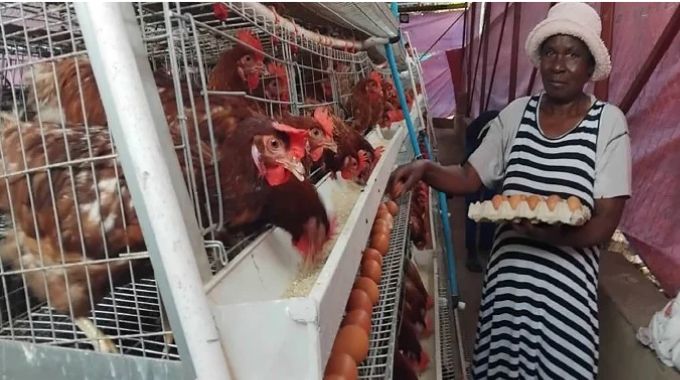
Spearheaded by 58-year-old Ms Betildah Shava, the project has grown from indigenous poultry rearing into a commercial operation housing 3 000 birds and supplying eggs to Mberengwa and surrounding areas.
The enterprise is helping bring a regular supply of eggs closer to rural communities, which previously relied on deliveries from cities such as Harare and Bulawayo.
Ms Shava said the project was producing 300 crates of eggs every week, meeting part of the local demand while creating opportunities for community members.
“At the moment, we are housing 3 000 birds, which produce 300 crates of eggs per week. The initiative is helping ensure adequate egg supplies in Mberengwa District and surrounding areas.
“The local community used to source eggs from Harare and Bulawayo, but this project has brought the products closer to home,” she said.
Beyond improving access to eggs, the business is creating employment and transferring practical poultry production skills to workers, giving them an opportunity to venture into farming independently.
Ms Shava said she was encouraged by the prospect of empowering employees with knowledge they could use to establish their own poultry projects and improve their livelihoods.
“This project is also providing workers with practical poultry-farming skills they can use to establish their own businesses and improve their livelihoods,” she said.
One of the workers, Ms Sibanda, said her experience at the enterprise had inspired her to consider starting a poultry project in her village.
“Since I started working here, I have drawn a lot of inspiration from this project and I hope to start my own. Beyond the income, I value the knowledge and skills I have gained, which I can use to establish a similar project in my village,” she said.
Livestock specialist in Mberengwa, Mr Paul Manenji, said the enterprise demonstrated how locally driven agricultural projects could stimulate rural economic activity while improving access to food products.
“This is one of the projects that can strengthen rural economic development. It ensures food supplies in our local community and is a business that is easy to sustain,” he said.
Mberengwa District development coordinator Mr Vafios Hlabati commended the initiative, saying Government was promoting an enabling environment for rural industrialisation and inclusive economic growth.
He said the project supported the objectives of the Rural Development 8.0 model, which seeks to transform rural communities into productive economic centres through increased agricultural production, utilisation of local resources and establishment of sustainable businesses.
Mr Hlabati said the enterprise was also in line with the National Development Strategy 2 (NDS2), which identifies agribusiness as an important driver of economic growth and employment creation.