admin
admin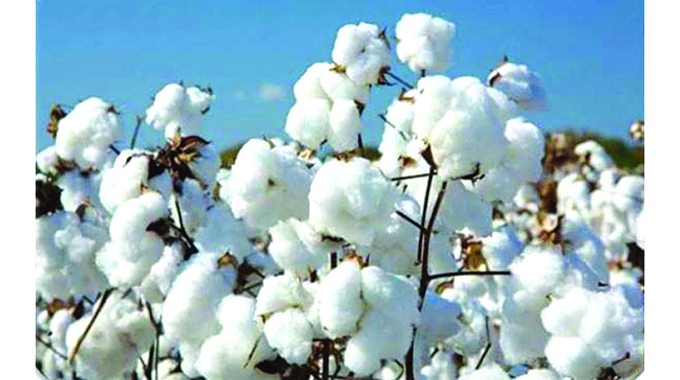
Edgar Vhera–Agriculture Specialist Writer
COTTON farmers are on cloud nine following the Government’s raising of their foreign currency retention ratio from 75 to 85 percent starting this marketing season on the backdrop of another increase in price for low grade lint from US$0, 30 to US$0, 40 per kilogramme.
In a recent circular to financial institutions, the Reserve Bank of Zimbabwe (RBZ) sent the exchange control directive RY002 that meant to operationalise the monetary policy.
The directive said: “With effect from the 2023 tobacco and cotton marketing season, tobacco and cotton growers shall be paid 85 percent of their sale proceeds in foreign currency. The remaining balance of 15 percent shall be paid to the grower at the prevailing interbank market rate.
Foreign currency sale proceeds for tobacco and cotton growers shall continue to be treated as free funds.”
The Government last year set cotton prices on a sliding scale, with the best grade getting the highest price in order to encourage production of quality cotton. Grade A cotton is to be paid US$0, 46 per kilogramme with grades B at US$0, 43, grade C- US$0, 41 and D set at US$0, 40.
Cotton Producers and Marketers Association chairman, Mr Stewart Mubonderi said cotton farmers were the greatest beneficiary from the announcement.
“This is a welcome development. As cotton farmers we are overexcited. Firstly, the lowest grade cotton price was reviewed 25 percent upwards from US$0, 32 to US$0, 4O per kilogramme. Secondly, our foreign currency retention was increased from 75 to 85 percent.
“Lastly cotton inputs came on time and we are likely to have a five-fold increase in production this year on the backdrop of these good rains,” said Mr Mubonderi.
He challenged cotton farmers to adopt good agronomic practices so that they produce quality cotton that fetches high prices.
“As the crop is looking good, we encourage farmers to eradicate weeds, apply chemicals to control pests and diseases and desist from side-marketing, come the marketing season.
The country held an inaugural celebration of the World Cotton Day last year wherein stakeholders from the clothing and textile industry bemoaned the decline in the production of quality crop. In an endeavour to improve quality, the Government announced that starting this season, seed cotton was to be purchased on the basis of grades.
Meanwhile, there were mixed sentiments from tobacco farmers with some rooting for a retention of up to 100 percent to counter the effects of the rising production costs denominated under the United States dollar.
Tobacco Association of Zimbabwe (TAZ) president Mr George Seremwe said though the increase to 85 percent retention was welcome, high production costs in United States dollars was impacting negatively on their profitability.
“We appreciate the 85 percent retention, but high fertiliser and chemicals costs, which are indexed in United States dollars are likely to see farmers incurring losses.
“Findings from a recent research have shown that small-scale farmers have a two percent profit margin while commercial farmers are in the negative. As such, we call upon the Government to review the retention to 100 percent until input costs stabilise, are subsidised or made cheap,” said Mr Seremwe.
Tobacco Farmers Union Trust president, Mr Victor Mariranyika concurred saying a 100 percent retention was crucial for viability and sustainability.
“This is a welcome development, but viability and sustainability are under threat, as all loans and inputs are being paid for in foreign currency. If farmers try to convert their Zimbabwe dollar amounts from the 15 percent into foreign currency, the amounts fall drastically, as most traders prefer to use the parallel market and not the official rate. In future a 100 percent retention is critical for viability and sustainability,” said Mr Mariranyika.



 Online Reporter