malvernmugadzikwa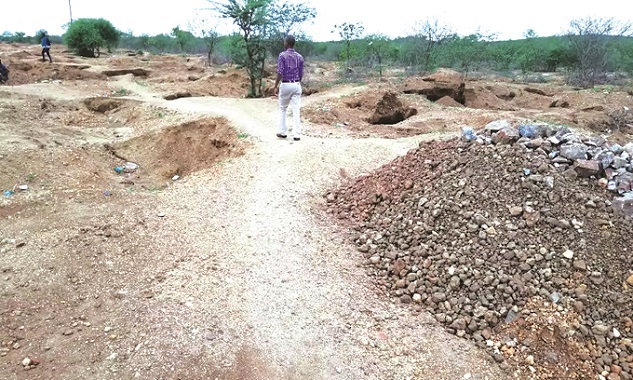
Vuyisile Moyo
Smallholder farmers in rural Gwanda, a region in Zimbabwe that borders South Africa, have been affected by a double shock — a combination of heat, droughts and floods caused by climate change; and water contamination and damaged land caused by illegal, small-scale mining.
Droughts in Gwanda have significantly affected rural farmers and increased over the past 40 years.
This has left many families impoverished after harvests failed.
Illegal, small-scale mining for gold in Zimbabwe has resulted in deforestation, land degradation, water pollution and loss of biodiversity in the area, making the problem worse.
Not all small-scale mining in Zimbabwe is illegal.
Some artisanal miners have a valid mining claim, a licence to engage in mining activities on an allocated piece of land; and pay taxes to the local authorities and the Government.
Illegal small-scale mining, on the other hand, is mining without permits in any area where the miners suspect there is gold.
There are an estimated 400 000 illegal small-scale miners in Zimbabwe.
The combined impacts of increased droughts and illegal mining create a complex web of challenges for rural farmers.
I am a researcher and development practitioner focusing on communities’ adaptation and transformation to climate change.
My PhD thesis investigated how 40 years of these problems had affected the farmers, and what practices they came up with to adapt to both stressors at the same time.
I held group discussions in Gwanda, surveyed 80 farmers and interviewed a group of elders who had lived and farmed in the area for more than 40 years.
My research found that rural farmers in Gwanda had limited capacity to adapt to climate-related and illegal small-scale mining shocks.
Poor governance of the natural environment in Gwanda is leading to food scarcity and damage to water and land.
It threatens to reverse development gains in these areas.
The problem
Families in Gwanda mainly survive on smallholder farming in the rainy season when crops grow.
In the dry season, households survive by migrating elsewhere for jobs, receiving remittances from relatives working outside Zimbabwe, receiving food aid and by vending.
They also rely on their own small businesses, harvesting mopane worms, homestead gardening and dry planting of drought-resistant crops.
Some farmers have bought smaller livestock like goats that can survive high temperatures and droughts.
However, illegal small-scale mining has negatively affected these earning opportunities.
The farmers I interviewed said they woke up in the morning, only to find their farmland and foraging areas having been dug up by miners, who worked at night to evade the police.
Livestock fell into mine pits and died, and local people were sometimes injured.
One farmer said: “My farm was encroached by artisanal miners who believed there is a lot of gold there. My farmland was dug all over and now I no longer have land for crop production. I now rely on requesting to farm on other people’s land . . . I depend on crop farming for the sustenance of my family.”
Previous research in Ghana has also found that artisanal miners dug thousands of pits, leading to the death of livestock from drinking polluted water in the ditches and from getting trapped in unrehabilitated and abandoned excavations. The miners also dug up roads between 2017 and 2021, which the local authorities failed to repair.
One busy road was so damaged by illegal small-scale mining that public transport vehicles could no longer use it.
The struggling farmers, who previously paid R100 (US$5,43) for a journey, now fork out R300 (US$16,40) to travel using a longer, alternative route.
This has brought additional stress to farmers who need to travel to Gwanda town or Bulawayo to collect their remittances and buy groceries.
Artisanal small-scale mining is benefitting only a few rural farmers, otherwise it is destroying the environment and damaging social capital.
Women most affected
Women in Gwanda said illegal small-scale miners had cut down mopane trees in the area.
During previous droughts, when their harvest was poor, local women were able to harvest more than 30 buckets each of mopane worms in a season and sell them in the closest city, Bulawayo, 126 kilometres away, and neighbouring Botswana.
They earned enough to survive the year. They could manage to buy food and clothing, and pay school fees. According to the women, this is no longer the case.
My research also found that women were double victims.
Local men tended to migrate to South Africa and Botswana to seek an income, leaving the women behind.
After having their land damaged and rendered unsuitable for agricultural activities, the women did not have the option of digging for gold themselves.
They were not accepted by the miners from outside Gwanda and could only find work on the periphery of the illegal mining industry.
This included washing miners’ clothes, sex work and selling food.
Those who did become miners faced sexual harassment and were looked down upon.
Solutions
Artisanal mining can be a good alternative to failing agriculture, but only if it is legal and managed properly. In Gwanda it is not policed well.
Governance systems in the area need to be strengthened. The Government must revisit the Mines and Minerals Act, which regulates how people and corporations go about getting mining rights, and make sure the police monitor and restrict artisanal mining.
Illegal miners must be apprehended and prevented from damaging communal land.
A climate change mitigation programme for agriculture must be put in place. Rural farmers and traditional leaders from Gwanda should be involved in developing this.
It should not be developed in a top-down manner by experts from the Government and international institutions.
Vuyisile Moyo is a post-doctoral research fellow at the African Climate and Development Initiative, University of Cape Town.



 Online Reporter