Chronicle Editor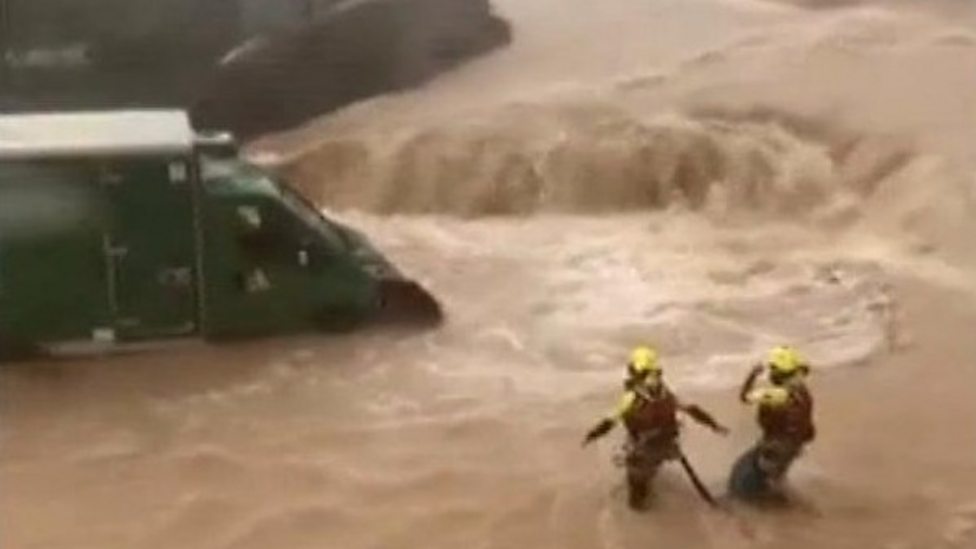
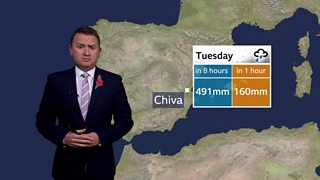
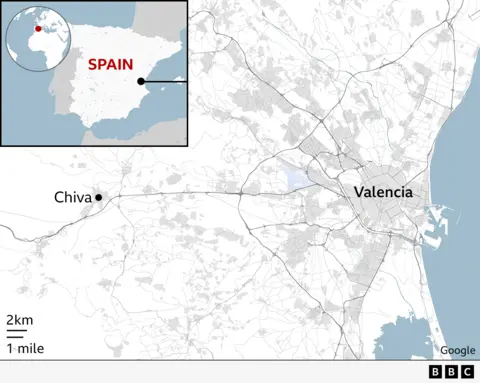
In the town of Chiva near Valencia more than a year’s worth of rain fell in just eight hours and local officials say it is “impossible” to put a final figure on the number of people who have perished.
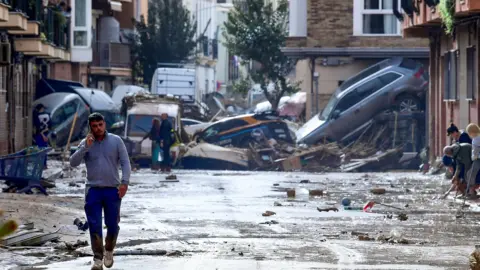
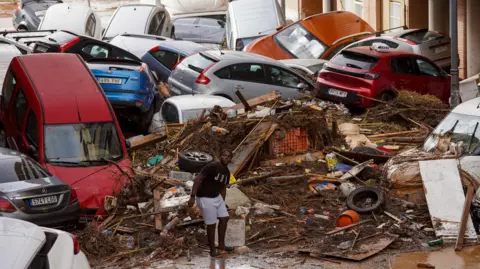
Footage uploaded to social media shows floodwaters causing chaos in the wider region, knocking down bridges and dragging cars through the streets. Other video appears to show people clinging to trees to avoid being swept away.
Much of the country has been badly hit by heavy rain and hailstorms, triggering rapid flooding across multiple areas.
 Getty Images
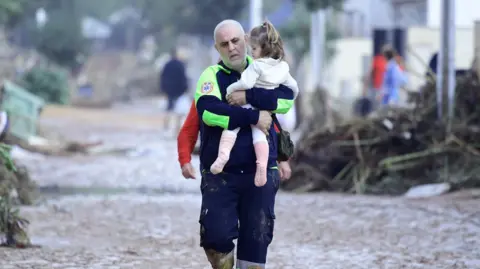
More than 1,000 troops are being deployed to help with the rescue operation, with scores of people unaccounted for. and hundreds of drivers reported trapped on motorways in the region.
Spain’s King Felipe VI said he was “devastated” by the floods, and sent his “heartfelt condolences” to the families of the victims, in a post on X.
Radio and TV stations have reportedly been receiving hundreds of calls for help from people trapped in flooded areas or searching for loved ones, as emergency services struggle to reach some areas.
In Valencia, one woman told of terrifying scenes as motorway drivers realised a torrent of water was heading towards them and formed a human chain to escape along a raised central reservation.
“Thank goodness no one slipped because if anyone had fallen, the current would have dragged them away,” Patricia Rodriguez, 45, told El País newspaper.
Chiva was among the first to experience the fury of the flash floods. Local media reported that by 18:00 (17:00 GMT) on Tuesday the town’s streets had turned into rivers, with cars, street lamps and benches being swept along with the force of the water.
The civil protection did not send a warning to residents of the Valencia region until over two hours later.
Many are now questioning the timing of that warning, saying that it arrived too late for people to get off the roads or seek refuge on the higher floors of their homes.
Spain’s defence minister Margarita Robles told reporters that the flooding across the region was “an unprecedented phenomenon”.
She added: “Yesterday, during the night, the emergency services were in the area, but the avalanche of water was tremendous.”
Police have issued an emergency hotline and asked people to phone 9006 5112 to report people who are missing.
“Practically all the main roads have been cut off and the secondary roads as well,” a government representative for the region, Pilar Bernabe said.
“Not going out is not a mere recommendation, it is a necessity to guarantee the safety of the people who are stranded and the people who have to go to rescue others.”
“If (emergency services) have not arrived it’s not due to a lack of means but a problem of access,” the regional leader of Valenica, Carlos Mazon, told a press conference, adding that reaching certain areas was “absolutely impossible”.
 Getty Images
Spanish weather service AEMET reported that Chiva, in the Valencia region, recorded 491mm of rain in just eight hours on Tuesday – the equivalent to a year’s worth of rain.
It has declared a red alert in the Valencia region and the second-highest level of alert in parts of Andalusia.
The floods have caused transport disruption with several flights due to land in Valencia diverted to other cities and others cancelled. All train services are suspended in the Valencia region, the national rail infrastructure operator ADIF said.
Valencia city hall said all schools and sporting events were suspended on Wednesday, and parks will stay closed.
Many factors contribute to flooding, but a warming atmosphere caused by climate change makes extreme rainfall more likely.
The world has already warmed by about 1.1C since the industrial era began and temperatures will keep rising unless governments around the world make steep cuts to emissions.
Additional reporting by BBC Weather’s Matt Taylor.


 Online Reporter