Online Reporter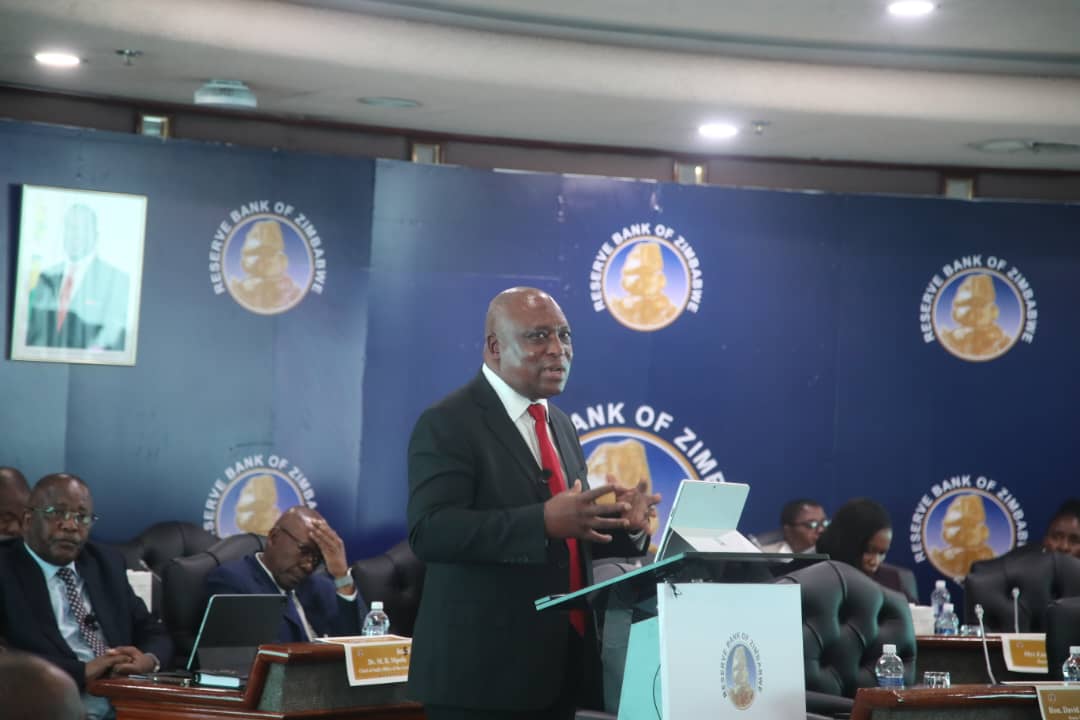
Business Reporter
Reserve Bank of Zimbabwe (RBZ) Governor Dr John Mushayavanhu has detailed the central bank’s success in restraining money supply growth and maintaining liquidity within targeted bands, defending the institution’s tight monetary policy stance as the cornerstone of the country’s return to single-digit inflation.
Presenting the 2026 Monetary Policy Statement, Dr Mushayavanhu walked stakeholders through the central bank’s performance against the targets it set for itself.
“Money supply would be at the end of each year, and as you can see from that graph, we have managed to live within those standards,” the Governor said.
He attributed the improved economic stability directly to the tight monetary policy framework introduced following the ZiG’s launch in April 2024.
“The tight monetary policy that we introduced resulted in us reviewing the policy rate from 20 percent to 35 percent in September 2024, thereby taming inflation and exchange rate pressures,” Dr Mushayavanhu stated.
The Governor revealed that the central bank had introduced a new technical tool to guide its interventions – an “optimum liquidity level” based on historical transaction data.
“We set for the market what we call the optimum liquidity level, based on the historical transactions that they are transacting on a monthly and daily basis,” he explained. “And as you can see from that graph, the market has continuously traded within the optimum liquidity level.”
Addressing frequent complaints from businesses and the public regarding cash shortages, Dr Mushayavanhu offered a data-driven rebuttal.
“I know some of you say there isn’t enough liquidity in the budget, but as you can see, while we set the optimum liquidity at that high level, banks have not been able to exhaust that liquidity,” he said, adding that we have an excess of ZiG2 billion every day.
The Governor highlighted a dramatic deceleration in money supply growth as evidence that the policy is working.
“We have also seen a significant decline in money supply growth, declining to as low as 2, 7 percent in 2025, compared to over 40 percent in prior years,” Dr Mushayavanhu said.
The Governor linked these monetary aggregates directly to the inflation outcomes that have brought Zimbabwe into compliance with regional benchmarks for the first time in decades.
Recent Zimstat data show that annual inflation has fallen to 3, 8percent in February 2026, down from 4,1 percent in January.
The sustained low inflation environment, which Dr Mushayavanhu credits to disciplined reserve money targeting and the September 2024 rate hike, has positioned the ZiG for greater acceptance and forms a key pillar of the central bank’s strategy to eventually establish it as the sole legal tender.
The Monetary Policy Committee has indicated its intention to maintain the current tight stance to preserve these gains and entrench macroeconomic stability.