admin
admin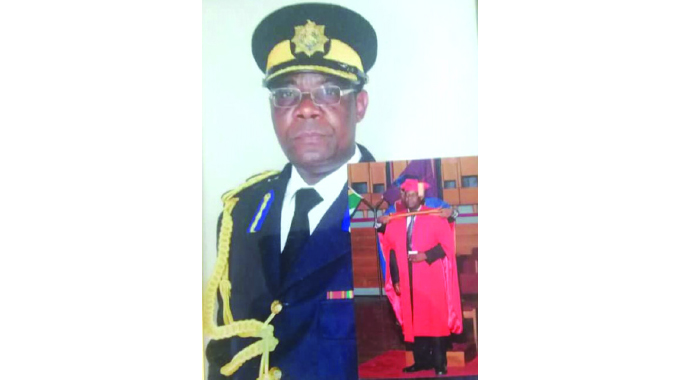
Isdore Guvamombe-Saturday Lounge Reflections
In 1999 during the build up to the Constitutional Referendum of 2000, I was deployed to Masvingo as The Herald Bureau Chief. I was young, firebrand and had had a trailblazing journalistic career in which I had amassed a lot of awards.
The then Herald News Editor Ray Mungoshi — one of the best wordsmiths I have ever worked with all my life- liked my style of writing and thought I followed his “pen-steps”, for lack of diction. I took it as an encomium!
Ray had been Bureau Chief Masvingo himself for a long time and had left strong footprints so he wanted me to continue with his legacy. Of course, the shoes were too big for me, that time.
Soon I found myself in Masvingo, a very new territory with strange factional politics then. Soon they learn I was from Guruve, Mashonaland Central so I was not really part of the politics of Masvingo, which made it easy for me. They called me Gorekore after my Korekore tribe and I did not find it offensive. Soon, each faction tried to claim me, without success. I had a strong briefing from Ray and adhered to it.
To escape the factional fights, I looked for stories from the police and soon I endeared myself with its provincial spokesperson Inspector Authur Makanda.
He was a tall bespectacled man, who walked with a lot of care.
But there was something awkward on the way he looked at me and the way he was very careful and I was fighting hard to break him down as a news sources.
That proved very difficult. I found him a rare breed of a policeman in every aspect, incorruptible, calm, calculative, intelligent, soft and secretive, but he never refused to comment on an issue. It was his comment that killed your story or gave you good copy.
I guess he was trying to break me down as a journalist and person, too. Soon we found common interest in traditional religious beliefs, the liberation struggle, literature and anti-white supremacist views. Then we interpreted the referendum campaign the same way and discovered the white population in Zimbabwe was against a section of the Draft Constitution and sponsored a No Vote, because it spoke to compulsory land appropriation, without compensation.
We predicted a No Vote win, which was a dangerous precedence and an affront to the long overdue land reform.
Apparently, I wanted the land reform myself, because for years I had rested this field and another for my farming projects.
Months before the voting Makanda had visited a traditional healer in Zvishumbe, a spitting distance on the outskirts of Masvingo town to the east. The war veterans had wanted to host their Heroes Holiday celebrations at the Great Zimbabwe Monuments and they wanted permission from the guardian spirit.
The spirit had strongly warned him of the rise of two storms (metaphoric storms) that would shake the country.
The medium of Mbuya Zarira took snuff from a pouch, placed it is its left hand and mixed it with her sputum, smeared the resultant phlegm on Inspector Makanda’s chest and thudded him up thrice, supposedly to calm his “chicken heart” and make him strong.
“You are too much afraid but you will now be fine. You will weather the first storm and lead a counter storm yourself,” he was told, in shriek but firm voice.
Since that day Makanda developed the heart of a lion.
Soon he started organising the aftermath of the referendum before it was even held, using his position as a war veterans’ provincial secretary general and leveraging it with his post and police’s public relations man. He sat in both meetings.
While many people concentrated on the campaign of the referendum, which he knew the Government was losing, he was far ahead and already working on plan B for the aftermath. I feared for him. But he was no longer himself.
When the result came, Makanda, as I later called him, was in the Elections Command Centre and as the final result was being read out he gave me the results as they came. Our prediction was correct. The No Vote had won.
He crafted the invasion of Yothum Farm but there was supposed to be another reason, which had nothing to do with the referendum results and yet, the plebiscite was the trigger.
Against the grain, Makanda mobilised war veterans to occupy Yothum Farm, owned by Dick Reign, a former Rhodesian soldier.
He gave them money from his own pocket for upkeep. Yothum Farm had a slaughter house from where hundreds of black people were killed during the war of liberation. That was enough justification for occupation.
In the group of 10 war veterans were Kidy Muzenda, Tendai Matambu, Eston Mupondi and Kennedy Saharu, among others. Soon they occupied the farm and it send shivers down the white farmers. I vividly remember Kidy Muzenda, using two triangular dry poles to scale an electric fence on a perimeter wall to enter the premises. Skillful!
Makanda had given them an instruction never to spill any blood and true, until the end of the land invasions, no white farmer was killed in Masvingo.
He gave them a cell phone, A Nokia 5110 for communication.
That time, the war veterans’ leadership in Masvingo was divided, with their chairman Munyaradzi Mhike vehemently against the land invasions.
In panic the white farmers requested to meet the police leadership and Makanda sat in various meetings with them and police public relations officer.
Little did they know he was the man behind the invasions. He used inside information to spearhead more invasions in Masvingo, while using his job to calm down and play the white farmers.
In one incident, the white farmers brought a court order to evict the war veterans from Yothum Farm and the invaders were listed by their names. That night, Makanda, visited the farm and hastily arranged a swap of the listed war veterans with those at the next farm.
At day break, he led the white farmers and journalists with the eviction order and when the names were called out, none of the listed war veteran was at the farm, so it could not be saved. It meant the white farmers had to start a new court application, listing the ones now at the farm. That was Arthur Makanda at his best.
After several meetings with chaired by Makanda, the white commercial farmers led by Clive Stockhill, discovered Makanda was the real deal behind all the invasions and Petitioned then Police Commissioner General Augustine Chihuri.
Makanda led a delegation to then Vice President Muzenda’s rural home in Zvavahera, Gutu, to explain the route taken by the war veterans.
While there, Josaya Hungwe (then Mavsingo Provincial Governor) was summoned by VP Muzenda for a briefing and thereafter Makanda arranged more invasions and the whole of Masvingo was taken.
Thereafter the land reform became a rollercoaster.
Makanda was transferred to Beitbridge on promotion, then Bikita District and Chitungwiza. I was also recalled to Harare where I hooked up with him while he was now at Chitungwiza in 2003.
In 2004 Makanda, then an Assistant Commissioner became President Mugabe’s Aid de Camp until 2014. During that time Makanda, a book work, had studied English and Communications and is now Dr Makanda.
He is now the Director of Curriculum Development at the Zimbabwe Schools Examination Council (Zimsec).


 Online Reporter