Chronicle Editor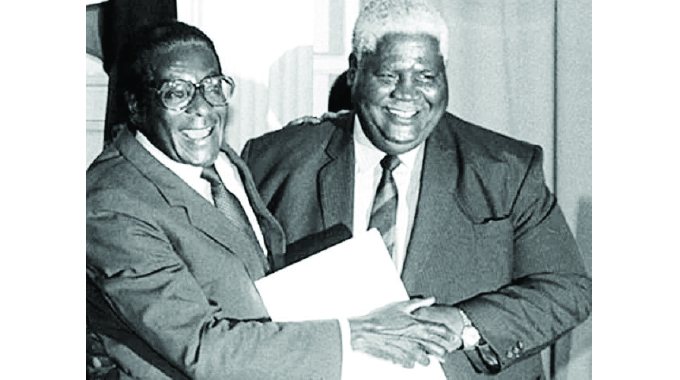
Lest we forget with, Colonel (Rtd) Ernest Mganda Dube
This second serial continues on the interview held between the author of this article and Father (Fr) Fidelis Mukonori and Fr Peter Paul Musekiwa on 8 October 2020, at their residence of Makumbi Mission Seminary, a locality found north of Harare, in the Chief Chinamhora country side, Mashonaland East Province.
The purpose of my visit was to enquire on the role of the clergy as well as the people of other colour [colour defined as any pigment that is not black] during the Imfazo/First Chimurenga Wars and that of Zapu’s Revolutionary War as well as that of Zanu’s Chimurenga War.
Question. What are the things that affected the Patriotic in the new Zimbabwe political dispensation?
Fr Mukonori. One iota I had just forgotten has to do with the movement of people from war zones to Zambia. Mr Nkomo said to me while we were at a certain camp in Zambia; ‘you see these women, young man? These are women some of them with babies. They came by foot from home. We have the responsibility to look after them, to feed them, and worse off, they are traumatised.
Fr Mukonori went at length narrating how RENAMO officials, in the immediate post FRELIMO Government usurpation of power, had approached their office and sought assistance in terms of processing for them passports to go to the UK. Against this, the Fr and John Deere tried their best to advise appropriately. To that, he said as he related this ordeal to the differences in PF liberation movements the Fr observed;
Fr Mutonhori continued. I worked extensively with the PF where I had the opportunity to understand both sides of the PF. At an early stage things at both camps were clear for instance when we would visit ZANU PF, they would say ‘ah ah, isu takabva ku ZAPU and so you must see ZAPU in us first and then ZANU next, hence the acceptance of PF was generally out of question. Now we are ZANU PF and their PF ZAPU, they would say. Then in 1978 on the sixth day, Mr Nkomo said while we were being driven somewhere he kept on saying, people are saying I must come home but I am saying I will not go home without Robert Mugabe.

This sixth day I heard a siren and asked what it was for. This other guy from our Lusaka office said it should be Mr Gabba the Nigerian Foreign Minister. So, in the afternoon we were in the State House around 1400 hours and Dr Kaunda (former Zambia President) walked in with this tall man who came along with his bishop and sarcastically greeted us to which we just laughed off. Having completed the State House meeting, I was surprised to hear that we were to have another meeting at 1800 hours. Once in that 1800 hours meeting probably 12 or 14 August 1978, former President Robert Mugabe was represented by his deputy but the main meeting was to continue between the two liberation movement representatives, Mr Ian Smith and the Nigerian Foreign Minister. Former President Mugabe had flown to Nigeria to meet President Obasanjo who briefed him about the previous Smith and Joshua Nkomo meetings.
At the new meeting place after we had relocated from the hotel to a new hideout, following the melding around of international journalists I personally asked vaNkomo many questions likely stalling the talks. VaMuzenda, the (late) Vice President of ZANU, had to invite me in the process of the on-going Lusaka PF unity talks deliberations to accompany him to the Lusaka Airport where President Mugabe was jetting in from Nigeria. President Mugabe, in the presence of Josiah Magama Tongogara, Rex Nhongo and others briefed the Commission on how Obasanjo had allayed to him about the Nkomo-Smith meetings and other issues. To that, President Mugabe, told us that he had told Obasanjo they have no interests in his role since theirs was dictated by the Frontline states. Mugabe was emphatic that let unity of purpose be given a chance and so, was the PF. On the questions of meetings with Ian Smith, that ZAPU had a large uncommitted regular army trained in Angola, which ZAPU was preparing for ZERO Hour, Mr Nkomo applied his mind to the best of his knowledge. So, those sticky issues were discussed and objected to. What else could the Commission have done?
As for the nation-building vision, I remember in the immediate post-independence in 1980 saying, peace is not the absence of war. One journalist asked me what I meant to which I said I was not talking to him but to my fellow Zimbabweans. What I was asking myself was; is the Zero Hour still there, and is the suspicion between ZANU PF and PF ZAPU still abound? As a result of not allowing the belligerents to openly discuss their suspicions Gukurahundi came and caused regrettable traumas which we are scared to discuss. Forty years on, we still hold back certain things which negate the justice, peace and healing processes. People know what happened but they don’t know how it happened.
When vaNkomo was sworn-in as the Vice President following the Unity Accord I went to congratulate him. He said ‘wena mfana’ [you son] as he used to call me. I have finished the meeting, can you come tomorrow morning, to which I did. Once there I asked him kuti baba Nkomo in your capacity as Commander-in-Chief of ZPRA forces and President Mugabe as Commander-in-Chief of ZANLA forces, the two of you are to apologise to the people of Zimbabwe on Gukurahundi. Why I am saying this, it is because you are the two harbouring differences and in the know of how it happened. Ubaba uNkomo then said, when mfana, I want you to go and tell President Mugabe exactly what you have asked me. When I heard President Mugabe making reference to my question, I knew the message had been passed. Unfortunately, both of them died before they had done that. Now that they are all gone, I don’t know whether it is right to still continue not answering the same question.
On another day’s visit vaNkomo talked passionately about the Unity Accord saying, I prayed to God refusing him to take me before the implementation of the Unity Accord. Now that unity for the people has been attained, I am now saying, God you can take me, I am ready. And for sure, God heard vaNkomo and took him away before long. What this legacy should tell the rest of us, is that unity of purpose should be jealously guarded, according to the prayers of the late VP Joshua Nkomo. I rest my case.
Ernest Mganda Dube aka Bookless is a political scientist who also has an interest in history discourses with emphasis on Zimbabwean anthropology in general and worldwide military-national security issues


 Online Reporter