admin
admin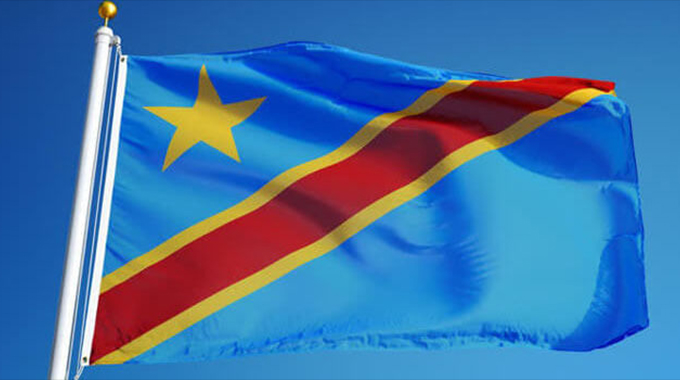
Herald Correspondent
Democratic Republic of the Congo (DRC) is a country located in central Africa. It is the second largest country on the continent after Algeria. Its capital is Kinshasa.
DRC is rich in natural resources. It boasts vast deposits of industrial diamonds, cobalt, and copper; one of the largest forest reserves in Africa; and about half of the hydroelectric potential of the continent.
However, the effects of colonialism are still felt in the country, which has been caught in a cycle of political instability since gaining independence in 1960.
The 36-year reign of Mobutu Sese Seko ended when he was deposed during the First Congo War, which lasted a little over six months between 1996 and 1997.
Mobutu’s successor, Laurent-Désiré Kabila, was assassinated during the Second Congo War, which stretched from 1998 to 2003.
The inauguration of President Félix Tshisekedi — who took over from Kabila’s son, Joseph, in 2019 — marked the first peaceful transfer of power in nearly 60 years.
However, since the end of the Second Congo War, regional violence between rebel groups and government forces have uprooted millions of Congolese. In 2016, such clashes led to a full-scale conflict in the Kasaï province, one that displaced more than 1,4 million people.
In March 2022, violence escalated in the eastern provinces (particularly North and South Kivu). This continued in 2023, along with renewed fighting in western provinces, bringing an already-complicated humanitarian crisis to a breaking point. Despite an inter-agency scale-up in humanitarian response that June, conditions worsened in the first months of 2024.
“This is not business as usual in the DRC,” Antoine Sagot-Priez, Country Director for Concern DRC, said recently. “We need people to know what is happening here.”
Over 8 million Congolese have been displaced
In the first three months of 2024 alone, the UN estimates an additional 738 000 people were displaced across the country. More than 80 percent of these displacements are the result of armed attacks and clashes, and the overwhelming majority were displaced in North and South Kivu (both of which have faced waves of harsh violence over the last 15 years).
This latest round of forced migration represents roughly 10 percent of the total displacement figures for the country. The Democratic Republic of Congo represents Africa’s largest internal-displacement crisis (and the world’s third-largest overall), with 7 096 556 internally-displaced persons (IDPs) as of February 29, 2024.
The DRC is also one of the world’s largest refugee crises, with approximately 948 000 Congolese seeking asylum abroad (primarily in Uganda, Burundi, Rwanda, Zambia and Tanzania).
It’s worth noting that the DRC is also a major host country for refugees — particularly for the neighbouring Central African Republic, Rwanda, South Sudan and Burundi — with over 520 000 refugees recorded in the country in 2023.
These refugees find themselves in an especially difficult situation, escaping conflict in one country to find asylum in a neighbouring country that also poses risks to civilian safety. Conditions in displacement camps (both for internally-displaced Congolese and refugees/asylum seekers from neighbouring countries) are often challenging, with key concerns including overall safety, gender-based violence, climate risks, disability inclusion and adequate housing.
Even for those who haven’t been forced to leave their homes due to ongoing violence, the DRC represents one of the worst ongoing humanitarian crises. At the beginning of 2024, the UN’s Office for the Co-ordination of Humanitarian Affairs (OCHA) estimated that 25,4 million people in the country (roughly 20 percent of its population) require some form of humanitarian assistance. That includes 13.7 million children.
Right now, the biggest need in the country is centred on food security with 100 percent of those in need of humanitarian assistance requiring aid in this area. Health and nutrition is another key area of need, with 19.6 million people requiring some form of health assistance and 8.4 million requiring nutritional support. 10,2 million Congolese require humanitarian protection and 6,9 million require assistance related to clean water, sanitation and hygiene (Wash).
Fighting has deprived families of their livelihoods, which for the vast majority of Congolese, lie in agriculture. This means that millions of people are unable to grow the food that they use for both sustenance and their income. In some of these conflict zones, humanitarian access is also limited, meaning that it’s harder to get aid in for civilians.
While DRC consistently ranks among the world’s “poorest” countries, it also has one of the largest reserves of potential wealth, including 200 million acres of cultivable land and large reserves of gold, diamonds, copper, zinc, coltan, and cobalt.
By extension, the DRC powers our phones, producing 67 percent of the world’s coltan and over 70 percent of the world’s cobalt.
Despite mining being a lucrative industry, the hundreds of thousands of Congolese — many of whom are children — working in these mines are not seeing adequate compensation for their work. Many aren’t paid at all.
This is the legacy of colonialism in action in the DRC today, with corporations and private interests taking over for monarchies.
This continues to be a key driver of violence and instability within the country as well.


 Online Reporter