Online Reporter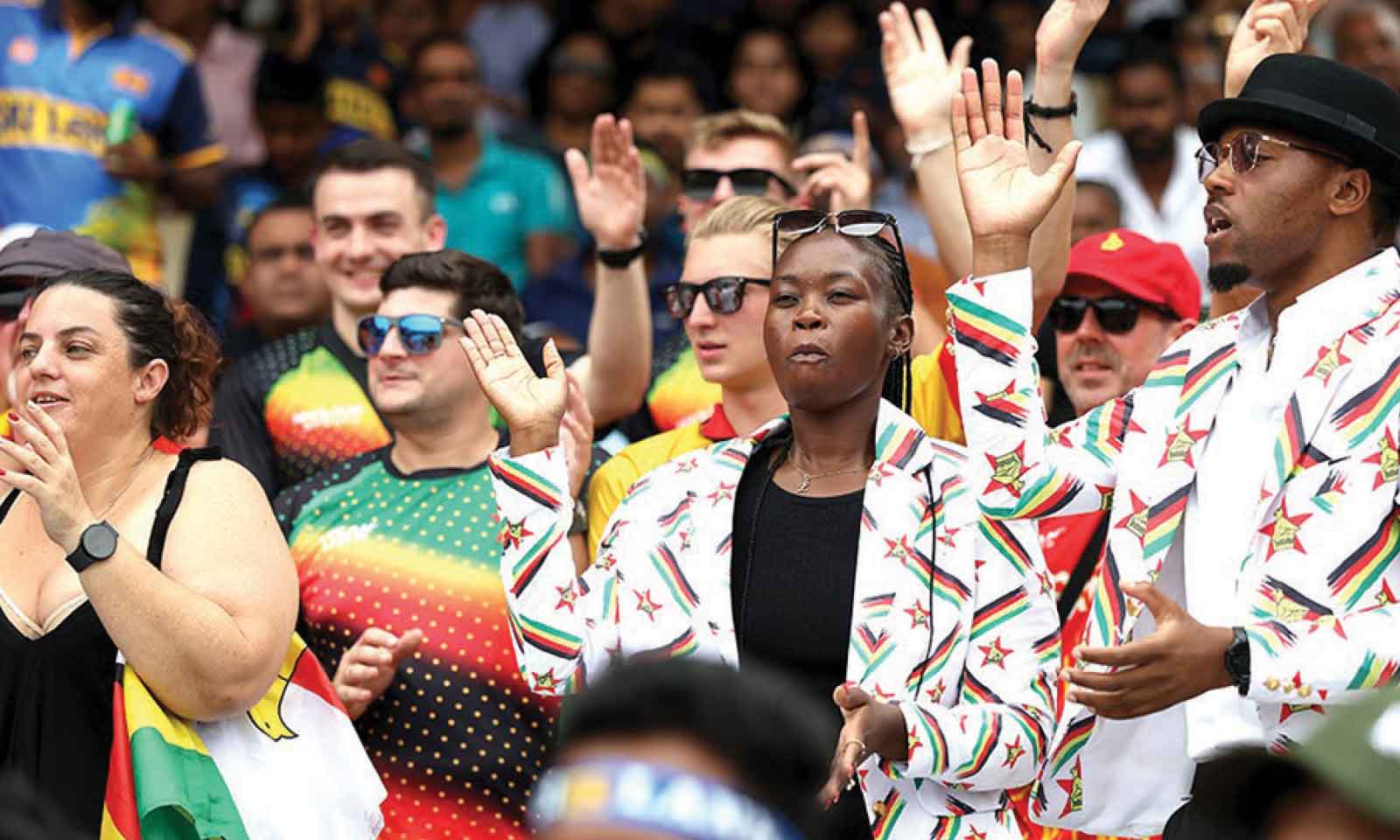
LONDON. – Daen du Plessis could tell that Zimbabwean cricket had turned a corner by the noise of the crowd.
The veteran broadcaster, who was born blind, has forged a remarkable career as a commentator by distinguishing the game’s almost imperceptible audio shifts.
He can tell a slower ball has been bowled by the fractional delay before ball meets bat.
He can tell if a batter has pressed forward or back by the scratch of spikes against the hard pitch.
And he could tell, in 2018, that the sport he loved would never be the same again.
“When I was a teenager, cricket in Zimbabwe was almost exclusively played and supported by white people,” Du Plessis says.
“And besides the accents and topics of conversation, you could tell this by the way they would applaud and chant. It had a particular energy.
“The most animated fans were usually the ones who had too much beer and hurled abuse at the players on the boundary.”
In the late 1990s, that ecosystem produced a golden generation. Andy Flower rose to the top of the ICC’s Test batting rankings.
Heath Streak carried the attack. Zimbabwe beat South Africa at the 1999 World Cup en-route to the Super Sixes.
They were plucky, precise and competitive. But they were also almost monochrome. So were their fans. Cricket was seemingly out of step with a country that shed so much blood to reimagine itself after colonial rule.
“I think this truly changed during the World Cup qualifiers in 2018. I can’t remember who they were playing, but I remember that the crowd was chanting in Shona.
“You could tell that people were dancing as they sang. It felt like this team was finally getting the love of the majority of the country. It feels like cricket is now a sport for everyone.”
That swelling fan base has been in dreamland this past month as Zimbabwe have defied expectations in the ongoing T20 World Cup.
Having taken the long road to qualify, playing Rwanda, Seychelles and Gambia, they arrived in the Indian sub-continent and beat Australia by 23 runs and Sri Lanka by six wickets to top their group and qualify for the Super Eights.
It was only seven years ago that Zimbabwe failed to qualify for the 2019 World Cup in England.
“We got Zimbabwe in this mess,” captain Sikandar Raza recently told Cricinfo.
“So to take Zimbabwe to new cricketing heights, it’s our job.”
Zimbabwe will host the Under-19 World Cup later this year and will share the 2027 men’s 50-over World Cup with South Africa and Namibia.
There are signs that Zimbabwe is on the rise, but Du Plessis knows not to confuse momentum with permanence.
“We’ve been through too much to ever relax. But maybe that’s a good thing. “Hopefully that means we won’t be complacent. It’s great to feel something other than shame for this team. I hope that this can catapult them forward.” – The Guardian