admin
admin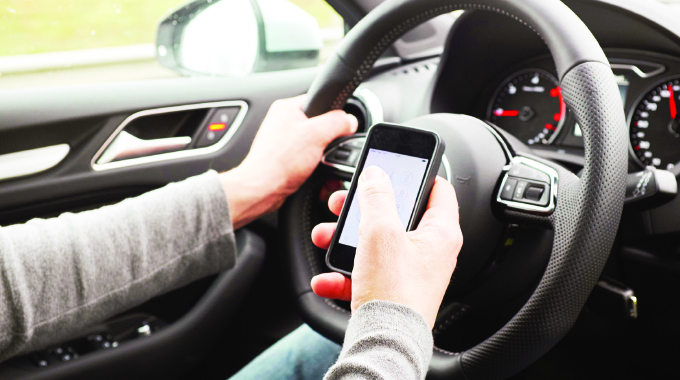
Tatenda Chinoda Correspondent
Six conditions are present in any driving situation namely: road, traffic, vehicle, driver, light and weather.
If these conditions are bad, they cause road traffic collisions. The state of the driver is the most critical condition.
This must be dealt with boldly and decisively if we are to achieve 25 percent reduction in road traffic deaths and injuries annually as espoused by our National Development Strategy 1 (NDS1) [Transport Infrastructure & Utilities).
The entry point is to accept that what many generally refer to as human error is actually driver error.
Anderson (2012) claims statistics prove that 97 percent of all road traffic collisions are a direct result of driver error.
If this is anything to go by, it implies that the 97 percent of the accidents caused by driver error can be prevented since errors can be corrected.
Drivers must consciously seek to correct these errors.
This article, focuses on a very high risk driving behaviour (error) which is known as distracted driving.
Distracted driving, a subset of driver inattention, can be generally expressed as doing other activities and feeling other situations which take the driver’s attention away from the road and its traffic.
There three types of driver distractions are: visual; manual; and cognitive distractions. Visual distraction means literally taking one’s eyes off the road and traffic.
Manual distraction means taking one’s hands off the steering. Cognitive distraction means taking one’s mind off the basic task of driving.
Driving is a generic skill that requires the driver’s holistic attention to safely control the vehicle and respond to events happening on the road and around the driver’s course.
It involves constant and complex co-ordination between the driver’s mind and body.
In towns, cities and along the highways, distracted driving cannot be ruled out.
Eating, reading, other occupants in the car, cellphone use, drinking, smoking, adjusting radio, adjusting environmental controls, reaching for an object in the car, grooming (applying make-up), meditation and looking — admiring an object or event outside the vehicle, are some of the examples of distractions.
Indeed, a glance can kill. Looking at what you are passing while you are driving is called rubbernecking.
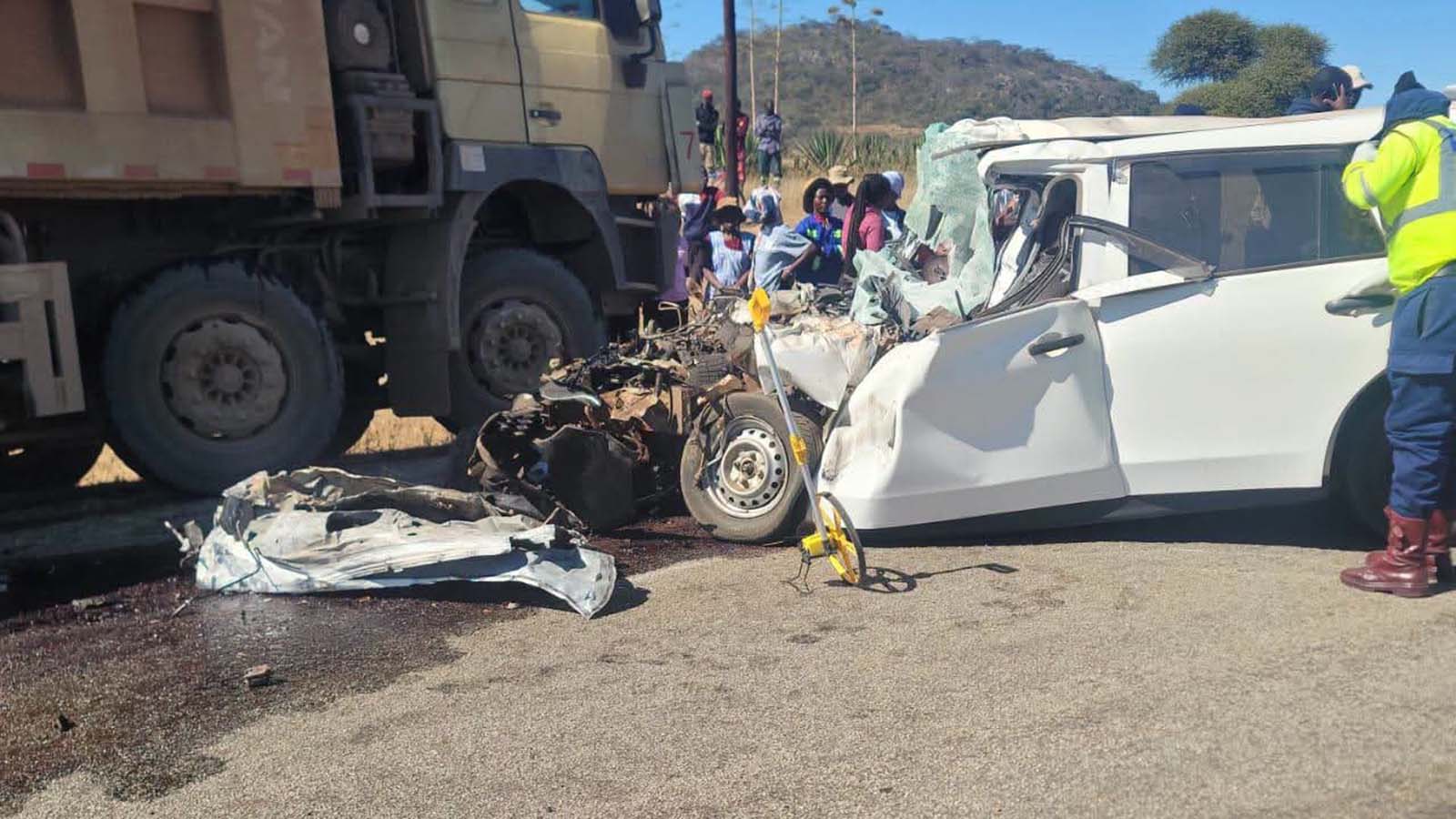
This can be a distraction if you are concentrating on getting a good look at say, an accident scene, a dazzlingly dressed lady or gentleman, a vehicle pulled over by traffic police, construction work, a billboard advertisement, a scenic view, street name and addresses.
Sometimes the driver’s mind is off the driving job. His / her attention will not be on the outer world; the world of the vehicle, the driving, the road and the traffic situations obtaining.
This means that the driver’s attention will be focused on his inner world — the world of troubles.
Even if the driver’s eyes will be wide open, he or she may not be seeing and reading the road ahead, the road behind and the road at the sides.
This state of mind, that is sometimes referred to as highway hypnosis (day dreaming — sleeping at the wheel), is dangerous when driving.
This possibly explains why some drivers appear like they involuntarily drive onto crossing trains at rail-road level crossings in broad daylight.
Therefore, emotional and spiritual instability are other salient forms of driver cognitive distractions which must be avoided.
Drug and substance abuse, domestic violence, workplace stress or bullying, social strife, economic strife, teenage euphoria, inferiority complex and superstition are among the major drivers of emotional, spiritual and mental driver distractions.
Inferiority complex borders on rank driving where some drivers want to show off on our roads, get preferential treatment using their rank of office or social-economic and political influence.
Unfortunately, there is no ‘barometer’ to detect these distractions like there are Alco meters and breathalysers.
It is therefore, imperative for the driver, supervisors, workmates, church mates, passengers and family members to be alive to such dangerous distractions and to take appropriate preventive measures.
Such measures may include appointing a designated driver who will not be found wanting or abandoning the trip altogether.
All of us must consciously take action for road safety and save lives, limbs and property on our roads [2nd UN Decade of Action for Road Safety – 2021 to 2030].
While the road condition cannot be changed overnight, the attitude and condition of the driver can be changed on the go. There are road traffic laws.
Notwithstanding, these laws, road signs, signals and markings do not carry out any action on the vehicle. For example, a stop sign does not stop a car.
It is the driver who must stop the car at a stop sign provided he or she is not distracted or negligent.
Before any trip, the driver should be physically, mentally, and emotionally fit to execute the demands of the driving job before him or her.
As the trip materialises, the driver must scan the environment ahead of them, behind them and at their sides for negligent road users and always slow down to prevent road traffic collisions.
In emergency cases, some drivers rush to blow the horn or hooter.
This is inappropriate as a life-saving skill.
Instead of tapping the horn, the driver should, almost invariably, slow down, and if need be, come to a complete stop.
Deaf pedestrians and those enjoying music via their earphones do not hear the hooter.
A mentally challenged pedestrian may not heed the warning after all. At any rate, the sound of the hooter does not stop a road traffic collision from occurring, but braking does!
Together, we can tame the traffic jungle in Zimbabwe and optimise the attainment of Vision 2030 by preserving property and human capital.
Tatenda Chinoda is a defensive driving instructor and Roads4Life Champion for the African Region.
Feedback: +263772966075, or Email [email protected]


 Online Reporter