Chronicle Editor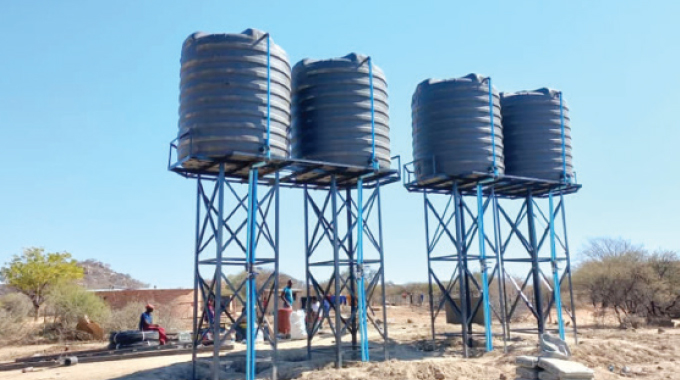
Sukulwenkosi Dube-Matutu, [email protected]
GOVERNMENT has assured farmers that various measures to support initiatives to boost livestock feed and fodder production have been put in place to mitigate water and food shortage for livestock in the face of the El Nino-induced drought.
To address nutrition issues affecting the livestock industry, Government has introduced the Presidential Silage Scheme, the Presidential Legume Pasture Programme and the Presidential Borehole Drilling Programme to mitigate water shortage and improve access to irrigation and drinking water.
Government has also introduced the Livestock Recovery and Growth Plan, a blueprint with strategies to improve livestock production and productivity. One of the pillars addressed in the growth plan is livestock nutrition
Livestock and livestock products contribute significantly to the Zimbabwean economy, with cattle accounting for 35 to 38 percent of the gross domestic product (GDP) contributed by the agricultural sector.
The Agricultural and Rural Development Advisory Services (Ardas) recently underscored the need for livestock farmers to have at least a plot of fodder and a source of clean water to improve their livestock’s nutrition.
Ardas further hinted that the establishment of dedicated fodder plots was crucial for ensuring the survival and productivity of livestock during challenging times.
The production of feed is expected to reduce the cost of commercial feed and improve cattle production and profitability to enable farmers to realise the full value of their livestock.
The effects of El Niño drought are tightening their grip on Zimbabwe’s rural communities, forcing desperate farmers to sell off their prized livestock — primarily goats and cattle — to abattoirs, butcheries and middlemen at heavily discounted prices.
In an interview recently, Lands, Agriculture, Fisheries, Water and Rural Development Minister, Dr Anxious Masuka, said farmers should not panic and sell their animals as Government has scaled up efforts to ensure that there is enough feed and water for their livestock.
Dr Masuka noted that some farmers were undervaluing their livestock, which are vital sources of income for rural households in Zimbabwe and critical for their sustenance.
Farmers are reportedly selling their cattle to private buyers for as little as US$200 to raise money to buy feed for their animals.
As part of efforts to address the drought challenges, Government has started constructing drought mitigation centres in over 1 600 rural wards across the country.
Garanyemba in Gwanda District Matabeleland South Province was identified as a pilot project.
The project, being implemented under the Rural Development 8.0 programme, will be replicated in all 1 620 rural wards across the country.
Under the programme, Government is setting up nutrition gardens and livestock feeding troughs. Livestock sales centres are also being constructed in each drought mitigation centre, which will have solar-powered boreholes. The sales centres will ensure that Government monitors the selling of cattle so that farmers are not short-changed.
“Government is doing what it can to rapidly roll out this programme. What is needed is for farmers to be educated and sensitised that help is on the way and therefore they shouldn’t panic and sell their livestock,” said Dr Masuka.
“We need to establish these formal livestock sales points so that farmers can get better value for their cattle rather than just have a bilateral with a buyer at their homestead.
“We want the cattle to be brought to this centre and all the buyers can come and bid for the cattle on a particular day so that we don’t have people buying cattle at a very low price as we have seen in the past.”
Dr Masuka said Government is concerned by the state of livestock in the country as they are a major contributor to the country’s economy.
“Government aims to have farmers shift their focus and see their animals as an asset that needs to be guarded jealously. My ministry working with other partners has rolled out programmes across provinces, which seek to promote livestock production,” he said.
“As part of efforts to preserve livestock in the face of the prevailing El Nino drought, Government, working with its partners, has also intensified the hay baling programme to ensure farmers have access to affordable feed. Under the programme, hay will be moved from provinces which have grass to other provinces that require hay.”
Government is accelerating plans to build the national herd to six million by 2025 in line with the Livestock Recovery and Growth Plan to meet national demand for meat and dairy products.
The national herd stands at 5,5 million and various measures have been put in place to improve the quality of livestock including artificial insemination, which involves cross-breeding with semen from selected quality bulls and vaccination programmes.
The Livestock Growth Plan (2021-2025) is one of the five anchors of the Agriculture and Food Systems Transformation Strategy. It envisages growth in the livestock sub-sector to US$1,9 billion by 2025, from the current US$900 million. —@DubeMatutu



 Online Reporter