

 admin
admin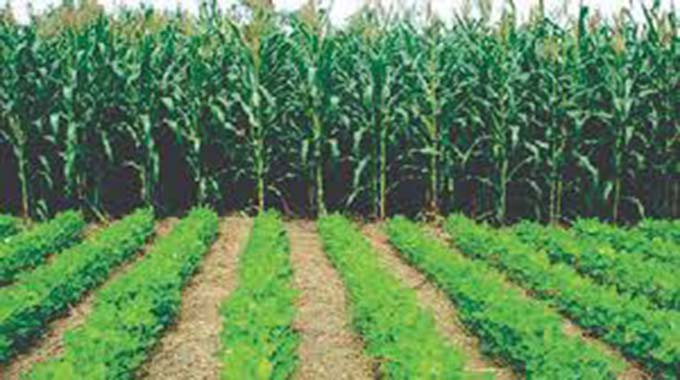
Sifelani Tsiko
Innovations Editor
Distributing new varieties of drought-tolerant maize to smallholder farmers in the country can help boost yields and lift most of the farmers’ out of poverty, the Korea Programme for Innovation on Agriculture (KOPIA) Zimbabwe Centre director Kim Young-bok says.
In a report released recently, he said expanding the cultivation of drought-tolerant maize varieties could support smallholder farmers facing increasing uncertainty in agriculture due to the impacts of climate change.
KOPIA and the Scientific and Industrial Research and Development Centre (SIRDC) are running a project to promote the cultivation of drought-tolerant maize varieties in 13 wards of Hwedza North constituency.
“The 2024 – 25 Drought-Tolerance Maize Expansion project will cover at least 120 hectares, an increase of 20 hectares from last season,” said Young-bok.
“Approximately 1 200 farmers are expected to participate with anticipated yield improvements of over 20 percent.”
The project combines the use of improved drought-tolerant maize varieties with conservation agriculture practices, such as intercropping and zero-tillage methods for improved yields.
Last season, approximately 970 farmers participated, and despite severe drought conditions, the project recorded a 15 percent increase in yields, with an average harvest of 0.9 to 1.5 tonnes per hectare.
KOPIA and SIRDC conducted the project using Sirdamaize varieties SM113 and SM115 which are drought tolerant.
“We need to develop and adopt smart agricultural models that effectively address the challenges posed by climate change,” said SIRDC chief executive officer, Dr Leonard Madzingaidzo.
“The ongoing collaboration between SIRDC and KOPIA is important in promoting sustainable farming practices for smallholder farmers.”
Maize is one of the most important cereal crops in Zimbabwe and most other African countries. Agricultural experts say it is a lifeline to 300 million vulnerable people in Africa.
The KOPIA – SIRDIC project aims to hasten the adoption of maize varieties that withstand dry weather.
Droughts in Zimbabwe and most parts of Africa are worsening. Repeated droughts have scorched millions of hectares of food crops in southern Africa and other parts of the continent in the past decades.
Southern Africa was particularly badly affected after rains failed last season leaving millions facing hunger.
In Zimbabwe, KOPIA’s projects are implemented through the KOPIA Zimbabwe Centre and SIRDC through a Government-to-Government bilateral MOU that was signed between Korea and Zimbabwe.



 Online Reporter