

 admin
admin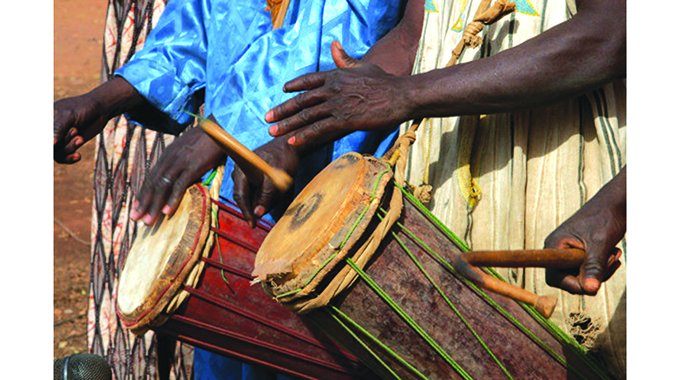
Elliot Ziwira
At the Bookstore
During Zimbabwe’s liberation struggle, the drum was effectively used for communication, morale boosting and invocation of the spirits of the ancestors.
Notwithstanding their superior weaponry and all the colonial machinery of subjugation at their disposal, it was difficult for Ian Smith’s soldiers to walk over the freedom fighters.
This was so because the guerrillas’ intelligence network involved a whole people, united through shared meanings, shared struggle and toil.
Through different beats of the drum, messages would be conveyed as warning of impending danger, or via interaction with the freedom fighters at their bases, either during the day or at night vigils — pungwes.
It is not surprising that the drum got prominence in the post-2000 Fast Track Land Reform Programme.
The drum, therefore, is pivotal to the African’s spiritual heritage.
In the African worldview, as has been explored widely by writers like Chinua Achebe, Ngugi wa Thiong’o, Wole Soyinka, Aime Cesaire, Charles Mungoshi and Ayi Kwei Armah, the drum ritualistically bridges the world of the living and the ancestors.
In African collective memory, the dead are alive in the experiences of the living. Africans can go on a spiritual voyage that takes them back as far as their ancestors through drumming, music and dancing.
The African’s spiritual heritage can easily be analysed through the drum discourse.
As depicted in Eric Harrison’s “Jambanja” (2006) settlers captured or attempted to capture this crucial heritage.
The ritualistic import of the drum tradition is crucial in locating historical memory in black people’s everyday toils. Their travails are collectively shared and expressed in the struggle for identity and shared ideological vision.
Zhuwarara (2001:56) maintains that during such rituals “the drum becomes the bridge which links the living and the dead”, thus, allowing the African to affirm “the harmony between him and his god.”
Because spirituality pervades black people’s worldview, spiritual emptiness is a death knell to them.
The Mandengu family in Charles Mungoshi’s “Waiting for the Rain” (1975) is given hope for spiritual regeneration by their ancestor, Samambwa, embodied in Garabha.
Parrinder (1962) points out that through funerals, a man is introduced “into the world of the spirits”.
Funerals, therefore, are “transitional rites” which are performed through the drum. Cognisant of the centrality of the drum to black people’s spiritual being, in “Jambanja” Harrison wades into its essence through Harry, who attempts to obliterate historical memory by hijacking the 25-litre tin used by his “striking” workers demanding their money.
“Someone produced an empty 25-litre tin and started hammering out a rhythmic beat which carried a message that only the Africans understood from thousands of years of camp-fire experience”, Harrison writes.
Harrison is conscious of the “thousands of years” that the message carries, but he is cut out of it because he is an alien. Aware of the spiritual significance of the drum, Harry “leapt towards the drum-beater who happened to be Jairos, the long serving compound sweeper, and snatched the tin from out of his hands”.
With the tin “between his own legs” he “started to beat it, swaying from side to side, his shoulders ducking and weaving like a cobra as he beat the same constant rhythm”.
Through the drum, Harry changes “the mood and tension in the crowd as they witnessed this ‘murungu’ (white man), do something so unheard of”.
In the end, fancying himself a revolutionary, Harry sways the mood to his favour and Maioio Farm is resonating with sloganeering: “Pamberi Zimbabwe!” and “Pamberi Maioio!” with Harry in the lead.
Harry’s use of bastardised forms of both Shona and Ndebele in a quest to foist a rapport with the indigenous people, lacks both sincerity and conviction.
Although his attempt to hijack the drum tradition momentarily succeeds with his workers (who laugh at him), he fails at the national level as “hordes of squatters had surrounded the homestead, banging away on their drums”.
Harry also fails to read the mockery in his workers’ laughter, as they are aware that his thudding of the drum carries neither message nor spiritual significance, for he is not an heir to that heritage.
Harrison also alludes to the spiritual link between the dead and the living through death, and the grave, an issue constantly raised by dispossessed and displaced Africans.
Harry reflects on “the spot nestling under an acacia tree, the very spot where he had instructed Joan to bury him, when his day to leave this earth came — overlooking his beloved orchards.”
The 72-year-old Geoff worries about having to leave his farm where his father and “son Jonathan, killed in the liberation war” were buried.
It is this issue of abandoning the graves of their loved ones that indigenous people raised when they were forcibly moved from their ancestral lands, but colonial governments ignored them.
Now whites raise the same issue when it suits them. Hence, spirituality; an intangible heritage as enshrined in the land, has always been an area of contestation.
In Brian Chikwava’s “Harare North” (2009), the unnamed narrator frets about his mother’s grave, which may be at risk of bulldozers, because he is aware of the link that exists between the dead and the living.
To Africans, upon death the dead join the ancestors in the spiritual world, which can only happen if all rites are followed during their burial and afterwards.
Besides offering water, food and ontological protection (Skey, 2011), Mother earth has a spiritual connectedness that cannot be rubbished through hijacking of the African drum.
It is also worth noting how Russell, Harry’s son, attempts to scare away the indigenous owners who have come to reclaim their land, through invocation of the Christian God.
Aptly, he is told off by Whitehat, who informs him that Africans have their own God and totemic symbols which are equally crucial to their well-being.
The drum is, and has always been a symbol of spiritual freedom which cannot just be wished away through settler arrogance. The African, therefore, should continue beating his own drum and refrain from skanking to the tune of alien drumming.



 Online Reporter