Online Reporter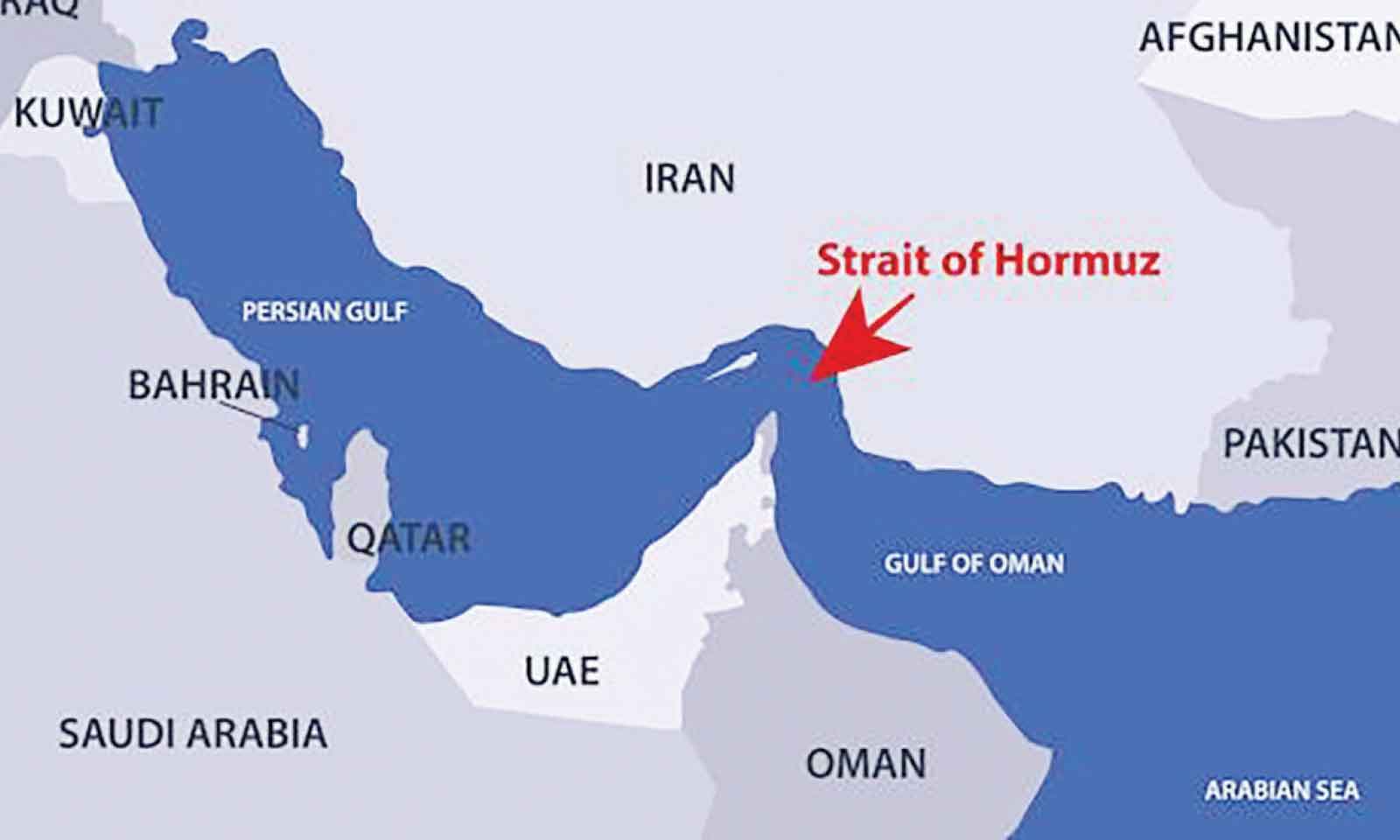
Martin Kadzere
THE Government will facilitate duty-free import of fertiliser and expedite revival of the Sable Chemicals ammonium plant to buffer the domestic market against soaring prices triggered by the Middle East crisis, Information, Publicity and Broadcasting Services Minister Dr Zhemu Soda said.
This comes against concerns that fertiliser prices in Zimbabwe could surge significantly if geopolitical conflicts cause long-term disruptions to global shipping routes.
According to the April Economic Pulse report published by local think-tank Africa Economic Development Strategies (AEDS), a worst-case scenario involving the prolonged militarisation or closure of the Strait of Hormuz for more than 12 months could result in fertiliser price increases.
Speaking during Tuesday’s post-Cabinet media briefing, Minister Soda explained that the fertiliser duty waiver aims to safeguard national food security against Middle East-induced shipping bottlenecks.
The maritime crisis has severely strained local logistics, driving Zimbabwean fuel prices up by about 30 percent since military escalations began at the end of February.
“The 2026/27 Summer Production Plan seeks to guarantee national food security against the backdrop of unprecedented compounding pressures, including the 80 percent probability of a Super El Niño-induced drought and heightened fuel and fertiliser prices,” said Minister Soda.
Hopes for the immediate restoration of maritime traffic in the Strait of Hormuz to prewar levels are fading as fragile peace talks between the US and Iran faltered this week. The breakdown followed fresh US airstrikes inside Iran and subsequent retaliatory Iranian drone and missile attacks on American military bases in the Gulf.
The dramatic escalation has reignited fears of a prolonged conflict that would keep the vital maritime choke point closed indefinitely. Zimbabwe imports significant quantities of fertiliser — a critical agricultural nutrient —due to the limited capacity of the local manufacturers.
The shortage stems from the fact that the Middle East is a major supplier of natural gas, a critical component in fertiliser production that relies on shipping routes passing through the Strait of Hormuz.
The resulting supply shock is projected to drive fertiliser prices up by 70 percent to 120 percent, pushing the retail price of a standard 50-kg bag of Compound D to US$77, says AEDS.
AEDS warns that the price hike will force farmers to drastically scale back applications, triggering a potential 35 percent to 80 percent drop in average national yields and forcing an emergency food import bill of up to US$600 million.
Even under less severe timelines, international bottlenecks are forecast to trigger immediate local economic strain, the AEDS says.
A moderate disruption scenario of six to 12 months — driven by prolonged regional tensions — is expected to cause intermittent stockouts of critical top-dressing urea and base compounds.
This would trigger a 30 percent to 50 percent surge in fertiliser prices, forcing smallholders to cut usage by 20 percent to 40 percent and shaving 15 percent to 30 percent off national outputs.
In the absolute best-case scenario of a brief 1 to three-month disruption mitigated by safe shipping corridors, the AEDS notes that minor delays and manageable shortages will still drive fertiliser prices up by 15 to 25 percent, culminating in an immediate 5 to 12 percent drop in average national maize yields.
While the Government has acknowledged the looming crisis, its current strategy prioritises a long-term plan to ensure the country achieves self-sufficiency in fertiliser production rather than addressing the immediate threat.
In a recent interview with Zimpapers on the sidelines of the recent SADC Ministers of Agriculture meeting in Victoria Falls, the Minister of Agriculture, Mechanisation and Water Resources Development, Dr Anxious Masuka, said a robust framework was being implemented locally.
“In Zimbabwe, we are already discussing the localisation of the fertiliser industry and there is a Cabinet committee that is focusing on that and we have made very important progress in that regard,” he said.
The Mutapa Investment Fund — Zimbabwe’s sovereign wealth fund — has launched a US$153,1 million revitalisation initiative specifically designed to revive the country’s domestic fertiliser value chain and reduce its heavy reliance on imports. The strategy focuses on injecting capital into key State-owned entities to boost the capacity of the local manufacturers.
Already, Mutapa has disbursed US$5,3 million to refurbish the Dorowa plant, the country’s sole phosphate producer.
The refurbishment exercise is almost complete to pave the way for the resumption of full-scale production. An additional US$10 million has been earmarked for the next phase to further scale up production.
The mine is projected to produce 100 000 tonnes of phosphate concentrate annually, which will provide the necessary feedstock to manufacture roughly 300 000 tonnes of compound basal (Compound D) fertilisers.
To secure national economic interests, Mutapa is injecting US$13,3 million into Sable Chemicals to revive idled production while restructuring its ownership to increase the Government’s stake from 37 percent to a controlling 69 percent.
Downstream, the fund has extended a US$30 million working capital facility to ZFC and US$3 million to ZimPhos to accelerate local manufacturing and raw material procurement.
While Mutapa’s immediate financial injections focus on reviving existing factories, Zimbabwe’s true path to absolute fertiliser self-sufficiency lies beneath the Cabora Bassa Basin in Muzarabani.
The main bottleneck for local nitrogenous fertiliser production (like Ammonium Nitrate produced at Sable Chemicals) has always been the lack of locally sourced natural gas. Currently, the production chain is exposed to global shipping disruptions like those in the Strait of Hormuz.
Exploration by Invictus Energy at the Mukuyu Gas Field has confirmed high-quality gas-condensate discoveries, with independent estimates placing the resource base at upwards of several trillion cubic feet of gas.
Furthermore, upcoming high-impact drilling campaigns at prospects like Musuma-1 are expected to unlock even larger fairways.
Invictus Energy already holds an active Gas Supply Memorandum of Understanding (MoU) with Sable Chemicals. Once commercial extraction and pipeline infrastructure are established, Muzarabani will provide a direct, localised stream of natural gas.
Economists say rising fertiliser costs would likely feed into broader food price pressures, adding strain to both farmers and consumers.
“Rising fertiliser costs act as a regressive tax on the entire food value chain,” Mr Enoch Musara said.
“Because fertiliser is a major upfront expense for farmers, the price hikes will inevitably bleed directly into the retail market, pushing the cost of basic commodities like mealie-meal and bread well beyond the reach of ordinary consumers.”