Peter Matika [email protected]
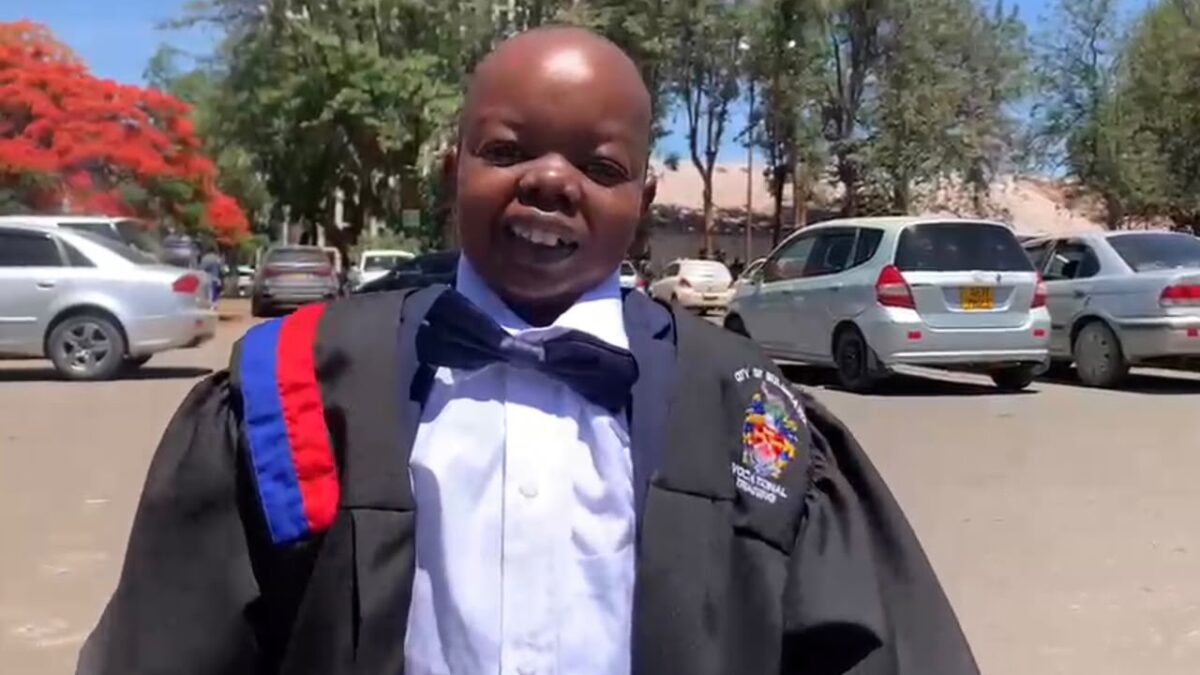
A BROKEN cellphone can leave its owner disconnected from the world, but for Mbongeni Ncube, fixing such devices could become a source of livelihood and a pathway to economic independence.
Living with dwarfism has not deterred the young man from pursuing his ambitions. Armed with a qualification in digital and cellphone repairs, he is now looking to turn his technical skills into a career.
Ncube was among 542 young people who graduated from Bulawayo’s vocational training centres on Friday. His achievement carried a particular message about the importance of making skills development accessible to people with disabilities.
For him, the qualification represents more than the completion of a training programme. It is an opportunity to build a livelihood in a world increasingly dependent on mobile technology.
“I am now better equipped to venture into a field that continues to grow alongside the increasing dependence on mobile technology.
“From malfunctioning smartphones and damaged charging ports to software-related problems and other technical faults, mobile phone repairs can play an important service in communities where these devices are central to communication, business and everyday life,” said Ncube.
He said the qualification had given him practical skills that could be turned into a sustainable source of income.
Ncube’s achievement reflects the potential of vocational education to open economic opportunities for young people who may face additional barriers when accessing education, training and employment.
It also challenges perceptions that disability should limit an individual’s ability to acquire technical skills, pursue a career or contribute to society.
The 542 graduates completed training in various disciplines, gaining practical competencies they can use to seek employment, establish businesses and provide services within their communities.
Addressing the graduates, Bulawayo City Council (BCC) director of housing and community services, Mr Dictor Khumalo, challenged them to move beyond celebrating their certificates and put their skills to productive use.
He said young people had a responsibility to establish businesses, create employment and contribute to economic development.
“Youth empowerment should go beyond acquiring certificates. We want to see young people putting their skills into practice, establishing businesses, creating employment for others and contributing
meaningfully to the development of our economy,” said Khumalo.
“The youth must take centre stage in promoting and developing the economy. They have the energy, creativity and potential to transform their communities, and the skills they have acquired should be the foundation upon which they build their futures.”
Mr Khumalo urged the graduates to embrace innovation, hard work and entrepreneurship, noting that vocational training should provide a pathway to economic independence rather than simply another qualification.
His remarks come amid limited formal employment opportunities, which have increased the importance of practical skills in helping young people explore self-employment and other income-generating activities.
Graduates equipped with skills in technical repairs, manufacturing and specialised services can use their training to establish small businesses and, potentially, create employment for others.
However, for young people with disabilities, access to training is only part of the journey.
Supportive learning environments, appropriate facilities and fair opportunities in the labour market are equally important in ensuring that qualifications translate into meaningful economic participation.
For the young cellphone repair technician, the next challenge is to put his newly acquired skills to work, demonstrating that opportunity, rather than physical stature, should determine how far a person can go in life.