Chronicle Editor
WE are now well into the calving season for most smallholder communal livestock farmers. These are the farmers who use uncontrolled seasonal breeding systems. A system where the cows run with the bull throughout the year but will naturally mate and breed during the rainy season because of the body condition of the animals then.
Most animals from the communal farming system lose condition and remain wasted for most of the year and only to pick up condition during the rainy season after the improvement of the vegetation. These cows or heifers will then start circling and as a result get serviced anytime between December and February.
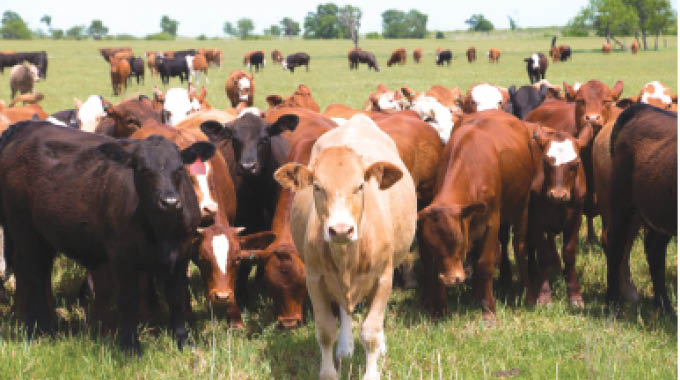
These are the cows or heifers which then begin to drop calves from October into November. Our submission this week is to relook at the challenge which at times comes with the happy moment of cows dropping calves. Farmers will know that the season of dropping calves is the happiest time for the livestock farmer, much happier than even the time of selling those animals.
In fact, the selling time despite the fact that, it is the time when you redeem the monetary value of your investment, it can be the most stressful time when you get short changed by the buyers. This is a separate and very emotional subject which we have discussed before, in an article which understandably became the most widely circulated and most viral submission in my 10 years of contributing to this column!
Our submission this week is on dystocia and how to manage it so that your happy moment as a livestock farmer does not metamorphose into a terrible sad story within a few hours. Dystocia refers to difficult birth which happens to your cows or heifers. Your cow will naturally push the calf out and do all the requisite midwife processes on its own without the need for assistance. However, it does happen that for one reason or another your cow then fails to push out the calf and some external assistance is required.
This is what we are discussing today. Literature will tell you that 11 percent of heifers and about four percent of cows will need some form of assistance during calving. This confirms that heifers are more likely to experience dystocia than cows and the reason is simple. Cows have given birth before and therefore the birth canal is open while heifers will be giving birth for the first time.
It is important also to mention that most of the dystocia cases can be addressed with timely assistance. Dystocia happens for a number of reasons which include poor presentation of the calf, weak cow due to its poor body condition and the too big a calf as a result of mismatch between the bull and the cow/heifer.
However, the most frequent cause is that of poor presentation of the calf during calving down. The common presentation of the calf during birth, front legs out first with the head positioned on top of the legs. The calf can also in some cases present from the rear and it will still come out if the legs go out first.
Any other presentation other than these will cause a difficult birth which needs assistance. It is my advice therefore to farmers to closely monitor cows/heifers that have gone into labour so that you see if there are some that need to be assisted. Typically, if your cow/heifer takes more than an hour with only the calf feet appearing and no progress in delivery, you should begin to get worried and be ready to seek assistance.
Timely assistance from those trained and experienced to handle such cases, is important and it can make the difference between losing your calf and the dam. When assistance is rendered when the cow still has the strength to push the calf out, the cow will do all the work- once the presentation of the calf is corrected. However, when the assistance is rendered after several hours of labour for the cow, it will be too exhausted to push hence you will need to pull out the calf.
This is a process which is normally done by trained people from the department of veterinary service, but in communities you will get some farmers who probably have worked in livestock farming environments before and they have attained a lot of experience is assisting dystocia cases. These can also be called to help, because most of the times veterinary offices are too far, and inadequately resourced to come to your farm.
Some of them can also be just lazy and indifferent to come and help, while others may not be trained enough themselves to be able to assist a dystocia case. Just last week a distressed farmer from Figtree called me to express his disappointment that he had to instruct his stockman to kill the cow which had been in labour for 24 hours and the vet person not pitching up despite several calls for his/her help.
This was not was not verified with the vet department. However, imagine the pain of that farmer after waiting for nine months for the calf, you not only lose the calf but the mother as well because you could not get the assistance needed.
Finally, it may be important for livestock farmers to invest in getting your most loyal employee to get trained on how to assist a dystocia case, so that you get the help you need on time.
I know that our farm staff is very mobile and such an investment can turn out to be wasted resources but if you have one that has been around long enough to demonstrate loyalty to the enterprise you can consider training that person.
Uyabonga umntaka MaKhumalo. Mhlupheki Dube is a livestock specialist and farmer. He writes in his own capacity. Feedback [email protected]/ cell 0772851275



 Online Reporter