Online Reporter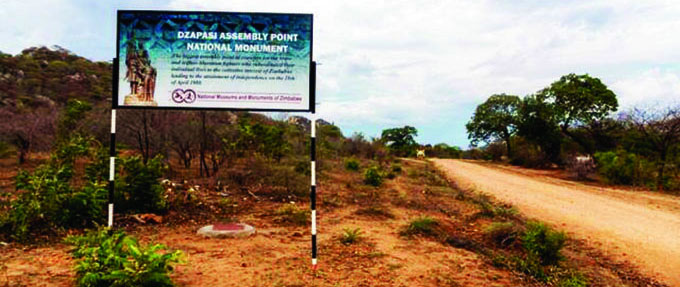
Lloyd Makonya
Correspondent
AS Zimbabwe prepares to commemorate Heroes Day 2025, the dusty plains of Buhera quietly echo with stories of sacrifice, unity, and the dawn of freedom. Some 60 kilometres south of Murambinda, the Dzapasi Assembly Point code-named Foxtrot stands, not just as a relic of the liberation war, but as a living symbol of national rebirth.
In the critical months leading up to Independence in 1980, Dzapasi transformed into one of the largest and most significant assembly points established under the terms of the Lancaster House ceasefire agreement.
Once a battlefield of resistance, it became a sanctuary where thousands of liberation fighters laid down arms and prepared for the transition to majority rule.
At its peak, Dzapasi held close to 6 000 freedom fighters, predominantly from the Zimbabwe African National Liberation Army (ZANLA), alongside elements of ZIPRA, making it the single largest of the 16 officially designated assembly points.
Commanded by the late Major-General Paradzai Zimondi, known by his nom-de-guerre name, Cde Tonderai Nyika, Dzapasi functioned as more than a logistical zone.
It was a place of transformation where the language of bullets gave way to the language of nationhood.
Trenches snaked across the ground, communal shelters emerged from the dust, and a stone-map of Zimbabwe painstakingly constructed by the fighters themselves symbolised both territorial memory and hope.
But the site’s greatest historical moment came in February 1980, in a scene that has since become legendary in Zimbabwe’s road to freedom.
In a deeply symbolic handover of power, the British Union Jack was ceremoniously lowered by Rhodesian officer, Bertie Barnard and the Zimbabwean flag was raised aloft by ZANLA commander, the late national hero, General Solomon Mujuru in what can only be described as a moment of profound triumph for the liberation movement.
It was the first time that the tricolour of Zimbabwe fluttered freely at a formal military base signalling that the long and bloody path to independence was at its end.
The National Museums and Monuments of Zimbabwe (NMMZ) has, in recent years, begun to breathe new life into Dzapasi.
A modern interpretive centre now anchors the site, offering historical insights to visitors and scholars alike.
A permanent exhibition is currently being installed, which will tell the story of Dzapasi and its role in the broader liberation struggle through artefacts, photographs, maps, and oral testimonies.
Most movingly, a dedicated mural now adorns the site, honouring the 1980 flag ceremony depicting Barnard and Mujuru at the pivotal moment of transition, a powerful image of former enemies unified in the birth of a nation.
The recent efforts by NMMZ, suggest a new dawn for heritage preservation in the country, one that blends memory with infrastructure, and history with development.
In the spirit of Vision 2030, such initiatives ensure that national pride is, not only rooted in economy and policy, but also in the soil where heroes once stood.
Declared a national monument in 2017, Dzapasi has become a focal point for Heroes Day and Independence commemorations.
Most recently in April last year, Vice President Kembo Mohadi presided over the independence flame-lighting ceremony, paying tribute to the fighters who converged at Dzapasi in 1980 and to those who never made it home.
For Zimbabwe, Heroes Day is, not just a day of remembrance, it is a pilgrimage to places like Dzapasi.
It is where the promise of Uhuru first became tangible. It is where silence replaced gunfire, where comradeship replaced command, and where the dream of a free Zimbabwe rose, flag first into the future.
As the nation stands on the shoulders of its heroes this August, may Dzapasi remind us that no struggle is forgotten, no sacrifice is wasted, and no flag flies without a story behind it.