Online Reporter
Rumbidzayi Zinyuke
Senior Health Reporter
When Ms Joice Chinofura finally held her newborn son in 2018 after 15 years of trying to conceive, she believed her long journey of heartbreak had come to an end.
Instead, another difficult chapter was about to begin.
Craig was born prematurely and had to be placed on oxygen immediately after birth. He lost weight and remained in hospital for several weeks before doctors allowed him to go home.
But as Craig was growing, his mother began noticing that he was not developing like other babies. His body was weak and he struggled to reach the milestones expected for his age.
Trusting her instincts, Ms Chinofura took him back to Sally Mugabe Central Hospital, where doctors delivered the news that would change her family’s life forever.
Craig had cerebral palsy.
“I was completely devastated because this was my second child with a disability. My eldest son, who is now 23 years old, was born deaf. Craig came after 15 years of trying to have another child, so when doctors told me he had cerebral palsy, I felt as though God had abandoned me. I cried every day, wondering why this had happened to my family.
“Things became even harder when my husband blamed me, saying disabilities did not exist in his family and that this must have come from my side. He eventually left us. At one point, I even started believing people who said it was witchcraft because I could not understand how I could have two children with disabilities. Losing my marriage while trying to care for a baby who needed constant attention was one of the most painful experiences of my life,” she said.
Unable to work because Craig required round-the-clock care, life became increasingly difficult until her sister and brother-in-law opened their home to the young mother and her son.
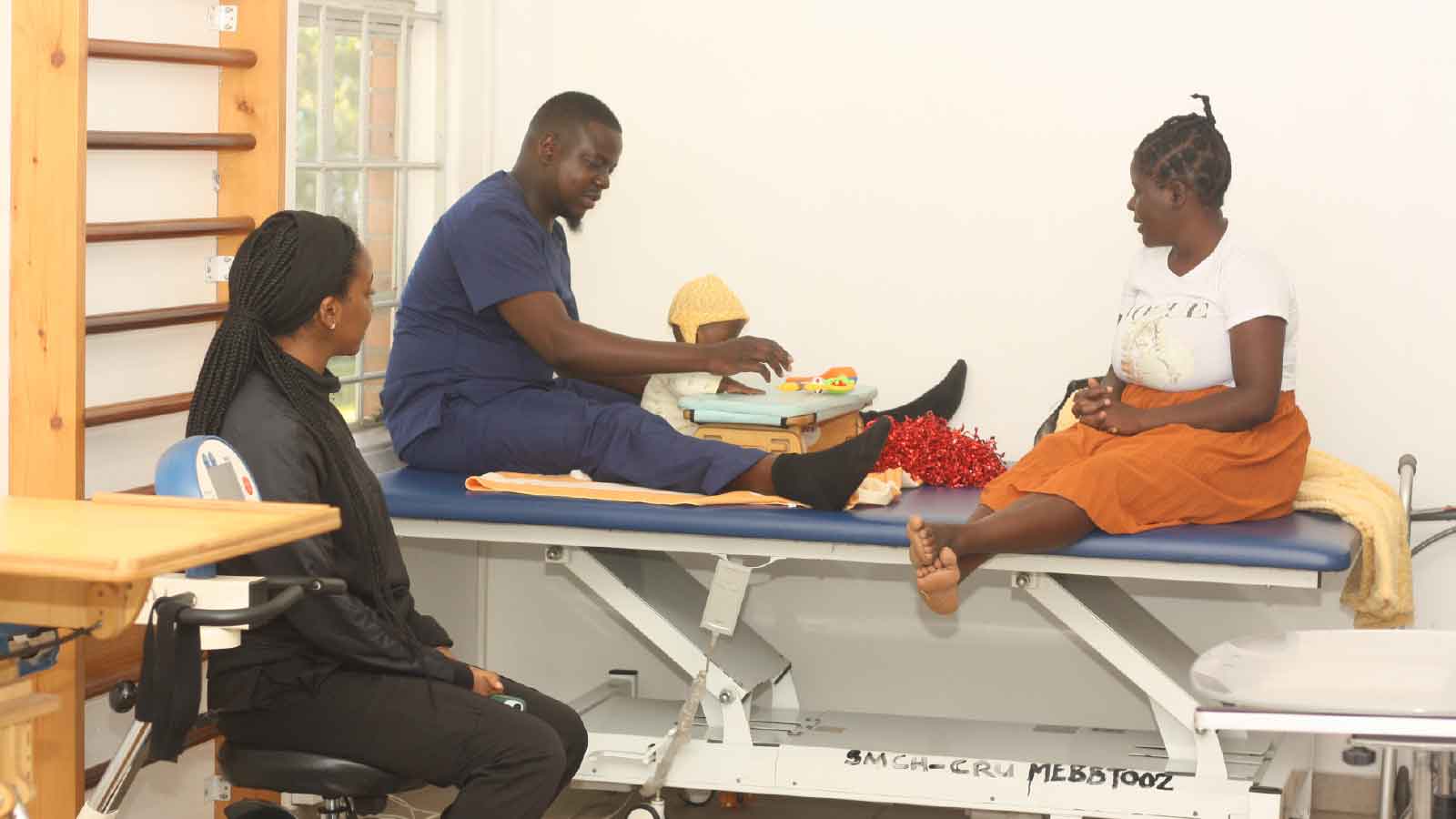
Hope finally came in 2019 when Craig was enrolled for rehabilitation at Sally Mugabe Central Hospital.
“We started attending rehabilitation regularly and little by little, I began seeing changes. First, he learned to sit on his own, then he started crawling. Later, he stood up, took his first steps and eventually learned to talk.
“Every small achievement felt like a miracle because doctors and therapists encouraged us never to give up. Today, Craig is eight years old. He walks, talks and even plays soccer at school. Anyone who meets him would never know he was once diagnosed with cerebral palsy unless I tell them,” she said.
“That is why I always encourage other mothers not to lose hope. Love your child, seek rehabilitation as early as possible and connect with other parents because sharing our experiences makes the burden much lighter.”
Mrs Chinofura’s story mirrors that of thousands of families across Zimbabwe raising children with cerebral palsy, the most common physical disability affecting children worldwide.
According to international estimates, cerebral palsy affects between one and four children in every 1 000 live births, translating to more than 17 million people living with the condition globally.
Every year, thousands of children are newly diagnosed, with many cases occurring in low- and middle-income countries where access to specialised rehabilitation services remains limited.
Although Zimbabwe does not yet have comprehensive national statistics on cerebral palsy, health experts say the burden is significant, with referral hospitals receiving hundreds of children requiring rehabilitation each year.
Improved survival of premature babies, coupled with better diagnosis, has also contributed to more children being identified and enrolled into rehabilitation programmes.
Cerebral palsy is not a disease, but a group of disorders affecting movement, posture and muscle coordination. It results from damage to the developing brain before, during or shortly after birth.
The condition is permanent but not progressive, meaning the brain injury does not worsen over time. However, without early intervention, children may develop complications such as muscle stiffness, joint deformities and difficulty performing everyday activities.
Medical experts say several factors increase the risk of cerebral palsy.
Premature birth remains one of the leading risk factors because the brains of premature babies are still developing and are more vulnerable to injury.
Low birth weight, multiple pregnancies such as twins or triplets, infections during pregnancy, prolonged labour leading to lack of oxygen, severe newborn jaundice, meningitis, head injuries and untreated neonatal infections can also contribute to brain damage that causes cerebral palsy.
Recognising this growing need, Zimbabwe has been steadily expanding specialised rehabilitation services across the country.
Sally Mugabe Central Hospital Chief Medical Officer Dr Hopewell Mungani said the country had made significant progress in strengthening rehabilitation services through partnerships that are bringing specialised equipment closer to communities.
“The burden of cerebral palsy in Zimbabwe remains considerable, and every year we continue receiving many children who require long-term rehabilitation services. What gives us hope is that we now have dedicated rehabilitation units staffed by therapists and doctors who specialise in managing these conditions. These services enable children to develop skills that help them participate more fully in everyday life and become active members of society,” he said.
Equally important, he said, is decentralisation.
“Families previously had to travel long distances to Harare for specialised rehabilitation, but today similar services are increasingly available in provincial hospitals including Chinhoyi, Mutare, Gweru and Masvingo. Bringing rehabilitation closer to communities reduces the burden on families and ensures children begin therapy much earlier, when the greatest improvements can be achieved,” Dr Mungani added.
The expansion has been supported through a partnership between the Government of Zimbabwe, the Korea International Cooperation Agency (KOICA) and the Africa Future Foundation, which recently donated specialised children’s rehabilitation equipment valued at more than US$170 000.
The equipment is being distributed to Sally Mugabe Central Hospital, Chinhoyi Provincial Hospital, Gweru Provincial Hospital, Masvingo Provincial Hospital, Mutare Provincial Hospital and Chitungwiza Central Hospital, building on earlier phases that also strengthened rehabilitation services at Bindura and Gwanda Provincial Hospitals.
Dr Mungani said the investment goes beyond purchasing equipment.
“Although we celebrate this milestone, our work is far from complete. Many provinces still require specialised rehabilitation services and equipment. Every child, regardless of where they are born, deserves the opportunity to walk, play, learn and participate fully in society. Expanding these services remains essential if we are to ensure that no child is left behind,” said Dr Mungani.
For mothers like Ms Chinofura, those investments mean families no longer have to face cerebral palsy alone.
Her son’s transformation stands as a powerful reminder that while cerebral palsy has no cure, timely rehabilitation, community support and acceptance can change the course of a child’s life, replacing despair with hope and opening doors that once seemed permanently closed.