Chronicle Editor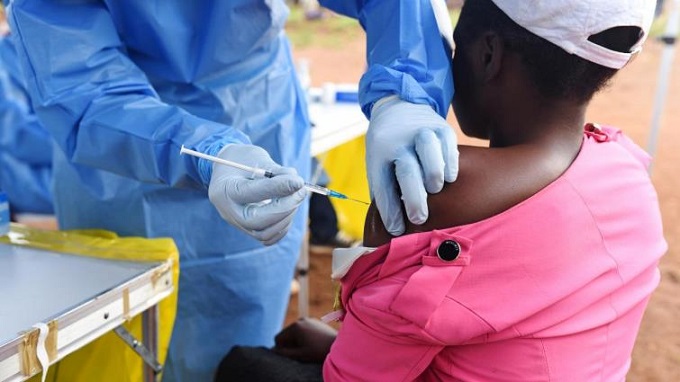
LONDON – Doubts are growing about whether the world’s emergency stockpile of 300 000 Ebola vaccine doses is enough to control future epidemics as the deadly disease moves out of rural forest areas into urban mega-cities.
Outbreak response experts at the World Health Organisation (WHO) and at the vaccines alliance GAVI are already talking to the leading Ebola vaccine manufacturer, Merck, to reassess just how much larger global stocks need to be.
“We’re actively engaged with the World Health Organization and with groups like GAVI, the U.S. government and others to try to understand what will be an appropriate sized stockpile in the future,” Merck’s head of vaccines clinical research, Beth-Ann Coller, said in a telephone interview.
Supply of the Merck shot, which is currently being used to fight a large and spreading outbreak of Ebola in eastern Democratic Republic of Congo, is not a problem right now, according to the WHO’s deputy director-general of emergency preparedness and response, Peter Salama. But the nature of Ebola outbreaks is changing, he told Reuters. As the virus finds its way out of rural villages into populous urban settings, plans for how to contain it in future must change too.
“What I’m concerned about is the medium- to long-term stockpile. The figure of 300 000 was very much based on previous Ebola outbreaks where you never really had huge numbers of cases because they were in isolated, rural, populations. But now, we increasingly see Ebola in mega-cities and towns. We need to view it now as an urban disease as well as a rural one – and therefore one requiring a different order of magnitude of preparations, including vaccines,” he said.
Merck’s experimental Ebola vaccine, known as rVSV-ZEBOV, is the furthest ahead in development. Another potential vaccine being developed by Johnson & Johnson could also eventually become part of the stockpile, global health officials say.
Congo’s two Ebola outbreaks this year illustrate the shifting nature of the threat. The first was relatively contained, infecting up to 54 people and killing 33 of them in an area of DRC’s Equateur Province that is remote and sparsely populated.
Several of the eight outbreaks before this one in Congo – including one in 2014 and another in 2017 both also in Equateur – were also quickly contained and limited in size. But this year’s second outbreak in Congo – and the country’s tenth since the virus was first identified there in 1976 – is concentrated not in rural villages but in urban areas of the North Kivu and Ituri provinces. – Reuters



 derick.khumalo