Chronicle Editor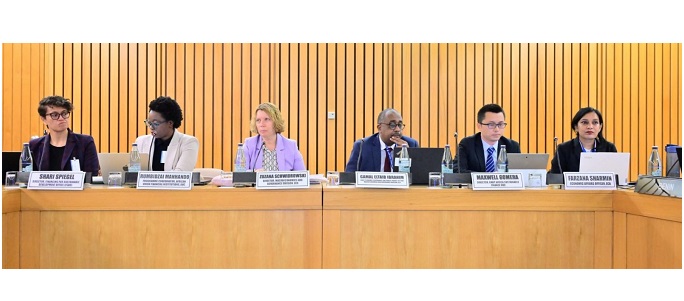
Leonard Ncube
UNITED Nations Economic Commission for Africa (ECA) member states are strategising on how to mobilise and utilise financial resources towards achieving the Sustainable Development Goals (SDGs) in Africa.
ECA is made up of 54 Member States, Zimbabwe included and plays a dual role as a regional arm of the UN and as a key component of the African institutional landscape.
It was established by the Economic and Social Council (ECOSOC) of the UN in 1958 as one of the UN’s five regional commissions, with a mandate to promote the economic and social development of member states, foster intraregional integration and promote international cooperation for Africa’s development.
In a significant step toward bolstering public finance systems, experts and stakeholders from across Africa gathered for an Integrated National Financing Frameworks workshop in Addis Ababa to strategise on mobilising and utilising financial resources to achieve SDGs.
In her opening remarks, the Director of the Macroeconomics and Governance Division at the ECA Ms Zuzana Schwidsowski called for immediate action.
“We are entering an era of poly-crises, characterised by multiple shocks, including pandemics, climate change, and economic and financial stresses.”
“These challenges jeopardize our progress in sustainable development. The need to raise financial resources to accelerate SDG implementation is more urgent now given that we are less than seven years from attaining Agenda 2030,” she said.
Ms Schwidsowski noted a severe financing gap estimated to range from US$200 billion to US$1.3 trillion annually, as detailed in the ECA’s Economic Report on Africa 2020.
She said there is a need for domestic resource mobilisation and the role of INFFs in integrating national plans with available resources.
The two-day workshop aims to strengthen the capacities of officials and stakeholders to develop effective financing strategies, promote knowledge-sharing, and generate regional dialogue on public finance trends and issues affecting INFF implementation.
Ms Schwidsowski said it creates space for knowledge sharing and learning as well as deepen partnerships to tap into the full potential of domestic resource mobilization to achieve Agenda 2030 and the AU’s Agenda 2063.
Ms Shari Spiegel, the director of the Financing for Sustainable Development Office at UNDESA, emphasized the critical role of domestic public finance.
“Robust and resilient fiscal systems can contribute to alleviating poverty, reducing inequalities, and supporting economic growth. However, significant challenges remain, including unmet tax potential and the impacts of globalization and digitalization.”
Programme Coordinator for the African Union Financial Institutions, Ms Rumbidzai Manhando reiterated the AUC’s dedication to strengthening both public and private financing for sustainable development.
“INFFs offer a comprehensive approach to mobilizing and utilizing financial resources. By integrating public and private financing, we can develop cohesive strategies that align with our development goals,” she said.
Ms Manhando said work is underway to launch the Africa Virtual Investment Platform (AVIP) to promote inclusive growth and sustainable development.


 Online Reporter