admin
admin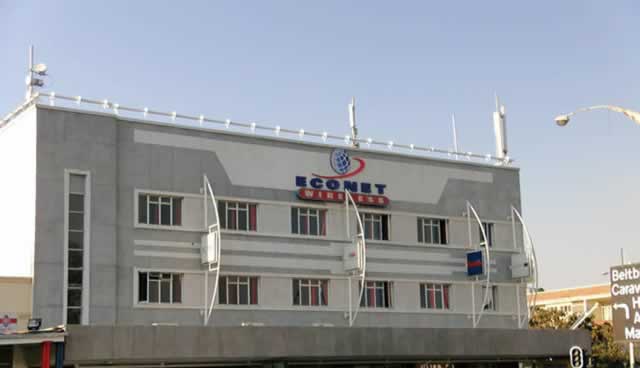
Econet Wireless Zimbabwe has set itself on a collision course with the Zimbabwe Stock Exchange after it said its extra-ordinary general meeting set for this morning will proceed as planned.
In a statement, Econet said shareholders should disregard any notices that are not coming from the company. This comes as the ZSE chairman Caroline Sandura had directed Econet to defer its EGM, where it seeks to get approval for a $130 million rights issue, until it had addressed certain technical issues relating to the rights issue had been clarified to the satisfaction of the ZSE board.
In another statement released yesterday Econet reiterated that the EGM will go ahead as the initial approval made by the “Committee of the Zimbabwe Stock Exchange, a Competent Authority” had not been withdrawn.
It is not clear which Committee Econet was referring to, but the statement goes on to say that the group would not consider the notice by the board “led by the company secretary of TelOne (Caroline Sandura) as it did not have jurisdiction over the matter. This is despite the fact that the board has oversight over the operations at ZSE.
Reports say that the initial approval was allegedly done unprocedurally by chief executive Alban Chirume who disregarded concerns raised by the Listings Committee chaired by Bart Mswaka. This in turn has thrown the stock market into disarray and has exposed the disconnect between the board and its secretariat while at the same time caused a drop in Econet’s share price to just below 18c from 30c when the abridged circular was published.
The ZSE had raised eight issues that needed clarification by the Econet transaction.
However, Econet in their initial statement, addressed only one concern that had been raised and said in the circumstances, the EGM shall proceed as published in the circular
Econet said it shall open a Rights Offer account with a local receiving bank, into which resident Zimbabweans shall deposit the proceeds of the rights offer using cash, bond notes, or electronic money in accordance with the published timetable.
The proceeds, shall be deposited into a Steward Bank account. In exchange for the amount paid by local shareholders, the underwrite shall pay the equivalent of the amount contributed to the international receiving bank (Afreximbank).
“Those resident shareholders who follow their rights by paying into the designated local account shall be deemed as having discharged their obligations as set out in the rights offer circular.”
Econet added that in the event any resident shareholder sells its rights offer shares to non-residents, the foreign currency generated shall be remitted to the Reserve Bank of Zimbabwe and allocated towards the remittance of the money due to the underwriter.
The RBZ shall agree with the company on a schedule for the remittance of the money held on behalf of the underwrite over the period during which the foreign debt was repayable and in equal instalments.
This was one of the issues that had been raised and could have come out of the meeting held on Monday.
The ZSE board met the Securities and Exchange Commission of Zimbabwe on Wednesday, where it raised several additional issues. Some of the concerns include the removal of proxy voting restrictions after Econet had said that proxy forms of institutional investors must be accompanied by a resolution signed by the investor’s board. It was felt that the requirement is impractical and costly in the time which had been provided.
ZSE also wants the debentures to trade freely either over-the-counter or on a licenced exchange and not subject to approval by a board of trustees appointed by Econet. The board also wants shareholders to be furnished with the terms of the underwriting agreement in order to determine whether all options to extinguish the debt are explored.
Econet was also called on to give justification and benefit to shareholders why the entire amount is being raised from shareholders when only $37 million of that amount is due in 2017.
Concerns were also raised on the transferability of shares across Ordinary and Class A shares and the need to give a breakdown on how many Class A shares and ordinary shares, the top shareholders hold. — Business Reporter/ Wires



 Online Reporter