Online Reporter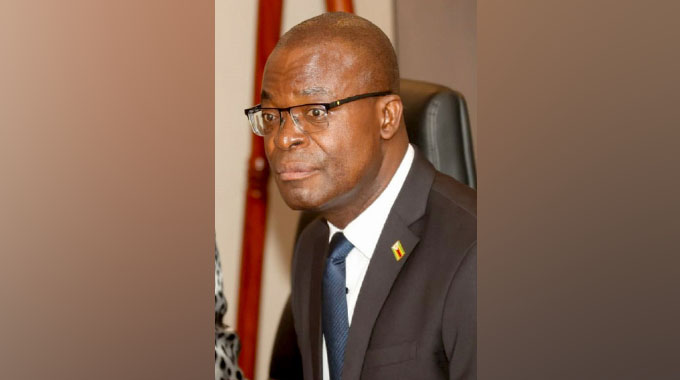
Gibson Mhaka, [email protected]
ZIMBABWE is using foreign policy as a central pillar of its economic strategy, prioritising diplomacy, peace and trade to attract investment and drive industrial growth, Foreign Affairs and International Trade Minister Professor Amon Murwira has said.
Speaking at the Zimbabwe International Trade Fair (ZITF) Diplomats Forum 2026, held on the sidelines of the just ended ZITF, Prof Murwira said the country’s international engagement is firmly anchored in constitutional principles that place peace, production and trade at the centre of national development.
Since assuming office in 2017, President Mnangagwa has intensified efforts to re-engage the international community, repositioning Zimbabwe’s foreign relations to support economic growth and sustainable development.
The engagement and re-engagement agenda was designed to establish new partnerships, rebuild strained relationships and strengthen existing ties, with a particular focus on attracting foreign direct investment, mobilising the diaspora and expanding foreign trade.
At the forum held in association with the Ministry of Foreign Affairs and International Trade, Prof Murwira said Zimbabwe’s foreign policy doctrine of being a “friend to all and an enemy to none” is not rhetorical, but grounded in the Constitution.
He said diplomacy, rather than confrontation, underpins Zimbabwe’s approach to building what he described as “connected economies”.
“If a country is an economy and a society, it must first be peaceful. Secondly, it must be productive. Thirdly, it must trade peacefully with others. That is the foundation of a prosperous nation,” he said.
Prof Murwira said the Constitution mandates peaceful coexistence, respect for international law and the resolution of disputes through dialogue, principles that guide Zimbabwe’s engagement with the world.
“Our policy is very clear — we are a friend to all and an enemy to none. That is not a slogan, it is a constitutional position. We do not pursue conflict; we pursue co-operation,” he said.
He added that peace is the foundation upon which economic activity is built, noting that Zimbabwe’s “Open for Business” narrative is supported by a deliberate non-adversarial foreign policy.
“You cannot have connected economies with closed doors. There must be openness, there must be a handshake. Trade is the basis for peace — if you do not trade, the alternative is conflict, and we reject that,” he said.
Prof Murwira said Zimbabwe is actively working to dismantle trade barriers, particularly within Africa, as part of efforts to deepen integration and spur industrial growth under the African Continental Free Trade Area (AfCFTA).
“Every diplomatic effort we are making, particularly under the African Continental Free Trade Area, is meant to remove both tariff and non-tariff barriers. We are saying, let us trade, let us produce and let us prosper together,” he said.
He said the country is repositioning itself from reliance on primary commodity exports towards value addition and beneficiation in order to build globally competitive industries.
“We can no longer export raw materials in their basic form. We are promoting beneficiation and value addition so that our industries become globally competitive and contribute meaningfully to economic growth,” he said.
Prof Murwira said Zimbabwe’s foreign policy also supports the exchange of knowledge, culture and innovation, the promotion of tourism, and the protection of Zimbabwean citizens abroad.
“These pillars are all built on peace. We are not interested in the drums of war. When there is conflict, we encourage dialogue because war is not a game, it is destructive and must be avoided at all costs,” he said.
He added that Zimbabwe’s engagement strategy is guided by sovereignty, mutual respect and shared prosperity rather than dependency.
“We are moving away from relationships based on dependency. The future is about partnerships, what you offer us, what can we offer you, and what we can achieve together,” said Prof Murwira.
Zimbabwe’s participation in regional and global groupings such as Sadc, Comesa and the AfCFTA, he said, reflects its commitment to building connected economies and competitive industries.
“The theme of this year’s ZITF, ‘Connected Economies, Competitive Industries,’ resonates deeply with our constitutional values. There can be no competitiveness without stability, and no connectivity without peace,” he said.
Prof Murwira said the country’s foreign policy aims to create a predictable and stable international posture that supports long term development.
“Peace is not weakness; it is the centre of human progress. Our goal is to ensure a tranquil environment that allows our people to produce, trade and live fulfilling lives,” he said.
He reaffirmed Zimbabwe’s commitment to diplomacy as the primary means of resolving global challenges.
“We believe in the supremacy of diplomacy and in building a world anchored on justice and peace. That is the signal Zimbabwe is sending to the international community, a clear, consistent and principled approach to engagement,” said Prof Murwira.