Online Reporter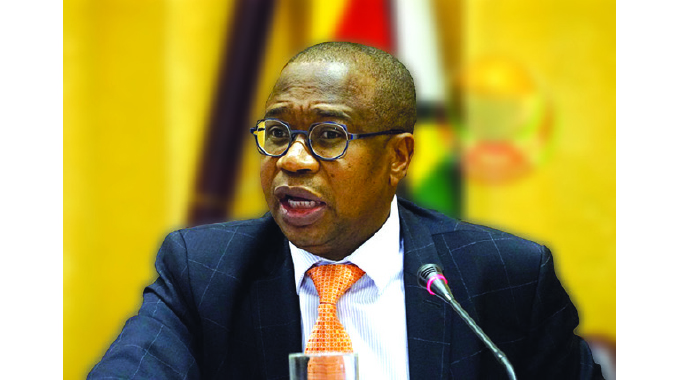
Nqobile Bhebhe
Zimpapers Business Hub
ECONOMISTS say President Mnangagwa’s call for Zimbabweans to view Vision 2030 as a launchpad to a higher-income, globally competitive economy, and not an end point, is a timely and crucial reminder of the mindset required to avoid the risks of the “middle-income trap”.
They believe that, while reaching upper middle-income status by 2030 would be a significant milestone, remaining there would leave Zimbabwe vulnerable to commodity price fluctuations, climate change effects and stagnation often experienced by economies stuck between middle- and high-income levels.
According to the economists, Zimbabwe needs to see beyond Vision 2030 targets to ensure enduring competitiveness, generate sustainable quality jobs and position Zimbabwe as a prominent industrial hub in Africa.
Launched in 2018, Vision 2030 seeks to transform Zimbabwe into an empowered upper middle-income economy by the end of the decade.
Anchored in the National Development Strategy 1 (NDS1) covering 2021-2025, it prioritises infrastructure development, industrialisation, human capital growth and improved governance.
Under World Bank classification, upper middle-income economies have per capita incomes of between US$4 046 and US$12 535. Surpassing this threshold into high-income status above US$12 535 per capita demands sustained innovation, economic diversification and globally competitive industries. Addressing thousands at the National Heroes Acre in Harare on Heroes Day last week, the President was unequivocal: “We must boldly decide now that we will not stop at upper middle-income status or Vision 2030.
“Let us break the ceiling and see beyond the horizon.
“As heroes and heroines of the current era, let us open up innovative frontiers and scale unimaginable heights.”
He added: “The national gross domestic product (GDP) is now pegged at US$45,7 billion, rising from US$16 billion in 2018. The current domestic demand growth is pleasing, while the projected 2025 economic growth of six percent is well within reach.
“The capacity of the national fiscus to resource key priority areas such as agriculture, health, education and social protection, as well as infrastructure rehabilitation and development, continues to be enhanced.”
Economist Mr Tinashe Dube said the message was a timely warning against the risks of the “middle-income trap”.
“Vision 2030 positions Zimbabwe for strong economic transformation, but breaking the ceiling means scaling up productivity in agriculture, mining and manufacturing, while rapidly building a competitive digital economy,” he said.
“As a country with vast untapped and well-sought-after natural resources, we need to fully exploit the resources to catapult us beyond Vision 2030 successes to avoid the middle-income trap.”
Mr Dube said Zimbabwe’s lithium, platinum and gold must be processed locally into higher-value exports, creating skilled jobs and stronger foreign currency inflows. Another economist, Ms Alice Chikonzi, underscored the role of human capital.
“To be a high-income economy, we need to invest heavily in education, research and innovation.
“Universities must partner with industry to solve challenges in agriculture, energy and manufacturing, the same way South Korea and Singapore overcame middle-income traps,” she said.
She called for expanded support for start-ups and technology hubs in information and communication technology, renewable energy and advanced manufacturing. Industrial analyst Mr Amon Dube cited the African Continental Free Trade Area (AfCFTA) as a gateway to growth. He said the country could tap into it for further growth.
“The AfCFTA offers Zimbabwe a consumer market of 1,3 billion people. If we position ourselves as a competitive manufacturer and service provider in the region, we will be on the path to high-income status,” he said.
Business strategist Mr Busani Malaba said the leap beyond Vision 2030 requires both investment and mindset change.
“We must have the courage to dream bigger, work harder and refuse to be limited by targets we can surpass,” he said.
He called for aggressive beneficiation of lithium, platinum, gold and chrome; investment in mineral-based industries such as battery manufacturing and jewellery production; and expansion of mineral exploration.
On agriculture, Mr Malaba said irrigation must be rapidly expanded to guarantee year-round production, coupled with growth in agro-processing industries, from dairy and grain milling to horticulture and textiles.
“The country needs to expand agro-processing industries in dairy, grain milling, horticulture and cotton textiles,” he said.
There is need to improve access to modern farming technology, financing and markets, he added.
“Let’s speed up modernising road and port infrastructure to reduce logistics bottlenecks, expand broadband internet coverage to enable a digital economy.”
He said the country needs to increase renewable energy generation from solar, hydro and wind sources to reduce costs and improve supply stability.
Mr Malaba said maintaining policy consistency and currency stability to boost investor confidence can also play a huge role.
“Let’s depend on capital markets to mobilise local savings for long-term investments and promote public-private partnerships for infrastructure and social services,” he said.
To that end, the Government has already signalled that financing for Vision 2030 will rely heavily on domestic resource mobilisation.
In the 2026 Budget Strategy Paper, Finance, Economic Development and Investment Promotion Minister Professor Mthuli Ncube said:
“The realisation of a prosperous and empowered upper middle-income society by 2030 requires an effective domestic revenue mobilisation strategy anchored in the principles of equity, fairness, efficiency and transparency.”
The 2026 plan will focus on enhancing tax administration, tightening anti-smuggling measures, aligning tax contributions of key sectors with their GDP share and leveraging technology to curb tax evasion and corruption.
Zimbabwe’s sovereign debt stands at about US$21 billion, including US$3,2 billion owed to international financial institutions.
Since 2022, the Government has been aggressively pursuing a debt clearance strategy built on three pillars — economic stabilisation and growth; governance reforms; and social development.
The debt resolution framework agreed with foreign creditors is seen as critical to unlocking concessional financing for infrastructure, industry and innovation, the critical tools needed to push beyond Vision 2030.
As the National Development Strategy 2 (NDS2) economic blueprint is being finalised by Treasury, the Confederation of Zimbabwe Industries (CZI), in its latest monthly newsletter, called on stakeholders to remain focused on putting in place the right fundamentals.
“Industrialisation is necessary for sustainable economic growth and complexity/sophistication must be the goal if we are to achieve economic structural transformation,” CZI said.
“This puts industrialisation at the very core of NDS2 and Vision 2030; it cannot be achieved without industrial transformation. A clear, coordinated approach will be required to deliver the kind of structural transformation Zimbabwe needs by 2030.”
CZI further said macroeconomic stability and competitiveness are prerequisites.
“It enables long-term planning, investment and credit growth; ease of doing business is necessary to support industrial development; processes must be efficient, and the regulatory environment must be predictable,” it said.
“Competitiveness is a prerequisite. A reduction of the regulatory and tax burden makes for a profitable environment by reducing the cost of doing business; intellectual property protection is essential. It encourages innovation and secures investment in research and production.”