admin
admin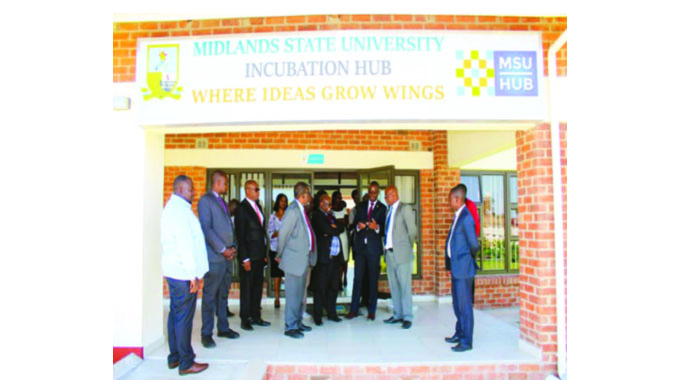
Sifelani Tsiko
Innovations Editor
Birds’ invasion on sorghum, millet and wheat cultivated fields have been very disastrous in most farming areas in the country resulting in crop losses running into thousands of dollars.
Many farmers have few options to manage these birds with traditional farmers and their children running up the field shouting, throwing stones and sometimes beating drums to scare birds away.
All these strategies and many other methods employed to address this issue are energy consuming and expensive and sometimes not effective at all.
Now, things could change for the better thanks to Justice Mahlaba-Dube, a Midlands University BSc Computer Science degree student who has come up with a new device that harnesses new and emerging technologies to address this problem in an environmental and sustainable manner.
He developed a technology-based Human-Wildlife Interactive Smart AgriTech System (ScarePro) that autonomously detects and deters avian birds away from crop fields, regardless of size of the field.
The use of his innovation could help the country’s agriculture to move toward technical innovations that allow farmers to work faster and more efficiently.
In addition, the digitalisation of agriculture in Zimbabwe can be a game-changer in supporting and accelerating the farming sector.
Justice’s innovative technology under incubation at the MSU Innovation Hub, makes use of high frequency (20kHz) ultrasonic sounds and distress calls that are triggered by the cries of the invading species detected using highly receptive audio sensors.
The ScarePro is an Artificial Intelligent (AI) machine that continuously learns from its environment. A solar module with a powerful Li-ion battery storage powers the system making it energy autonomous.
“The alarm hardware and solar modules are supported on a firmly anchored pole at least 2m above the ground level. This makes the system available around the clock to respond to the slightest invasion. One ScarePro unit can cost-effectively control a minimum of 1 acre and maximum of 1.5 hectares field area,” Justice said.
“The minimum labour requirements for the farmer compared to physical manning and use of nets free up farmers for other productive activities. Moreover, the system works throughout the day and is not prone to fatigue.
“The system is more eco-friendly and sustainable compared to chemical methods as it does not kill the avian birds but merely scare the birds away; farmers could then use nets just to catch some of the avian birds for their own subsistence. The system could also be integrated with other eco-friendly methods such as mist nets.”
Zimbabwe has joined other African countries that are now using drone technology to scare away birds, helping smallholder farmers reap some benefits.
The Department of Migratory Pests and Biosecurity Control introduced the use of drones to control quelea breeding colonies in Muzarabani, Gonarezhou, Deka and Mbire and help manage the tiny species that flock in huge numbers attacking vast tracts of grain crop fields.
Quelea birds are the largest contributor to heavy wheat losses annually estimated at over 95 percent if uncontrolled.
The birds have been a threat to summer subsistence small grains and commercial winter cereal cropping in Zimbabwe for years.
Each tiny bird can feed on four grams of wheat per day and experts say a million birds can result in losses exceeding 40 000 tonnes when the quelea birds invade fields in large flocks.
The red-billed quelea is a small weaver bird native to sub-Saharan Africa and renowned for its attacks on small-grain crops within Africa. It is the most numerous bird species in the world, with a peak post-breeding population estimated at 1,8 billion.
Nomadic super-colonies can grow to millions of birds, making quelea not only the most abundant bird in the world but also the most destructive to cereal grains, especially sorghum and millets as well as wheat, rice and barley.
Innovative bird deterrent solutions can help farmers save time and labour, cut down on the health risks associated with being in daily contact with chemicals on crops and microbes in crop fields.
The innovation by Justice answers to the call by the Government’s heritage-based Education 5.0 through the Ministry of Higher and Tertiary Education to focus on solutions that work for our people.
“The ScarePro system will contribute immensely to the mechanisation drive in agriculture while bringing harmony between humans and wildlife from which the fauna shall also be safeguarded,” the MSU innovator said.
“Indeed, the Midlands State University Hub is leading in coming up with innovative solutions that will directly answer Zimbabwean challenges; in this case, challenges farmers face in losing their crops, time and financial resources every season to the quelea birds invasions across most parts of the country.”
MSU Vice-Chancellor Prof Victor Muzvidziwa says his institution has intensified the implementation of education 5.0 as a way to come up with graduates who can come with innovative solutions to address the country’s pressing problems.
“MSU has undertaken an ambitious program review project. To that end, we have developed 273 Education 5.0 compliant new degree programs that are under review by the Zimbabwe Council for Higher Education.
“The University has reoriented itself towards research, innovation, and entrepreneurship. Our research efforts are poised to become more development-oriented. Like President Mnangagwa always says, Nyika inovakwa nevene vayo, brick by brick we shall be there,” Prof Muzvidziwa said.



 Online Reporter