peter
peter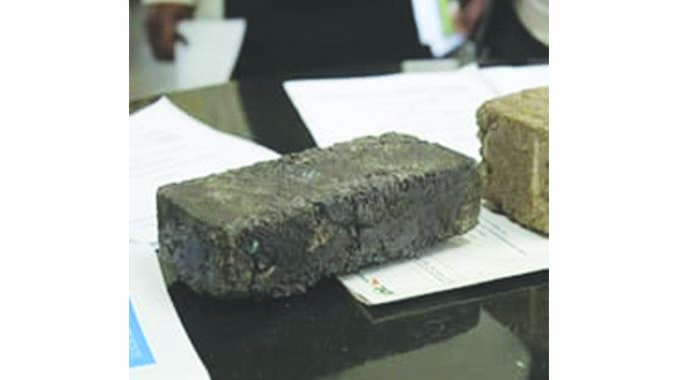
Sifelani Tsiko, Innovations Editor
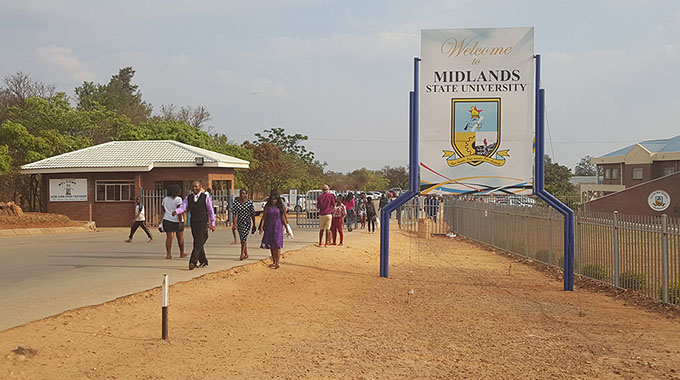
As Zimbabwe and most other countries across the world drown in plastic waste outpaced by society’s inability to manage it effectively, a Midlands State University student has found a sustainable way of turning plastic waste into bricks.
Ms Kellin Mangau, an MSU research and development innovator has come up with Lego Plasilica Bricks that are made using the industrial processes of shredding and melting of any type of plastic waste. Using her innovation model, she can recycle tonnes of plastic waste that plague most landfills in urban areas into eco-friendly bricks that are stronger, cheaper and lighter than concrete.
The creation of these plastic bricks can be used to build cheap and affordable houses, emergency houses, classrooms, mobile shelters and other structures.
“Plastic waste has value and we can make plastic bricks. Using this model, we can mitigate two major problems that include the housing deficit and the generation of plastic waste. We can make alternative building material for low-cost housing which is cheaper and affordable.”

Ms Mangau’s innovation uses shredded plastic mixed with sand which is then subjected to extreme heat to produce a sludge that can be moulded into different sized blocks. The plastic bricks are durable and much cheaper and can be moulded into beams, blocks, jambs and sills. The MSU innovator plans to commercialise her prototype and enter the lucrative housing market by designing a block that can replace or be used with mortar bricks to build cheaper and affordable houses.
“In the obtaining situation where cement has become an expensive commodity, one can now build a mansion without it.
“Plasilica Bricks are a unique type of bricks that are cheap and affordable as they are used to build houses, emergency houses, classrooms, mobile shelters and others.”
Ms Mangau is confident about addressing the country’s housing shortages.
“Given that the products have a high degree of elasticity (not brittle and less prone to spalling), it lends them useful as materials for the construction of temporary shelters that can be dismantled and re-assembled on need.
“This implies that these manufactured elements work well for self-homes, emergency housing solutions, shelter, classrooms, and any kind of project that can dignify informal settlements.
“The country will benefit from this innovation as homes will now be constructed much cheaper and it will create employment in Zimbabwe within the whole chain of the construction industry.”
Her prototype has been tested successfully and plans are afoot to build a model home using her plastic bricks. This innovation promotes a circular economy. Zimbabwe has embraced the circular economy in line with the African Union Agenda 2063, the Sustainable Development Goals (SDGs) and the commitments to reduce carbon emissions expressed in the Paris Climate Change Agreement.
The country’s business sector is keen to chart a path towards a green, sustainable, inclusive and circular economy to promote sustainable waste management and reduce the country’s carbon footprint. Plastic is fibrous in nature and bricks made from it are stronger and more durable than those made from concrete.
It is light in nature and makes transportation much cheaper. Zimbabwe and most other African countries are grappling with the proliferation of plastic pollution which has become an overwhelming problem.
By 2040, estimates indicate that as much as 710 million tons of solid plastic waste will clog up the earth’s ecosystem, in oceans, rivers and on land, according to a UN Global Plastics Outlook report.
Plastic waste pollution has doubled in the last decade and is predicted to triple by 2060. Only nine percent is recycled globally.
The world is producing twice as much plastic waste as two decades ago, with the bulk of it ending up in landfill, incinerated or leaking into the environment, and only nine percent successfully recycled, according to a new OECD report.
The selection and collection of plastic waste that can be shredded and fused into solid blocks using steam and compression could prove to be useful in reducing pollution and greenhouse gas emissions.
Zimbabwe fully supports the adoption of the resolution to end plastic pollution with an international legally binding instrument under a United Nations Environment Assembly framework.
Ms Mangau’s innovations could prove to be useful for the country’s business sector which is keen to chart a path towards a green, sustainable, inclusive and circular economy to promote sustainable waste management and reduce the country’s carbon footprint.
“The Lego brick novel model is a potential solution to provide decent housing with a good socio-economic impact including reduction of extreme poverty, mitigation of informal settlements and promotion of sustainable environmental conditions,” said Professor Grace Mugumbate, MSU Pro Vice Chancellor, Research, Innovation and Industrialisation.
“The innovation, coming from a student who studied Human Resources at undergraduate level, demonstrates that skills being imparted by the university are bearing fruits as evidenced by the solutions being provided, in this case, to the construction industry and the environment.”
Zimbabwe has adopted Education 5.0 which focuses more on problem-solving through innovation to accelerate the country’s industrialisation and modernisation thrust.
Education 5.0 is based on five major components that include teaching, research, community service, innovation and industrialisation.


 Online Reporter