dyton mupawaenda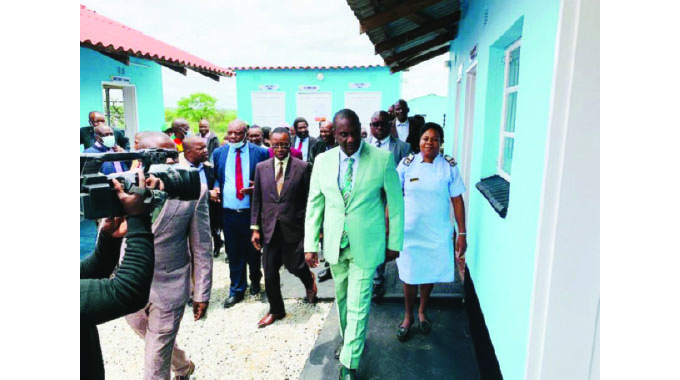
Herald Reporters
One of the milestones achieved by the Second Republic, led by President Mnangagwa, was the Devolution and Decentralisation Policy launched in 2020 to spell out the constitutional requirements and strategies for implementation of developmental projects across the country’s 10 provinces.
The Government has committed to the implementation of the programme through Treasury’s disbursement of $703 million allocated to 93 local authorities in the 2019 National Budget under intergovernmental transfers. Government has committed $2,93 billion to accelerate programme implementation in 2020, while $19,5 billion was allocated to local authorities in 2021, $42 billion in 2022 and $195,5 billion this year.
Budgetary allocations were supported by the Constitution Amendment (No.20) Act of 2013, which outlines devolution and decentralisation of powers and responsibilities from central government to lower structures of governance.
The funds were earmarked for capital projects that benefit citizens in the following service areas: schools and clinics, roads, plant and equipment, water, sewer and solid waste management, electricity, and any other capital activities that may be deemed necessary for service provision.
Zimbabwe has 93 local authorities made up of 32 urban and 61 rural councils. Urban councils are made up of five city councils, 11 municipalities, 13 towns, three councils and local boards.
The philosophy behind devolution
Devolution is driven by the philosophy to eliminate marginalisation by decentralising power to provincial and metropolitan councils.
In many areas countrywide, water and sanitation issues are being addressed, schools and medical facilities constructed. Also, road rehabilitation programmes are ongoing to complement existing Government programmes.
Local authorities are utilising the funds to implement their projects, which have gone a long way in taking development closer to communities.
Devolution has been in existence since 1980 when Zimbabwe got independence from colonial rule through activities by Government ministries such as Health, Home Affairs, Local Government and Education. It encourages citizens to partake in developmental programmes in their localities, and promotes good governance through transparency and accountability of resources.
Over the years, devolution saw responsibilities being delegated to communities at the lowest levels through government-owned entities in the electricity, water and telecommunications sectors.
The idea was also manifested in the creation of development committees at the local level in wards, villages, districts and provinces. These committees spearheaded the identification of projects and encouraged unity of purpose through cooperatives aimed at transforming livelihoods. They were a part of the post-independence reforms in the early 1980s meant to bring previously marginalised populations into the mainstream development matrix.
Devolution was exercised through local authorities in the form of urban councils and rural district councils established to provide services to a diverse citizenry in geographically defined and demarcated areas of jurisdiction.
Although crucial to development, these efforts did not bring the desired objectives of uplifting the people out of poverty. As a result, the Government had to insert a provision for devolution in the 2013 constitutional amendment in a bid to give a new approach to the devolution concept.
However, hesitancy appeared to impede the constitutional provision that defined the notion since its promulgation in 2013, until the coming in of the Second Republic in 2017, which accelerated it. This new provision changed the way devolution is being implemented, giving it more impetus and relevance to bring development to the doorsteps of communities.
The new approach to devolution has resulted in citizens spread across the country’s 10 provinces reaping benefits through eased accessibility to healthcare, education and transport services, among others.
Chirere Clinic: Devolution joy for Zvishavane folks
The up-to-the-minute Chirere Clinic in the Zvishavane District of the Midlands Province has eased life for thousands of citizens, who in the past travelled long distances to access healthcare services.
Funded through Government devolution funds, in partnership with other stakeholders, and built under Runde Rural District Council, the clinic has transformed health service delivery in the district. This bears testimony to the Second Republic’s commitment to improving access to quality primary healthcare services in rural areas in line with the National Development Strategy 1 (NDS 1).
The facility, whose construction started in June 2016, provides healthcare services to villagers in Wards 14 and 19, who previously were forced to travel long distances to Chenhunguru and Madzivadondo clinics in neighbouring Chivi District in Masvingo Province.
The new clinic was recently commissioned by the Midlands Provincial Affairs and Devolution Minister Owen Ncube.
The Zvishavane Community Trust supported the project with the construction of two ablution blocks, while Runde District Council used devolution funds to complete the structure, drill a borehole, and do finishing plumbing works.
The imposing health facility comprises two wards for males and females, a labour ward, a post-natal ward, a vaccination room, a consultation room and a pharmacy.
With fitted cupboards and a solar-powered borehole, the facility has a dispensary stocked with drugs and other consumables.
Community members, who spoke to The Herald, hailed the President for coming to their rescue in Zvishavane District, saying travelling long distances to the nearest healthcare facility belonged to the past.
“We want to thank President Mnangagwa and his Government for addressing our challenges here in the rural areas. Before the construction of this facility, we would walk for more than 18 kilometres to access healthcare services in Chenhunguru and Madzivadondo in Chivi District,” said Ms Privilege Shoko.
“As expecting mothers, there is no need for us to go to Zvishavane District Hospital for services, since we now have a maternity wing at our doorstep, which is a positive development for us.”
Chief Masunda said the new clinic has brought renewed hope to the local community.
“The availability of this clinic has come with huge benefits, among them being the easy access to healthcare services. This will certainly improve the well-being of our people. We thank the Government for this initiative,” he said.
The Ministry of Health and Child Care bought eight cars for all districts in the province, which were commissioned recently. The private sector is also assisting with critical equipment for operating theatres and related specialist services.
Infrastructure development drive in Beitbridge
For over two decades, the Beitbridge community has been clamouring for key infrastructure development, with some wishing for the availability of people-centred service delivery.
Several years went by, and for many residents in a district with an estimated 200 000 people, this seemed to be a perennial elusive dream. Some had to endure the unavailability of a standard school, roads and access to primary healthcare, water and sanitation facilities.
The Second Republic, under the leadership of President Mnangagwa, has opened a new chapter of accelerated infrastructural development and improved service delivery in local authorities through devolution funds.
In Beitbridge millions have been spent under the Beitbridge Rural District Council (BBRDC) and Municipality, respectively.
Before 2019, these local authorities, with their meagre revenue base, had been struggling to match service delivery and rapid population growth.
Beitbridge District Development Coordinator (DDC), Mrs Sikhangezile Mafu-Moyo, said service delivery has gradually been improving as the Government continues injecting funds for capital projects under the devolution initiative.
“The release of funds through the devolution concept has been a relief and a lifesaver for local authorities, which have been able to invest in public infrastructure development and other key services,’’ said Mrs Mafu-Moyo.
She said the unavailability of schools, clinics and other services such as water and sanitation, was gradually being addressed. Both local authorities have been able to make headway in infrastructure development and procurement of necessary equipment. In some instances, she added, the construction of schools and clinics had bridged the gap on community development challenges.
“We don’t expect to have more issues with school drop-outs. In the public health sector, we are happy to note that some new clinics have been built, while some have had their capacity improved to better handle our community members,” Mrs Mafu-Moyo said.
Beitbridge Town Clerk, Mr Loud Ramakgapola, said they managed to buy service delivery equipment, vehicles and built two-roomed houses to address the colonial problem of crowding in Dulivhadzimu, in addition to building a primary school and a clinic in the town. Among other things, the local authority has in the last four years managed to procure a refuse compactor truck, and earthmoving equipment, upgraded its information communication technology facilities and procured two service vehicles. Recently, it completed construction of a new primary school in the Khwalu 2 suburb, west of the border town.
“As a local authority, we appreciate the intervention by the Government, which has made us visible in meeting delivery requirements in the community,” said BBRDC chief executive officer, Mr Peter Moyo.
Among other things, they were able to build Dumba Clinic in Ward 2, build a school, Novhe Primary School in Ward 10, construct two F14 houses for staff at Chabili Clinic, and electrify the clinic, which is now open.
The local authority, which had been hit hard by climate-related disasters, used some of the devolution funds to repair damaged infrastructure at several clinics and schools.
These are: Shashe Clinic (re-roofing and ceiling of a clinic), Chabeta Primary School (rehabilitation of a classroom block), Mazunga Clinic (fix and supply sluice, repairs to water and sewer system), Mapani (Number 14) Primary School (re-roofing of a classroom block) and Mpande Primary School (rehabilitation of a classroom block). Furthermore, the local authority carried out repairs at Tshitulipasi Secondary School, bought a backhoe, built the Malibeng Cattle Sale pens and procured a supervision vehicle to boost implementation of major capital projects.
Spurring development in Norton
Devolution has spurred development in Norton, Mashonaland West Province, where the local authority used availed funds towards infrastructural development and purchase of equipment for garbage collection and road repairs. The opposition-led council was struggling to bring order, and construct roads, among other services, but has received a major boost from the Government, which has seen the town acquiring road construction equipment. A resident, Mr Mufemberi Ruzvidzo, said the collection of refuse had improved since the purchase of compactors, while the frequency of road maintenance had also improved. Ms Shelus Mavhangira expressed gratitude, saying devolution has transformed their community.
“We hope that the funds are continuously disbursed,” she said.
Norton residents, who are the direct beneficiaries of the projects, pledged to pay their bills as the council was now able to meet its required provisions.
Using devolution funds, the council acquired two refuse compactors, a grader, a pneumatic roller, an ambulance, and other service vehicles commissioned this year. In addition, it revamped the sewer reticulation system and constructed classroom blocks.
First grader for Chegutu RDC
since 1970
The last year that Chegutu Rural District Council had procured road construction equipment was 1970, meaning there was no yellow gear for the council since Independence in 1980, until the central Government released devolution funds for that purpose in 2022.
Hence, the devolution initiative changed outcomes for the Chegutu community as they made it possible for the council to acquire a grader and a pneumatic roller required for road construction and maintenance.
Speaking at the commissioning of the equipment then, Chegutu RDC chairperson, Councillor Tatenda Gwinji, thanked the President for devolution, saying the funds had helped them end the 50-year jinx in road equipment procurement.
“President Mnangagwa said we are the economic enablers of the districts that we represent as councils; and as such, we should push up our Gross Domestic Product (GDP),” he said.
Cllr Gwinji said the commissioning event might have appeared insignificant to those that don’t share the President’s vision, but for them, the development “means a lot”.
Read full story on www.herald.co.zw
Senator Chief Ngezi (born Peter Pasipamire), from Chegutu District, said the equipment will help improve accessibility of most roads in the area.
Long-serving councillor for Ward 12, Alderman Farai Charakatenda, weighed in, emphasising that the community views good roads as a sign of good governance.
“We can’t talk of good governance by councils if roads are bad, because the community benchmarks our performance through them. The equipment we purchased using devolution funds has guaranteed that we provide good and passable roads to our communities,” said Cllr Charakatenda, who has served Chegutu RDC for over 20 years.
Ward 24 representative, Cllr Rose Matambo, whose area also had a clinic constructed using devolution funds, said the new equipment would improve movement of grain and farm produce.
“I am one of the female councillors that voted for the procurement of this equipment, because bad roads affected movement of patients, especially pregnant women, to clinics and hospitals, which put their lives at risk,” she said.
Totonga Clinic brings delight to Shurugwi
As devolution funds continue to transform communities nationwide, folks in Shurugwi are delighted that the commissioning of a new clinic has brought healthcare services to their doorsteps.
For years, it had become normal for the villagers to travel about 15 kilometres to access the nearest healthcare facility. Hence, the commissioning of Totonga Clinic, thanks to President Mnangagwa’s “leaving no one and no place behind” vision, has brought much relief to them.
“As the local community, we were forced to travel to either Shurugwi or Chikwingwizha hospitals about 15 kilometres away, since we didn’t have a healthcare facility nearby. Transport from here is a challenge, which makes it difficult,” said Mr Samule Madenga.
“We thank the Government for funding the construction of this clinic through devolution. We also chipped in with free labour, and today we are rejoicing, as a community.”
Another villager, Mrs Melody Mafuka, said the new facility will help expecting mothers most of whom were delivering at home owing to non-availability of healthcare facilities in the area.
Chief Nhema said the new clinic has brought new hope to the local folks.
Midlands Provincial Affairs and Devolution Minister Owen Ncube, who commissioned Totonga Clinic last month, said the facility was one of the many life-changing projects initiated by the Second Republic.
“It is my singular honour and privilege to grace the official opening of Totonga Clinic, here in Shurugwi built through strong collaboration of the local community, Government of Zimbabwe and our all-weather friends from the People’s Republic of China,” he said.
The clinic will service mainly ward 17 in Shurugwi. It is equipped with two staff houses, a borehole and piped water system.
Since the inception of devolution funds in 2019, local authorities in the Midlands managed to complete 42 health-related projects, including purchase of ambulances.
Devolution funds transform Gokwe
Devolution funds have transformed education, healthcare and social amenities, with a new clinic, classroom blocks, and rehabilitated roads emerging in the six wards making up Gokwe Town Council.
Gokwe Town Council officials and residents told The Herald that devolution has brought more opportunities to the local authority by boosting capacity to implement high impact projects.
In 2021, the Government allocated the council $86 million, while the local authority was allocated $208 million in 2022. The council has rolled out an all-year-round road-maintenance programme, where drains and gullies are being repaired.
Gokwe town is built on sandy soils, which are prone to formation of gullies that threaten infrastructure, but with the coming of the Second Republic, funding has been provided to construct culverts and storm drains to control runoff.
Acting Gokwe Town Council secretary, Mr Alexander Nyandoro commended the Government for the devolution funds, which he said had brought about the much-needed funding for people-centred projects.
Mr Nyandoro said with the level of disbursements from the Government, Vision 2030 is now a certainty. He said the local authority was focusing more on ensuring the implementation of people-centred projects, while acquitting the funds in time, so that funding doesn’t stop. Acquitting the funds means providing the evidence required that the money has been properly spent on what it was intended.
“We are building a classroom block at Vision Kunashe Primary School in Nyaradza. We have pupils walking out of town to faraway schools. This is difficult for ECD children and other lower grades. This is why we are constructing new schools,” he said.
Strategically located, the school serves both Ward 2 and Ward 3.
Also, the council is sinking six solar-powered boreholes and rehabilitating roads and drainage systems.
Using the $208 million, the local authority was looking at coming up with a master plan for the town, construction of more classroom blocks and market sheds, among other projects. On completed works, Mr Nyandoro said Gokwe Town Council was through with the construction of Nyaradza Primary School classroom block.
“This year, we had the pleasure of commissioning Mapfungautsi Polyclinic. The clinic will serve more than 11 000 people, including expecting mothers. This will ease pressure on Gokwe Hospital and Cheziya Clinic as well as shortening distances travelled by patients,” he said.
Chief Njelele commended the Government for effective devolution.
Chief Nemangwe said at the pace projects were being undertaken, Vision 2030 was achievable for the people of Gokwe.
“We are seeing roads being rehabilitated, clinics and schools being constructed by the local authority using devolution funds. This is a welcome development for us as we get services at the centre. Gullies are now a thing of the past, and the roads are passable,” he said.
Changing the face of Gwanda
Gwanda Municipality has since 2019 received $117 million in devolution funds, which went towards the development of key infrastructure that include the construction of schools and refurbishment of the town’s water supply system.
Devolution has helped local authorities in Matabeleland and other parts of the country to boost healthcare delivery, particularly in rural areas, where a majority of citizens often travel long distances to access facilities.
In a report, Gwanda Municipality director of finance, Mr Xolani Dube, said they have managed to construct a classroom block at Phakama Primary School, which is now operating as an annexure of Jahunda Primary School.
He said a second classroom block is under construction, with $566 000 having been spent so far. Mr Dube said using devolution funds they also roofed a classroom block at Senondo Primary School.
In 2022, Gwanda Municipality received $99,3 million for devolution out of a total allocation of $148 million, with $77 million being a grant to assist the town to buy water from the Zimbabwe National Water Authority (ZINWA).
“We have managed to construct a classroom block and ablution facilities at Phakama Primary School using devolution funds. We also bought furniture for the classrooms, while a new block is shaping up,” he said.
Moreover, they bought a tipper truck and refuse compactor, while another one was repaired to improve service delivery. The local authority used some of the funds to complete a water reservoir.
Chinhoyi: Taking delivery of
heavy-duty machinery
In January 2022, Chinhoyi Municipality took delivery of heavy-duty machinery worth over US$87 000, courtesy of devolution funds.
The municipality procured a tractor loader backhoe (TLB), which has lessened pressure on excavation of sewer and water trenches as well as land clearing.
“The purchase was funded through devolution. The machinery that we bought will be used mainly during road construction, including excavation and loading of gravel. It can also be used at our dumpsite,” said council spokesperson, Mr Tichaona Mlauzi in an interview.
Prior to its purchase, the council was mainly relying on hiring manpower.
Chinhoyi Residents’ Association member, Mr Tatenda Chitate, welcomed the move, saying it was a people-driven decision that was going to aid the council’s vision of attaining city status.
Mr Peter Liwanda of Chinhoyi Residents’ Trust said the decision to procure the machinery, including a fire tender currently at Kazungula Border Post, were overdue.
Mlugulu Clinic shortens travelling distance for Matabeleland communities
Mlugulu Clinic is one of the clinics built in Matabeleland using devolution funds, which has transformed the healthcare sector in the region by bringing services closer to communities.
Devolution has helped local authorities in Matabeleland and other parts of the country boost healthcare delivery, particularly in rural areas, where a majority of citizens often endure long distances to obtain treatment when ill.
The up-to-date Mlugulu Clinic in Ward 24 of Matobo District in Matabeleland South Province, was completed last year. The clinic has a spacious waiting room, a screening room and a maternity ward. The delivery and post-natal rooms have showers and toilets. It is tiled, and has fitted cupboards.
There are also two blocks of staff cottages each accommodating four families. A solar-powered borehole supplies the clinic with water. Also, the dispensary is stocked with drugs and other consumables.
The clinic will service nine villages in Ward 24; which are: Tshatshane, Jeqe, Malunga, MaFuyana, Mafela, Mqabuko, Lookout, Sizingeni and Emncwazini.
Villagers who spoke to our Bulawayo Bureau commended the Government for addressing their plight.
Mr Edward Sibanda of Malunga Village said the clinic has come as a huge relief to them, since they had to walk up to 20 kilometres to the nearest healthcare centre, either in Bhazha or Marula near Plumtree town.
Another villager, Ms Ntombizodwa Mhlanga, said the community is excited about the new clinic as they would sometimes fail to secure transport to ferry the sick or pregnant women to the nearest facility.
Mr Samson Ngwenya of Malunga Village said the completion of Mlugulu Clinic will revolutionise healthcare delivery in the area.
In 2021, Matobo Rural District Council was allocated $42,3 million, and the bulk of the money was directed towards outstanding projects. These include Mlugulu Clinic and construction of Nhlupho Clinic in Ward 8.


 Online Reporter