

 admin
admin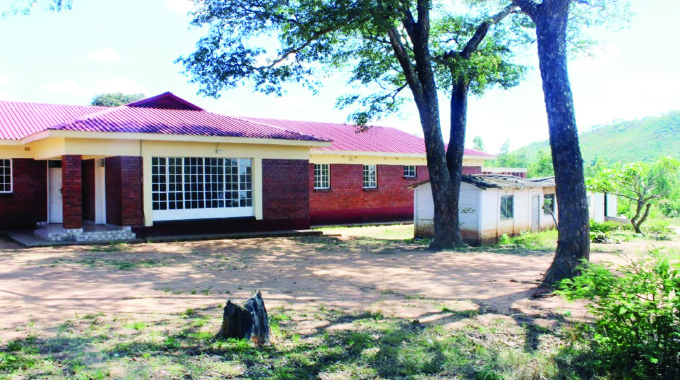
Elliot Ziwira Senior Writer
Recognising the crucial role that youths play in driving the fortunes of any progressive nation forward as embodied in the Southern African Development Community Declaration on Youth Development and Empowerment (2015), enshrined in the African Union Youth Charter, and epitomised in Zimbabwe’s Heritage-Based Education 5.0, the Second Republic, under the stewardship of President Mnangagwa, formed a new ministry responsible for this key constituency.
Realising that young people below 35 years fall under a vibrant “demographic window of opportunity”, constituting 76 percent of the population in the region, in 2015, SADC reaffirmed, committed and declared to invest in policy frameworks aimed at developing and empowering youths through participation of the private sector and other stakeholders.
The Declaration acknowledges that empowered youths play a significant role in consolidating, defending and maintaining democracy, security and stability as well as sustainable socio-economic expansion in the region through regional integration.
The newly fashioned Ministry of Youth Empowerment, Development and Vocational Training, led by Tino Machakaire, deputised by Kudakwashe Mupamhanga, speaks to the Declaration’s clarion call, and testifies to the Government’s commitment to empowering young people.
Since knowledge is always in a state of flux, the expedition to narrow the gap remains a continuous process, hence the need to create a ministry separate, but complementary and interconnected to both the Ministry of Primary and Secondary Education, and the Ministry of Higher and Tertiary Education, Innovation, Science and Technology Development.
Young people are the backbone of Zimbabwe’s developmental trajectory now and into the future, as they comprise more than 65 percent of the population, hence programmes that encourage behavioural change among this critical demographic should be initiated.
It is only through change of behaviour via initiatives involving all stakeholders, with young people as the major players, that national socio-economic expectations are realised.
As such, President Mnangagwa’s vision concerning youth development and empowerment through impartation of skills and change of mindset cannot be overemphasised. The fundamental import of education is that it should be able to mould a complete individual, not only capable of reading and writing, but also conscious of the way bookish knowledge interacts with practical skills to open up opportunities for livelihood routes.
The need forever arises that more openings are created in vocational training to close the widening chasm between knowledge and skills, conscious that polytechnic and university schooling is not for everyone.
The Ministry of Youth Empowerment, Development and Vocational Training, has situated young Zimbabweans at the centre of its programmes aimed at empowering them through skills training in entrepreneurship and mechanised agricultural practices, among other trades. Such initiatives do not only capacitate youths in the fight against poverty, but also take them away from drug and substance abuse as well.
A peep into the colonial conspiracy
The Rhodesian conspiracy was to keep Africans in “educated bliss” through a system that created labourers, semi-skilled workers and supervisors in support of white capital with them believing that it was good for them.
The bottleneck system of formal education was meant to restrict them to such careers that would not make them compete directly with whites. Ironically, Africans took pride in the acquisition of such bookish knowledge, which scantly changed outcomes for their lot.
To buttress the above rationale, Godfrey Huggins, known for institutionalising apartheid in Rhodesia when he became Prime Minister in 1933, delivered a speech on March 30, 1938 in which he said: “This (good education) is essential if our children are to be given equal opportunity for progress and keep their position of influence and power. It will prevent the creation of a poor white class.
“Constant adjustment will take place and the result should be a system of education Rhodesian in character, and essentially suited to our own requirements” (Chigwedere, 2001:3).
Huggins succinctly summed it all here. In whatever garb the scheme came in, it was not suited to black people’s requirements.
Africans were kept out of agriculture, engineering and mechanical education institutions. Their access to university education was deliberately tapered as well. When white colonists realised the essence of the land as a means of production, they deliberately closed out blacks from agricultural institutions like Blackfordby.
The native was meant to be a labourer, who “will more and more tend to settle down with his master and remain on with his master’s son when he takes over and so on — permanent servants in the employ of the estate” (H.U Moffat, Rhodesia Prime Minister cited in Chigwedere, 2001:2, arguing for the 1930 Land Apportionment Bill in the Rhodesian Parliament).
In 1952, sixty-two years after settler occupation, there was no secondary school for coloureds and Asiatics (Asians); and there was one high school (Goromonzi established in 1946) for Africans.
In 1968, there were only six secondary schools for Africans with only two of them offering Advanced-Level classes. Only two percent of black children were allowed into Form One, and only one percent were allowed into O-Level. Just a handful of those allowed into O-Level would make it to A-Level.
With only one university before 1980, the bottlenecking continued to hinder progress in the academic direction for blacks.
The colonial agenda was to see to it that blacks would not outnumber whites at university. In the 1960s only a third of the 300 students at the University of Zimbabwe (University College of Rhodesia and Nyasaland), which opened its doors in 1952, were blacks and less than a dozen of them were Asians and coloureds.
Hungry for education in a quest to improve their lot, and conscious of the bottleneck system against them, the two percent of black children allowed into Form One would achieve at least a 70 percent pass rate through hard work and determination.
For the 98 percent of black children, school practically ended at Grade Seven, hence, the pride exhibited by those that got to O-Level, albeit, without any passes.
The tilt towards vocational training
The Rhodesian colonial project derived its tilt in the imbroglio that came with presumed knowledge meant to feed the capitalist machinery of oppression and plunder. As a result, despite having a 94 percent literacy rate, records show that Zimbabwe is at 38 percent in terms of skills acquisition.
The Education Act of 1987 repealed the discriminatory Rhodesian Education Act of 1979 meant to keep blacks down.
After achieving the initial brief of attaining literacy, and moving to ensure that previously closed out black Zimbabweans’ hunger for primary and secondary education was satiated, the Government’s focus since Independence in 1980 was to create more openings in vocational, polytechnic and university training to narrow the gap between knowledge and skills.
Completing a four-year secondary course leading to Ordinary-Level examinations, regardless of whether one passed or not, was all there was for the majority of blacks, hence the thinking that they would have “finished” school (kupedza chikoro).
The thinking behind this was that beyond O-Level, there was no more school or anything else for a child with less than five passes.
Trained to be employees, black youths found themselves with so much time on their hands and nothing to do after “being done” with school, thus compounding an already precarious socio-political situation.
Having taken on a robust expansion project to have as many Zimbabwean citizens as possible attain primary and secondary education, the need arose to equally respond to the corresponding appetite for vocational, technical and mechanical training.
Initiatives like the Zimbabwe Foundation for Education with Production (ZIMPEF), which emphasised the provision of education with specific vocational training programmes, thus bridging the gap between knowledge and skills, were started.
With numbers of school-leavers increasing yearly, the Government realised the need to absorb the bulk of them not only in teachers’ colleges, but other tertiary institutions offering vocational, technical, mechanical and university training.
Thus, more such institutions were established through the Treasury and mobilisation of private players. The philosophy was that every individual was talented in his or her own way, therefore, training requirements differed.
While figures regarding the numbers of higher and tertiary education institutions in the country may be impressive, more still needs to be done in terms of creating a complete individual with the agency to probe the reasons for being and interrogating the world around him or her without having to adhere to inflexible set curricula.
Examinations should not be used as determinants of intelligence, for knowledge goes beyond bookish learning. Individual destinies are not only shaped by academic achievements.
As Karl Marx avers, “Education must constitute the basis of Man’s development of his vocational, cultural and political growth.”
Hence, the individual should be able to contribute to his own vocational, cultural and political development, and that of the broader constituencies that make it possible to change outcomes for the greater good.
That is why the formation of a ministry responsible for the empowerment and development of young people through acquisition of skills is commendable as it shifts from the colonial approach of creating perpetual employees out of black people, and not employers.
As alluded earlier, a nation’s future is as bright as its young people, for they are the seed from which it sprouts, the soil that supports it, and the water that nourishes it. The commitment to vocational training centres, therefore, will more than empower youths to be able to stand on their own, but will also benefit the nation.
It is this crucial involvement of young people in the nation’s developmental matrix that President Mnangagwa emphasised in his State of the Nation Address at the official opening of the First Session of the 10th Parliament of Zimbabwe at New Parliament Building in Mount Hampden on the outskirts of Harare, when he said:
“Government is developing a National Youth Bill, which will be considered during this Session. The Bill will provide for mechanisms to facilitate mainstreaming of the youth in social, economic and political spaces as well as the sustenance of vocational training centres as hubs for local community development.
“I challenge the private sector to play a part in support of our ongoing initiatives for youth development and empowerment.”
There is so much to what constitutes vocational training and how communities can reap benefits from them. Besides engaging youths and redirecting their focus from drug and substance abuse as well as early marriages and other delinquencies, vocational training imparts requisite skills for a specific job or trade through instructional courses or programmes.
Many conduits through which this can be achieved exist, including apprenticeship, on the job training, distance learning and post-secondary vocational school.
As long as one can read or write, the sky is limitless in the acquisition of life skills offered through vocational training. What is only required is passion and keenness to learn. There is no skill that cannot be acquired if one puts his or her heart to it.
For those courses affiliated to the Higher Education Examinations Council, five Ordinary Level passes, inclusive of English Language, Science and Mathematics are required. Even those already holding diplomas and degrees from universities and polytechnics are encouraged to enrol at vocational training centres to augment their academic learning, and take the changing world head on.
The delivery
There are 68 vocational training centres in Zimbabwe, including 15 satellite ones, with plans afoot to establish a centre in each district countrywide. Although the concept of vocational training has been in place since Independence in 1980, most of the centres were on the decline over the past years, requiring infrastructural repair.
With intakes varying from centre to centre, one can opt for either short courses spread over six months at foundation and competence certificates level, or longer programmes of up to three years for the diploma level. Those looking to be proficient in their trades can be tested from class four to class one.
Metal fabrication, motor mechanics, brick and block laying, automobile electrics and electronics, carpentry and joinery, clothing and textile, cosmetology, tourism and hospitality, business studies, agriculture and electrical engineering, are some of the courses offered at vocational training centres across the country.
The push towards vocational training has seen scores of young Zimbabweans establishing their own companies, with some of them holding their own in entrepreneurship buoyed by the Heritage-Based Education 5.0 philosophy.
In the last hundred days, the Ministry of Youth Empowerment, Development and Vocational Training has embarked on programmes aimed at raising awareness on drug and substance abuse among young people, registration of district youth associations and construction of skills training centres countrywide.
Funded by Treasury and other development partners, the programme is envisaged to reach out to a million youths across the country’s 10 provinces. To date, 569 378 youths were reached out with anti-drug and substance abuse information nationwide, of which 295 098 were females, while 274 280 were males.
Riding on Africa Youth Day commemorations, and the designation of November as the Youth Month, a number of activities were carried out by the ministry to engage youths on the dangers of the scourge. To keep the momentum, provinces are holding at least one awareness campaign per week to ensure dissemination of information on the perils of drug and substance abuse.
Another milestone was attained in the registration of district youth associations, which has seen at least 15 000 youths being empowered through integration into sector-specific programmes. The average membership per association is 30.
Under this initiative, which recorded a 100 percent progress, 16 352 young people were mainstreamed into climate-smart agriculture, climate change mitigation and adaptation programmes. The engagement meetings: both online and physical, included youths with disabilities; and encompassed in-school and out of school young Zimbabweans.
However, the number of registered associations during the period under review was constrained owing to the voluntary nature of the programme.
Concerning infrastructure development aimed at taking all Zimbabweans on board, under the 3rd 100 Day Cycle of 2023, through support from Treasury, the ministry has embarked on the construction and revamping of vocational training centres, at varying stages of completion in the Bulawayo Metropolitan, Manicaland and Mashonaland East provinces.
In Bulawayo, the construction of Sizinda Vocational Training Centre is underway, with an ablution block at 95 percent completion, targeting operationalisation of the convenience amenities section. The excavation process for the establishment of the vocational training centre has been done, with a classroom block completed.
Some of the courses offered at the VCT are: carpentry and joinery, motor mechanics, clothing and textile technology, metal fabrication, and brick and block laying.
At Marange Vocational Training Centre in Manicaland Province, a hostel is being built. The target for this project is the completion of bathroom amenities. Once complete, the hostel, which will accommodate 250 trainees per year, will boost the institution’s enrolment starting from 2024.
A hostel is also being constructed at Nyahoni Vocational Training Centre in Mashonaland East Province, targeting completion of bathroom amenities. Excavation of the septic tank is complete, while procurement of material is in progress. Completion of the hostel, now at 97 percent, is expected to boost enrolment beginning from 2024 as well, since it will be able to accommodate 250 trainees each year.
Youth Empowerment, Development and Vocational Training Minister Tino Machakaire has also officiated at graduation ceremonies at vocational training centres nationwide, where he highlighted the ministry’s vision to empower young people to partake in national development as enshrined in National Development Strategy 1, and refrain from early marriages and drug and substance abuse.
Tinotenda Chikuruwo, who recently graduated as the best student in carpentry at Chaminuka Training Centre in Mt Darwin, Mashonaland Central Province, said her focus was drawn to entrepreneurship as she believes that she is not cut out to be an employee.
The only female in her class, Tinotenda received a starter pack for her efforts.
“My dream is to establish my own company. Working for someone else is not my idea of empowerment. Carpentry is not an easy terrain, but with passion nothing is impossible. I, therefore, urge women to make a go of these so-called male-dominated sectors,” she said.
Tonderai Kanopupa from Rushinga, who was the best graduating agriculture student at the same occasion, said he took up the course because his family relies on farming for its livelihood.
“I am thrilled to have made it this far. It wasn’t an easy journey, though. The skills I acquired here will benefit not only my family, but will contribute to the development of my community and nation as well,” he said.
Another graduating student at the ceremony officiated by Minister Machakaire, Blessed Chaitaze, who specialised in tobacco production, was all smiles as she looked back at her journey.
“Our programme covered land preparation as well as production and marketing of tobacco. We were also trained on the production of other crops,” said Blessed, adding, “My focus for now is to share the knowledge I acquired here with local farmers before looking for employment, or starting my own project.”
For Nathan Hungwe, the numero uno in brick and block laying, the training he received at Chaminuka has empowered him to consider starting his own business.
“I am grateful for having been afforded the chance to hone my skills in brick and block laying. I encourage other young people out there to take up the opportunity offered through vocational training, and desist from drugs and other harmful activities,” he said.
Chaminuka Training Centre farm manager and agriculture lecturer, Ms Patience Denga, said vocational training was the way to go, because it empowers youths with practical skills to face the realities of life, as opposed to largely theoretical learning.
She urged parents to support their children in realising their inherent talents, notwithstanding their academic shortcomings, since university education was not meant for everyone.
“There are a lot of opportunities to be derived from the land; that is why colonialists closed out blacks from this crucial means of production. There is a need, therefore, to empower Zimbabweans to be able to fully utilise the land,” Ms Denga said.
Emphasising that agriculture is a broad field, she said from the onset, they create awareness in their students that they should go beyond seeking employment. Instead, youths should become their own masters through effective utilisation and sustainable use of the land for posterity.
“We train them in climate proofing, with each one of them having his or her own Pfumvudza patch, in addition to production of all crops, including traditional grains common in their communities, poultry, piggery, gardening, making tools such as strops, yokes and hoe handles, and yoking oxen for draught power,” said Ms Denga.



 Online Reporter