admin
admin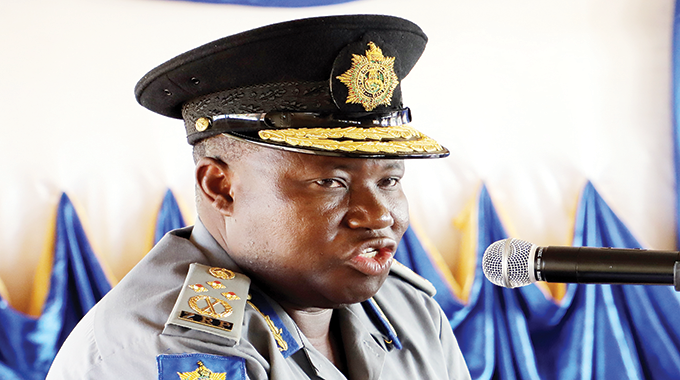
Our police force had, until November 2017, become a laughing stock. The public detested the officers having lost all respect for them.
The reason why this was so was largely a fault of the officers themselves from top to bottom. Corruption that had taken root among them. Instead of ensuring that the law was upheld, officers had become law unto themselves.
They openly demanded bribes on the roads and any slight resistance from their victims would lead to “arrest.”
It is alleged that some senior officers routinely sent their minions to set up road blocks, collect “fines” that went into the bosses’ pockets. Seeing that their bosses were abusing their offices in this way, some junior officers did the same.
There was a joke that, at that time, a police officer who found himself broke would simply don his uniform, walk to any busy road to mount a road block alone, stop vehicles to extract money from motorists after which he would pass through the supermarket buying food for his family.
The Police Service Charter, which defines how the force must operate, had become a document that no one paid regard to.
To say the wheels had come off is to understate the depths to which discipline had plumped. The image of the force was in tatters; it had no image to talk about.
When Operation Restore Legacy was launched in November 2017 and police were withdrawn from public policing duties to be led by soldiers, the public celebrated.
They celebrated not just the resignation of the former president, Mr Robert Mugabe, but also the removal of corrupt officers from the roads. Soon after, President Mnangagwa reorganised the top brass of the force, removing and or redeploying the corruption-tainted seniors and replacing them with untainted ones.
Discipline returned to the force and a new, internationally acceptable model of policing is now being observed. Slowly but surely, the public’s respect for the force is returning to the delight of everyone.
Now an officer will think twice before demanding or accepting a bribe. The restoration of discipline and ethical work in the police force is certainly one of the biggest achievements of the Second Republic so far.
Police Commissioner General, Godwin Matanga is leading the multi-faceted, onerous task.
Under the rebranding exercise, Comm-Gen Matanga and fellow commanders are addressing senior and junior officers who are undergoing refresher courses that seek to guide them for the new beginning.
“Going forward, we expect your work ethics and actions to truly reflect that you were exposed to this high-level training programme,” he said at the closing ceremony of the rebranding and refresher training courses for 64 officers from the Midlands and Masvingo provinces at Ntabazinduna Depot in Matabeleland North in a speech read on his behalf by Deputy Commissioner-General Learn Ncube.
“We also expect that as officers-in-charge you exhibit the highest standard of discipline and integrity so that your character and actions mirror the new brand that the organisation envisages.
The level of professionalism, integrity, dedication, loyalty and impartiality expected from you should give momentum to your subordinates and all stakeholders towards the desired collective effort in dealing with crime.
Above all, communities that you serve should also enjoy the fruits of such admirable values.”
The ongoing re-education is among the recommendations made by the Motlanthe Commission of Inquiry into the August 2018 violence that was caused by MDC Alliance supporters who rioted in anger after their party’s election loss but the repositioning of the force had actually started months earlier.
Police are now bound to be more civil in interacting with the people unlike in the past when they were generally brash and ill-tempered.
They must introduce themselves when they, for example, approach a motorist and advise the driver what they are up to.
They must be properly attired in their full uniforms, that is those who are not from the CID or other special units of the force that don’t require uniforms.
Officers are bound to be more visible unlike in the past when they were only seen enthusiastically manning roadblocks, some of which were unauthorised.
New police posts are being opened while old ones that had been closed are being revived. This police visibility has been in evidence in Bulawayo in recent months.
We expect the ongoing trainings and the newly introduced operating framework to be at the heart of policing in the country to ensure that officers remain relevant men and women of integrity.


 Online Reporter