admin
admin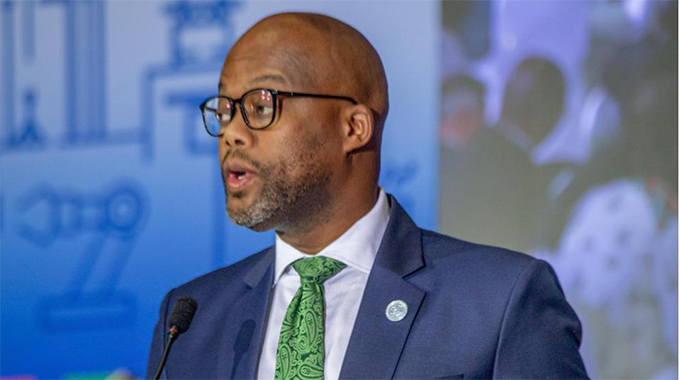
AFRICAN countries need to do more to feed themselves, both individually and collectively, as the continent organises its economies and provides a better future for its people.
At the weekend, President Mnangagwa stressed again for Southern African countries to organise their agriculture to not just feed their growing populations, but to make sure that the production was spread, so that farming families could each grow enough food, pointing out that the Zimbabwean policy was to ensure this.
Already Zimbabwe has shown that it is possible, in what passes for a normal rainy season in this era of climate change, for most farmers to grow most of their own food and have surpluses for sale to feed the cities and the rest of the non-farming population, a rising percentage as industrialisation and rural industrialisation expand.
He also highlighted the need to continue developing irrigation, building those expansive dams to capture the good rains when they do fall, and that often means being able to store water for a couple of years so that when droughts hit, and they will be hitting more often, the water is there to carry on.
The double importance, of both total harvests and making sure that the smallholder farmers, who still are the largest group although no longer a majority, are highly productive. As some colonial societies showed, and Zimbabwe was one of these, it is possible to grow enough food, or almost enough food, on large estates and keep the majority of the people in abject poverty. That model is not really helpful for development.
The transformation of Africa requires the double — respectable total harvests and the spread of wealth by ensuring that every African is highly productive and earning a decent living.
The probabilities of surpluses are not a problem, as secretary general of the African Continental Free Trade Area Mr Wamkele Mene highlighted on Monday at the SADC investment conference in Harare. The continent imports food at a cost of almost US$50 billion a year, and that is money being spent on other people’s farmers, not on African farmers, as well as creating potential food shortages as climates change.
Proper free trade in Africa could ensure that surpluses are moved around, and Mr Mene stressed that free trade was a lot more than just removing customs duties. It requires common technical, health and other standards, the minimum of bureaucracy and a willingness to create systems that make a single market a reality.
This need for free trade is important as we upgrade agriculture. While Africa as a whole has the arable land, the water resources are more unevenly spread, with some of the largest deserts in the world as well as some of the wettest areas in the world, and the temperatures and other factors mean that it is difficult and often impossible for every country to be self-sufficient in all foods, especially as standards of living improve and people want maximum variety in diet.
So there will be a degree of specialisation within African agriculture. We can look at the position of wheat, where only Zimbabwe and Ethiopia are self-sufficient and able to export. On the other hand Zimbabwe imports almost every grain of rice its population eats, and while the new varieties from cross-breeding Asian and African species will help, it is likely that Southern African will always be a rice importer, although West Africa can probably develop as a rice exporter as yields improve.
Climate change opens up other trade possibilities. El Ninos, and the corresponding La Ninas, are likely to become more common as warming of the Pacific increases the chance of these counter equatorial currents.
Yet the effect that these two phenomena have on the African wind patterns that bring rains differ in complementary ways. El Ninos tend to bring drought to Southern Africa and better rains to East Africa. La Ninas do the opposite.
While irrigation and improved farming practices can help ameliorate the annual changes for national food security, it seems a good bet that continental food security might well see East and Southern Africa being a single source of several crops with the trade surpluses coming each year from one half for the wider market.
The need for free trade in inputs has already been explored in the case of fertilisers. No African country appears to be self-sufficient in all the raw materials, Zimbabwe being typical by being able to put together about half. But the national blocks of raw materials are different, so the continent can be self-sufficient if the raw materials move in both directions.
A fair amount of good research into seed varieties and crop varieties is being done across Africa, although once again we have probably more contact between African research scientists and those in other continents than between scientists in Africa. Again, as Mr Mene noted, better contact also requires standardisation and common health and safety standards if it is to be effective.
Africa could and should go further with more research done on new crops to domesticate and even new looks at domestication of other species. The continent seems over-reliant on crops domesticated elsewhere, even when research is done locally to fine-tune varieties so they grow better in Africa.
Traditional grains, domesticated from indigenous African species, are a rather small commercial bundle with many hundreds of potential varieties simply ignored. They were, and sometimes still are, regarded as a poor person’s crop so never had the sort of research work done on them that is normal for say maize across the Americas where it is an indigenous grain, or rice across Asia.
We need to keep in mind that
US$50 billion a year in African food imports. Between Governments, farmers, research workers and simply proper trade policies, that money can be used to transform the standards of living of hundreds of millions of farmers, as well as ensuring Africa flourishes.


 Online Reporter