admin
admin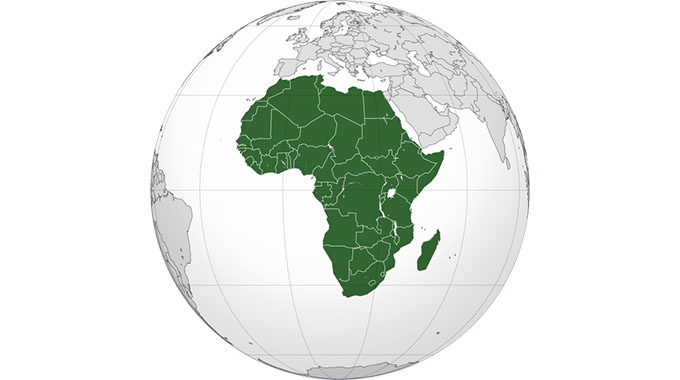
IT has now become urgent for Africa to take full responsibility for its health affairs, leveraging on the continent’s high levels of training of professional staff and the large internal continental market to support a high-end pharmaceutical and vaccine industry.
President Mnangagwa spoke on the changes when he was discussing SADC’s unanimous choice of the best candidate to be the next regional director for the World Health Organisation Africa Region, a post that has become a lot more important as the continent needs to fill the gaps caused by declining levels of international aid.
Africa has been very reliant on development partners when it comes to financing for health, although almost all staff from community health worker level to the highest levels of specialist physicians and surgeons are African.
Most of these have had at least much of their training in Africa even if they were some spending time outside the continent seeking the most advanced skills. But those have been bringing back those skills and training their compatriots, so Africa is largely self-sufficient in skills.
The gaps are largely financial, plus partly in the research areas over new diseases. The continent also needs to build up a substantial pharmaceutical industry and ensure that most equipment and health materials can be made in Africa. Any imported equipment can be maintained in Africa by local technical staff.
To a degree Africa has been fortunate. Support for health services and emergency food support do top the agendas of foreign development partners, so Africa has been backed by these partners. But it now seems likely that such support will be at a much lower level, at least in total. The US withdrawal from WHO will obviously affect that organisation’s ability to support Africa without more support from African countries.
In 2001, African Heads of State and Government pledged the Ajuba Declaration on continental health, a declaration that still makes very good sense. Among other measures it set a target of a minimum of 15 percent of national budgets being allocated to health, to close the obvious major gap and one where Africa was probably over-reliant on external support.
The percentage might have been somewhat arbitrary but it was set taking into account that most health services in Africa need a high level of State support, rather than being built around the private sector. So African countries needed to talk about health budgets rather than the percentage of GDP spent on health.
The declaration was also made as the full extent of the HIV pandemic had become apparent, and the need for major resources there. But on a more positive note it had also come after one of the most spectacular decades in the upgrade in primary health and the huge advances seen from the late 1980s as universal vaccination for a wide range of childhood illnesses backed by some basic primary health had more than halved infant mortality rates.
The combination of a need for more money, but also the promise of major gains as money was spent more precisely with respectable budgets for preventing disease rather than just reacting to disease, made sorting out the continental health finances very worthwhile. In 2001, no African country was close to 15 percent of its budget allocated to health, and the percentage seemed ambitious. Since then African countries have been pushing up the percentages, with Zimbabwe among the leaders now on 13 percent. The target no longer seems over-ambitious or out of reach and in fact might even be found to be on the low side once it has been achieved.
Along with more money raised from its own resources, Africa also needs to maximise the “bang for the buck” of that extra money, and here a more continental approach is required.
There are islands of pharmaceutical industry on the continent, but a lot more could be done with a continental approach to fill the continental market. Some common medications can be made in just about every country. Some might need the huge markets of entire regions or even the continent as a whole before manufacturing is viable and the cost of those medicines is as low as possible.
India has become a giant in the global pharmaceutical industry, supplying a large percentage of the generic drugs around the world. Having that huge home market as a starting point must have been a major plus. The African market is of comparable size and while many countries have only modest populations, between us we can support a very full pharmaceutical industry.
This industry also needs to ensure that Africa is self-sufficient in all vaccines, and can move forward in research for new vaccines. We at least have learned the incredible value of vaccination for so many diseases, such as far fewer graves for children, that we need to be in the forefront of research even if others want to back out.
Disease research has not been a major priority in Africa, despite outbreaks of new diseases like ebola or mpox and the likelihood of other such crossover diseases from remote animal populations. Again such research will be far more effective when done on a continental scale rather than by an affected country with some modest support from a development partner.
And we need to be practical. The research is likely to be better when it is directed by top-end scientists whose relatives are more likely to be infected, and paid for by Governments who are hurriedly working out the far higher costs of doing nothing.
Again this is something that the new WHO Africa director needs to take in as part of their duties and as part of converting the post into an effective co-ordinator of African health initiatives, so that the continent can assume the responsibility it must now take on.
We do not have to be reliant on others, although any support they offer will be gratefully received, but we do have to be exceptionally efficient in how we use the resources we can mobilise and must mobilise internally, and that requires this efficiency at both national and continental levels. So the search and the endorsement of a new WHO Africa director is important as we need the right professional. President Mnangagwa once again saw the critical point.


 Online Reporter