admin
admin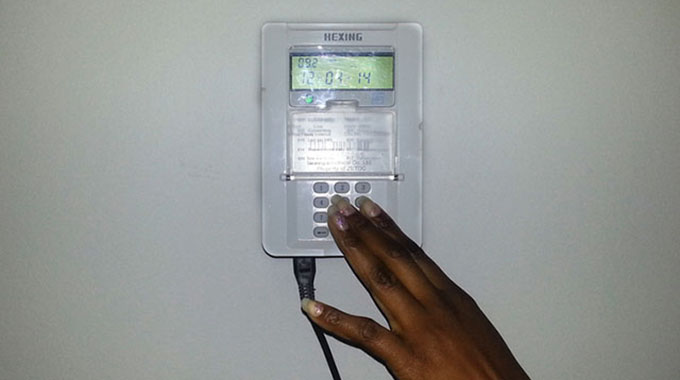
The marginal easing of the exchange rate in this week’s auction, by 0,4 percent putting it back close to the mid-September rate, is not going to impact on inflation, as the changes over the past couple of months have been minute and in any case add up to a slight rise in the local currency.
Of more concern are the recent three rises in electricity tariffs, pushing up the Zesa cost by more than three-and-a-half times, and now the four-fold rise in water charges in Harare.
To some extent, the rises were expected. While other prices rocketed in the few months leading to the first currency auction and the stabilisation of the exchange rate at a level well above the previous official rate, but significantly below the soaring black market rate, regulated tariffs did not.
Fuel prices had been adjusting a little, and with the auctions the regulator reset them quickly. So the fuel price rises were part of the that pre-auction hyper-inflation.
Zupco ran an eight-fold fare rise over several months as it became obvious that there were limits to subsidies, now in effect limited to the Government’s recapitalisation of the company via deals for new buses, which a shareholder would have to do even if the entity was privatised.
But that again was absorbable and has been accompanied by a rise in quality of the service.
Zesa, for some reason, kept quiet. Its running costs were not rising as fast as its output, since the better rainfall in the Upper Zambezi River catchment and the subsequent rising levels in Lake Kariba allowed more generation of hydro-power.
While Kariba South has capital and maintenance costs, its operating costs are very low since there is no fuel to buy, just opening a valve and let free water drop.
But obviously coal miners for the Hwange station were asking for more money, with some justification, and Eskom in South Africa and Hydroelectrica Cahora Bassa in Mozambique are paid in foreign currency, and Zesa, like everyone else, has to pay the going rate.
And then there are the appalling costs of decades of skimped maintenance to account for.
But it would have been smart if Zesa had kept its tariffs up to date, so by now we would have had, like with petrol prices, a relatively stable price for the past few months.
It would also have been handier if Zesa had done its best to tell its customers, especially its household customers, what it was doing and tell them in advance.
Zesa has been pushing hard to get customers to use digital platforms, both its own payment platform which is in many ways good, and using the banks and mobile services.
Most people now buy their tokens or pay their bills on their phone or in the comfort of their office. But, despite the ease of payment, we defy anyone to find out on any of these platforms just how much their electricity costs. And you cannot find out from any Zesa platform any announcement of recent tariff rises.
This is shoddy. And that shoddiness from the finance department is surprising when you consider the gains made by the operations departments who have for several months managed to give almost every consumer a 24/7 supply, with plenty of information when a serious generation problem at Hwange caused minor load shedding and almost daily reports of repairs.
Even the faults reporting service has improved significantly, with phones now answered, report numbers given and quite often even a brief non-technical explanation of the nature of the fault.
The finance manager perhaps must adopt the same attitude, especially as the finance software requires from pre-paid customers a good estimate of their monthly demand before they make their first monthly payment, otherwise they lose the advantages of the stepped tariff system.
While reforms at Zesa are producing results, we still have the old culture of “take it or leave it” floating around the finance department, which is a pity.
We would have thought that a week or two of advance notice of forthcoming tariff rises would be a good idea, so that when people were paid they could budget properly, plus notices on the online platform and by working with the mobile companies having a message sent to anyone battling to get into the Zesa payment system on their phone.
However, the faults and the degree of arrogance at Zesa, and even Zupco’s lack of forewarning and instant fare rises, fade into insignificance when it comes to the Harare City Council.
Shoving up water and sewer charges four-fold in one jump and rubbish removal charges almost 10-fold without warning, with negligible notice and without going through the laid-down consultation process, since there is no regulator, exhibits a degree of arrogance that takes our breath away.
Compounding the evil is the fact that council wants to charge us without delivering. When you get no water, and your rubbish bags are piling up, it just makes people even angrier when there are tariff rises.
One problem will be effect on the inflation figures of this spell of three sets of price rises. For businesses, the actual rises in costs will not be dramatic, since energy and water for most businesses are not major costs. So prices should continue to remain almost stable. There are exceptions, but few.
But for households, the rise in the cost of living could be significant. Forking out around $1 500 a month for minimum water, electricity, rubbish removal and other municipal tariffs will hammer many families and with another $1 000 to $2 000 a month for Zupco for a married couple.
And our inflation figures are calculated from the changes in the cost of living for a high-density urban family. So the water and electricity charges especially can be expected to have a noticeable effect on the cost of living, not as much as the worst dire forecasts on social media might led us to believe, but still there.
So we could have the odd, but difficult effect, that inflation rates are rising faster than prices, because inflation depends on what a low-income household spends while prices should depend on actual production or distribution costs.
The temptation will be there for some businesses to try and justify unnecessary price rises by referring to inflation rates, and we all know there are some businesses that cannot be trusted.
We all thought inflationary pressure had vanished, but what we were not expecting was Harare City Council and Zesa saving up the rises they should have implemented in small steps during the inflationary period so that we would now be a such calm water that everyone could take a seriously deep breath and start to enjoy the journey, rather than race to take in sail as more storms gather force.
All it needs is an extra element of reform, for public entities to start “making the customer king” and start thinking ahead rather than using their monopoly to behave in total arrogance. Treating customers like intelligent adults who need to budget carefully would be a good start.



 Online Reporter