admin
admin
Zimbabwe has realised that there is no simple single solution to the problems of drug and substance abuse and that any successful programme will require a lot of strands across a wide range of campaigns, plus sustained action and the involvement of a lot of people.
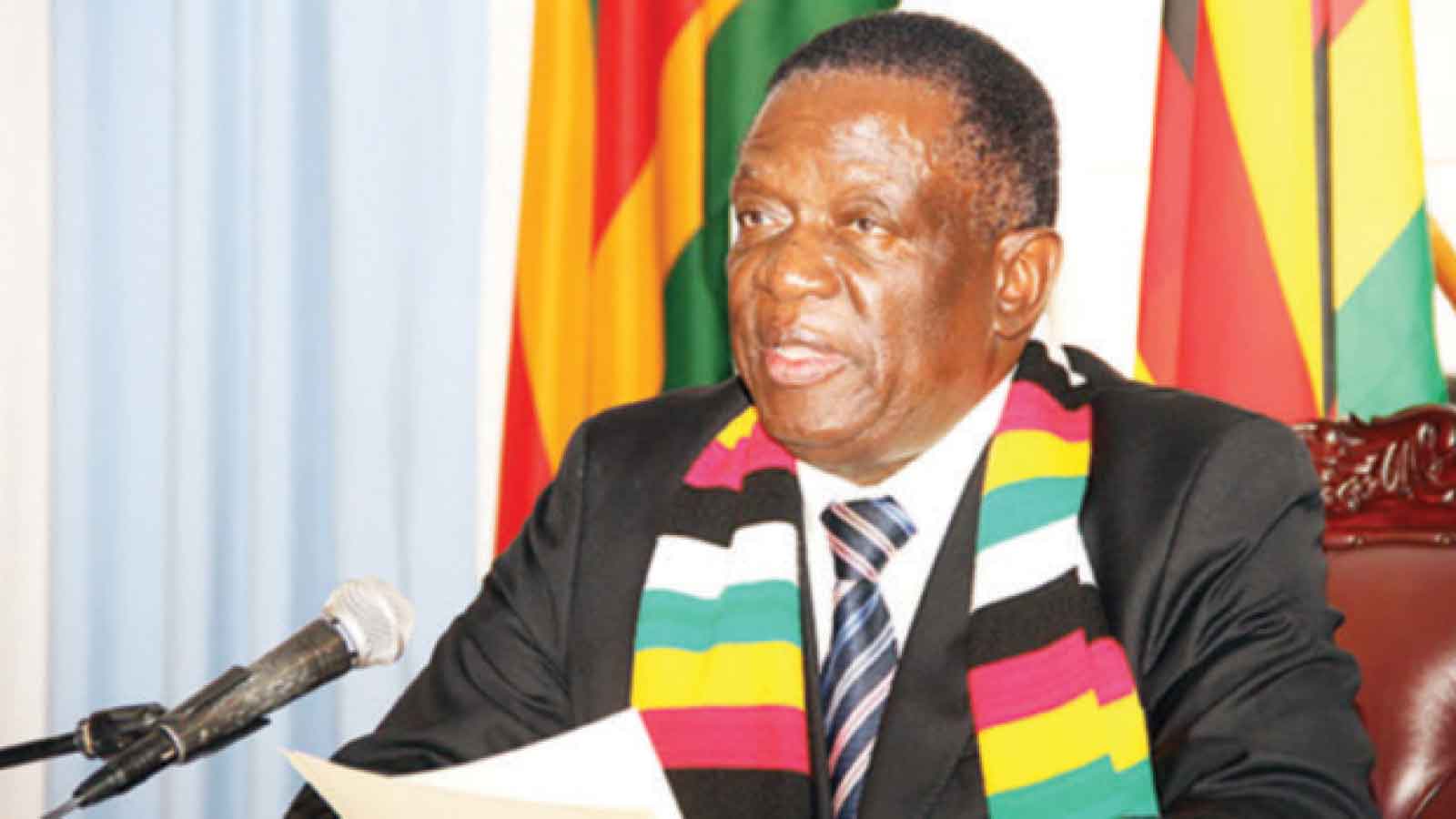
President Mnangagwa made this need for a multi-front war against drugs plus the involvement of just about everyone perfectly clear, when launching the Zimbabwe Multi-Sectoral Drug and Substance Abuse Plan this week, accompanied by his appeal to all people of goodwill to become involved and do their bit.
If there was a simple and single-sector approach to end drug abuse, we would have adopted it by now.
Simplistic solutions have been tried in some countries, such as just locking up all users, and they do not work.
In countries where a far more complex and sophisticated approach has been tried and then sustained, there has been significant progress, although no one has yet been able to eliminate drug abuse and perhaps total eradication is unrealistic.
But there is a difference between a small number of lives ruined each year, and having a large chunk of the population knocked out of the productive sectors because they have become addicted to or are under the influence of drugs, plus the money that should be going on building up family and household income moving into the pockets of the drug dealers and drug suppliers.
The plan takes into account Zimbabwe’s own experiences, especially recent experiences, plus feeding in what is generally considered best practice internationally to craft our own plan.
So the plan starts with seven approaches that need to be implemented together: supply reduction, demand reduction, harm reduction, treatment and rehabilitation, as well as psychosocial support and community reintegration. And all seven campaigns need to be coordinated and work together.
Miss one of these out, and the plan is diminished and does not work that well. Supply reduction is largely a responsibility of the police, arresting those who grow or smuggle the drugs and those who process and sell them.
And even here there is need for a lot of community involvement. The police need to know who and where the dealers are, and that means we, as citizens, need to do our part at this level by passing on what we know, what we hear and what we see.
But unless demand is reduced, new sources of supply will emerge. The police could arrest every dealer tomorrow, and if a lot of people still wanted to buy drugs a whole new crowd of dealers would emerge. So we need to cut demand.
Here the police play a smaller role, although the arrest of users is still useful so long as this is followed by rehabilitation rather than jail, and we start bringing in families, churches, communities, schools and society as a whole to persuade people that there are better ways of spending your life than moving from drug-induced high to drug-induced high.
Again this will require a lot of different approaches. No two users or potential users are the same, so programmes need to take that into account.
Harm reduction is largely related to demand reduction, in the sense that fewer users means less harm, but it has its own areas, such as persuading people not to move from less damaging to more damaging drugs. Harm also covers the steps so many abusers have to take to feed their habit.
Treatment and rehabilitation is a necessary follow up to demand reduction.
When we stop people using drugs we need to put them back on their feet, and free them from addiction, or at least allow them to live without drugs. This is where some of the larger bills arrive to fund anti-drug campaigns.
Psychosocial support and community reintegration mean keeping the treated addict off drugs, for life, and then making them once again a productive member of society.
This might well require forgiveness, and as President Mnangagwa noted, will mean families have to step in and play a decisive part in the process.
The Government, correctly, has seen the need for a new permanent agency to take the lead role and co-ordinate the activities of a wide range of State and Government forces, departments and agencies.
A lot of the bits we need to combat drugs are already set up, and could devote some of their manpower and resources to the battle against drugs, but need to be fitted into the overall scheme.
The inter-Ministerial committee has shown what can be accomplished, but the detailed action still needs more service and agency collaboration as a routine matte of course. The private sector, voluntary organisations, churches and others need to be brought in, and again a co-ordinator can suggest how everyone offering to help can do the most good.
But as the President noted we have done this before, with Covid-19, and we won that battle and came out a stronger country, and a more healthy country. Side effects of actions can be positive as well as negative.
The battle against drugs will be a continuous battle, for year after year, and with no relapse. It is long haul, and perhaps never can be totally won. But then a battle against deadly disease will see some people die, just far fewer, and that is how we measure our victories.
It will not be cheap, in money or manpower, but it will be less than the value of the damage done by drugs if we do too little or get it wrong.
The Government is doing its part, with the co-ordinated practical plan and the commitment of State resources. But now the rest of us must do our part, individually and together.


 Online Reporter