

 admin
admin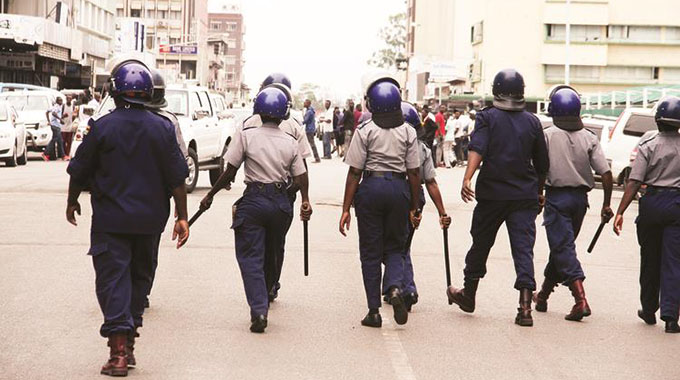
There is need for a smarter approach in dealing with the political opposition agenda.
Last week’s clashes outside Harvest House, in Harare, demonstrated a failure by police to read, anticipate the importance of change in tactics by the opposition, understand the bigger picture, and how to manage public protests in changed circumstances.
On Wednesday last week anti-riot police clashed with supporters of the opposition MDC-Alliance outside the party’s headquarters along Nelson Mandela Avenue, resulting in some of the supporters being seriously injured. At least seven supporters were arrested and have since appeared in court.
The clashes followed refusal by the police in Harare to sanction a proposed meeting in Africa Unity Square in the Central Business District (CBD), dubbed Hope of the Nation Address (HONA), at which the MDC-Alliance leader was scheduled to address supporters. The party was, instead, advised to hold the meeting at the open ground next to the Rainbow Towers Hotel.
Since 2001, the European Union has imposed sanctions on Zimbabwe, arguing that this is “in relation to the escalation of violence and intimidation”.
Ever since then, a pattern has emerged that each time the EU prepares to review its position on Zimbabwe — usually at the beginning of each year — the opposition has gone out of its way to provoke the authorities, all in order to present and sustain a narrative of recurrent violence and human rights abuses in the country.
On Thursday last week, the second session of the Zimbabwe-European Union dialogue began in Harare. The security authorities did not connect the dots — that is the aborted MDC-Alliance meeting in Africa Unity Square was staged for the EU delegation that was in the country. The party knew its meeting at the proposed venue would be turned down and that the offshoot of that would be generalised chaos, which is the impression they wanted as the take-away message for the EU delegation.
But there is also need on the part of political players to be mindful of how they schedule their programmes. In the context of the current environment, how does a political party organise an open meeting right in the middle of the central business district during peak business hours and in the process disrupting business activities?
And so the subsequent clashes outside Harvest House became a windfall for the MDC-Alliance because it perpetuated the narrative that the new dispensation is no difference from the former administration.
The motive being that when the time comes for the EU to review its position on Zimbabwe at the beginning of 2020, its officials who were here for the dialogue, will conclude that they are still concerned with the economic and humanitarian crisis in Zimbabwe, therefore, providing the bloc with justification for continued sanctions against the country.
Regrettably, it appears the security authorities did not see this bigger picture to the actions of the MDC-Alliance and that the clashes provided evidence enough that rights abuses, freedom of assembly and demonstrations in the country continue to be violated.
Any developments that point towards normalisation of relations between the EU and Zimbabwe demolish the opposition’s central argument that nothing has changed.
Therefore, there is need, going forward, for a smarter approach and a change in tactics when dealing with or responding to actions or initiatives of the opposition parties.
Although the authorities cited violence that has ensued in the past such as the MDC-Alliance January 2019 protests that became an orgy of destruction of shops and looting, among reasons for refusal to allow the Africa Unity Square meeting to proceed, in hindsight, it would have been a positive in the eyes of the EU delegation if the Africa Unity Square meeting had been given the green light.
The EU’s position is that dialogue is now central to Zimbabwe and EU relations and that it wishes to support Zimbabwe’s political and economic reform agenda.
Now we will wait for the New Year to hear the EU’s position when next it meets to review its position on Zimbabwe.
But the clashes aside, the EU–Zimbabwe dialogue and the visit by a delegation from the Swiss conglomerate, Nestle, were the week’s positive developments, heading into the New Year and appear to suggest that if pursued to their logical conclusion with all the will could set the country on a new path.
Nestle plans to continue investing in its operations in Zimbabwe and last week unveiled the scope of the work it has been undertaking in empowering farmers in the coffee and dairy sectors in the country.
The Nestle investment in Zimbabwe is important for its contribution to the economy, employment creation and for its empowerment thrust.
What remains critical is ensuring that there is evidence of willpower on the part of Zimbabwe to facilitate in the actualisation of the envisaged growth by the Swiss food and beverages giant.
Many will recall the fanfare and euphoria that accompanied the visits by the Nigerian magnate, Aliko Dangote, and subsequent announcements by the Dangote Group of its intentions to invest in Zimbabwe. That is a narrative that dates back to 2015 and four years on nothing has materialised.
So there is need to ensure Zimbabwe does not drive away genuine prospective investors, while for the law-enforcement agents, it is imperative that they are ahead of the tactics such as those exhibited by the MDC-Alliance in recent weeks.



 Online Reporter