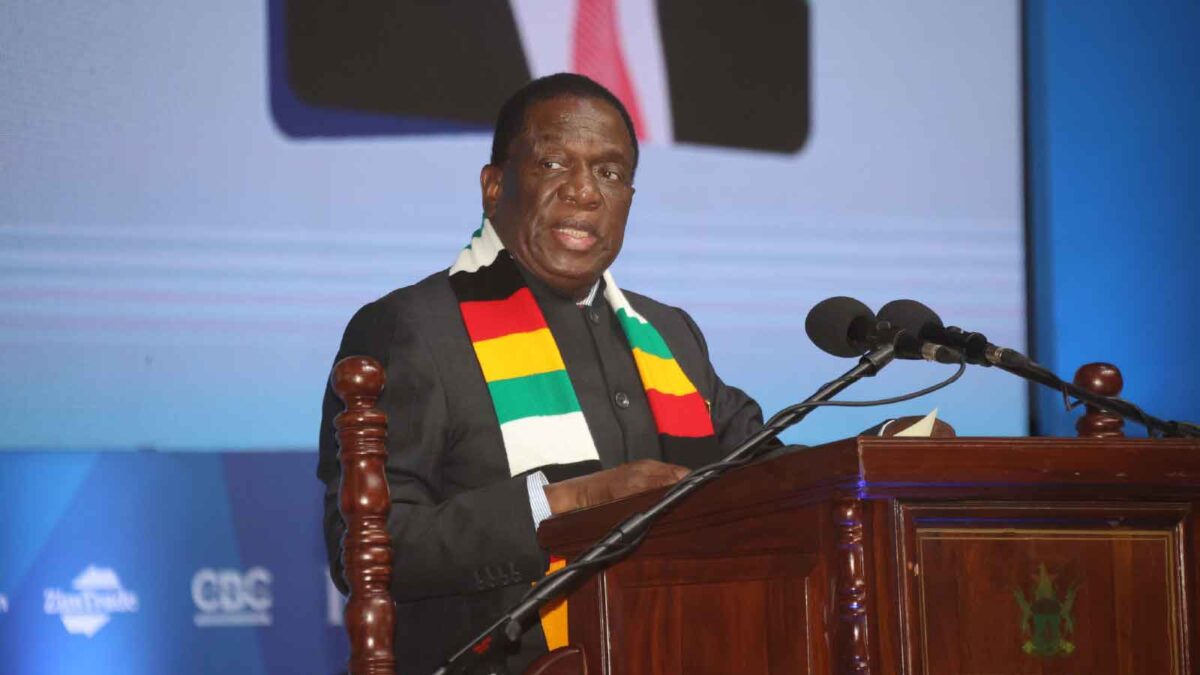
Heads of the member states of the Common Market for Eastern and Southern Africa meet in Harare today under incoming chairperson President Mnangagwa, who has already, in the build up to the summit, made it clear that he wants practical action to boost regional trade.
This action needs to go beyond removing barriers to regional trade, both tariff and non-tariff barriers.
It includes, as he made clear when addressing the 19th Comesa Business Forum and Exhibition in Harare, partnerships and more joint investment, increasing value addition of raw materials so industrialists can make more products within the region, and then seeing the resultant higher trade in these products.
While political commitment at the top is needed to ease and remove barriers, the private sectors of the member states are the ones who need to increase trade and investment.
This can be as simple as looking at other businesses in the region who can supply materials and finished products, rather than simply following historical patterns.
If the Governments have done their share, then the trade will be simpler and the overhead trading costs a lot lower, so pricing will depend on the actual value and competitiveness of the products on offer.
The President spoke of the non-tariff barriers which include rules of origin, complex customs procedures and other barriers that increase the costs of trade.
In his search for practical solutions, President Mnangagwa told the businesspeople and their representatives in the forum that they had a duty to recommend precisely what they needed to increase trade and investment, so the summit would be looking at specific measures that made sense to those who actually trade.
Intra-Comesa trade, as the President noted, is low. The main reason is likely to be that most Comesa states export raw materials that others make up and then sell back to businesses in the same states.
At the same time most Comesa states are fairly small with a limited range of such raw materials even when that state is a major global supplier of one or two industrial minerals.
So others buy what they need from several to fuel their factories. Between us we have almost everything to fuel a major industrial revolution
We need not only add value to our raw materials before export, but we also need to be looking at investments across several states so our own factories can make the final products using Comesa materials.
Exporting shirts rather than cotton or even cotton fabric is simply a starting point. There is a lot more that can be done.
One example is the lithium-ion battery market.
Others have noted that the desire to make the batteries that will be powering the vast number of new electric vehicles that are now coming onto the markets of the world as petroleum fuels are phased out over the next decade will require such spread investment if Africa is to be the main leader.
While Zimbabwe, and to a lesser extent the DRC, can produce the lithium, there are still a handful of other critical minerals involved. Nickel comes from several countries, including Zimbabwe.
But the world supplies of cobalt, probably the second most important addition by value, are centred on Zambia and the DRC. And Mozambique is now an important exporter of graphite, another critical mineral.
So businesses in the Comesa states need to be looking at each other, pairing up when this makes sense, in the industrial as well as the retail sectors. This helps us all to get rich together, and that increased prosperity as more of our people are earning decent incomes means that there are ever-larger regional markets, which our businesses should be supplying.
So businesses need to accept the challenge that President Mnangagwa has laid down. Because we are near each other, and often next door to each other, we can keep transport costs under control, especially as most member states are now investing heavily into improving road and rail networks.
The Heads of State are likely to consider other practical measures favourably.
So what is left is, as the President said, the need for industrialists to be looking not just at the comparative advantage of local raw materials, but at the region for what they cannot find at home.
Retailers need to be comparing costs and seeing how competitive are those industrial goods when they stock their shelves. We can all be part of the practical solutions to add to our own prosperity, nationally and regionally.