

 admin
admin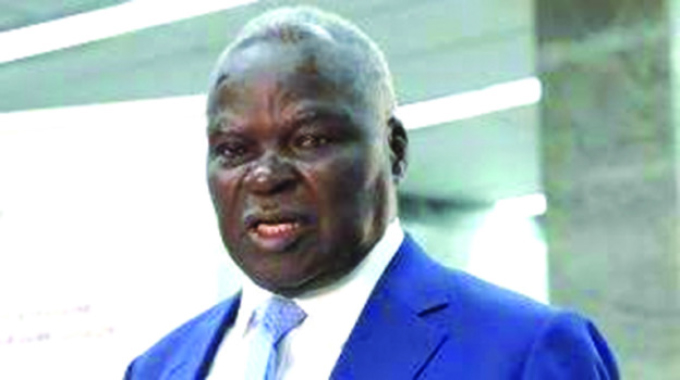
THE issue of unqualified local authority councillors is becoming a serious problem with councillors unable to understand the position papers of officials, unable to oversee what council staff are supposed to be doing, and unable to understand exactly what people are complaining about.
There has been pressure for some years for better qualified people to stand and be elected to councils, with particular pressure coming in Harare, the second largest and second most complex public institution in Zimbabwe after the central Government itself.
That pressure includes pressure from mayors belonging to opposition parties who made it quite clear that just being a supporter of a political party was an inadequate qualification and one that produced people totally unsuitable to have any say in their local authority, let alone run it.
Minister of Local Government and Public Works July Moyo is now discussing possible amendments to local government law by bringing in minimum educational qualifications for those standing for councils.
He is even contemplating asking Parliament to insist on tertiary qualifications. His point is that most councils are now larger and more complex than many ministries and need people who understand what is going on to be able to set the policies that make sense, and sort out the problems that inevitably arise.
These tertiary qualifications obviously include university degrees, but should also include a far wider range of tertiary qualifications such as the higher national diploma and the national diploma, or the sort of qualifications that many teachers must still possess, plus recognised qualifications from a range of professional associations. The main concept here would be “recognised”.
There are, for example, still some chartered accountants who must have qualified purely through articles and professional examinations before the Society of Chartered Accountants insisted on a pure graduate entry into the profession, with articles and professional examinations to follow so CA(Z) now being a pure post-graduate qualification.
There are possibly some lawyers who qualified through attorney articles, although graduate entry has been the norm for longer in the legal profession.
And at one stage most top CEOs came up through the ranks of holders of the final CIS examinations.
The civil service used to have a wide range of its own qualifications earned through examination and the police and defence forces still do, with promotion up to fairly senior levels still dependent on passing quite stringent courses and examinations outside the systems of the Ministry of Higher and Tertiary Education, Innovation, Science and Technology, as well as an ever-wider range of training and qualifications within the purview of that ministry.
But, so long as the list of tertiary qualifications is inclusive, the Minister’s idea is a very good starting point to ensure that a prospective councillor has at least enough formal education to understand the advice given by senior officials, who are all obviously professionally qualified, and be able to at least see if that advice makes sense or is just some weird scheme by the lazy or dishonest.
No one expects a councillor to be able to generate that advice, but they need to have enough background to be able to assess it and to demand something better that fits their community. The tertiary qualifications could still exclude the self-educated, and we all know people who were not that wonderful when it came to school examinations, let alone those in higher education, who nevertheless are successful in business, farming and other areas of self employment, which you can enter without a piece of paper on the wall, and who would possible adorn a local authority council.
So those drafting the proposed law need to think about these and try and figure out ways they could be included.
Perhaps an ability to pay a reasonable amount of income tax every year would measure their ability just as well as formal education qualifications, at least showing they know how to run a business or a farm.
We also have the case of people with qualifications, sometimes very good ones, who are near useless or dishonest and who would make very bad councillors. So perhaps in the end we might need both, enough formal education or its equivalent to understand the details, and some sort of measure of subsequent success in the real world and the real economy.
However, we do it, we also need to recognise that being a local authority councillor does not provide an income, and is not a full time job. There are allowances, but for a proper hard-working councillor these just cover the expenses of doing the job, the transport and communication costs basically.
The few hours of duty each week at council and committee meetings, and sorting out problems in their ward, are supposed to be done for free.
One of the major problems we have faced, and Harare is an excellent example, is that some councillors try to live on their allowances as their main source of income.
Because of the strong post-independence entrance of party politics into local authority elections, getting a party nomination is sometimes the only required qualification.
Party nominations can be an advantage for voters; at least they know what the councillor is supposed to stand for.
The problem arises if councillors are just riding on the coat tails of a presidential or parliamentary candidate and voters simply tick the party boxes without looking at the candidates.
This is not much of a problem with Zanu PF, where the system of primary elections at least ensures that someone has vetted the original candidates and people who know them have given them support.
To win a Zanu PF primary you do need to be able to impress a good block of those in your community, and that can filter out the lazy, stupid and dishonest. Their neighbours know. Zanu PF does vet aspiring local authority primary contestants for more than just party loyalty since the party wants at least people who can do the job as well as agree with the party policies. So perhaps those other non-party qualifications could form a basis for everyone.
Most other parties do not have any selection process besides choosing candidates who are known to someone in a self-appointed leadership, and it appears that local authority nominations are handed out for being a strong supporter, not for any intrinsic merit, hence the Minister’s desire to have some measure of minimum intrinsic merit before the candidate selectors choose a nominee.
There was a time when successful business people, and successful professionals, were willing to become councillors.
Some were driven to this by the sort of disaster that has been seen in, say, Harare for the last 20 years and wanted to fix their council, others because they felt that doing a term on council was a public duty, and others recently retired felt a tour of council duty was a way of paying back their community while they were still fit and active.
However they came forward, these are the sort of people we need, able and willing.
In this modern world where education is open to all, the minister’s suggestion of minimum educational qualifications is at least a starting point, although other attributes are also required including the recognition that making money as a councillor is not on the list of options. Such people exist.



 Online Reporter