admin
admin
Most urban and rural district councils failed to meet Sunday’s deadline for submission of their masterplans, or at least a draft one, although some have reported progress and have applied for extensions, showing that they are aware of the need to generate something concrete and useful.
There may well be a lack of appropriate professional planning staff in many rural district councils and some of the smaller urban councils, although a masterplan is not a detailed planning document, showing the boundaries of new suburbs or new towns, of the precise design of a new sewer reticulation system.
It is more of an outline, with the detailed local plans to come later, and as such is something that a competent local authority can at least draft with the help of its professional staff in the administration. The masterplan deals with the strategic outlook, and is the sort of document a professional planner would require to create the more detailed functional plans.
As such it involves the largely political and administrative choices councils have to make, rather than the professional planning requirements, although we would agree that a professional planner could be useful in at least listing the sort of options that a council needs to consider.
A lot of the masterplan builds from what is already present, and this is the sort of statistical information that a council already ought to have, such as the road system, the dams built or planned, the distribution of the population and the sort of activities they are involved in, the housing and how many live in those houses, where formal and informal urban settlement or new suburbs have been built, and the resources of the council area that will help direct the sites for new industrial, commercial and residential development.
In this modern age the council also has to know the environmental make up of their area, where wetlands and other special sites need to be preserved, where land suitable for building or farming is found, and where local materials for construction can be quarried or dug up without wrecking the local environment.
One advantage that modern councils have is the easy access to satellite mapping, providing full colour images of their entire council area basically for free, just the time of the official downloading the images, and this is a far cry from even a quarter century ago when people would need expensive aerial photographs and complex mapmaking. Technology does allow a council a fairly up-to-date picture, literally, of their area.
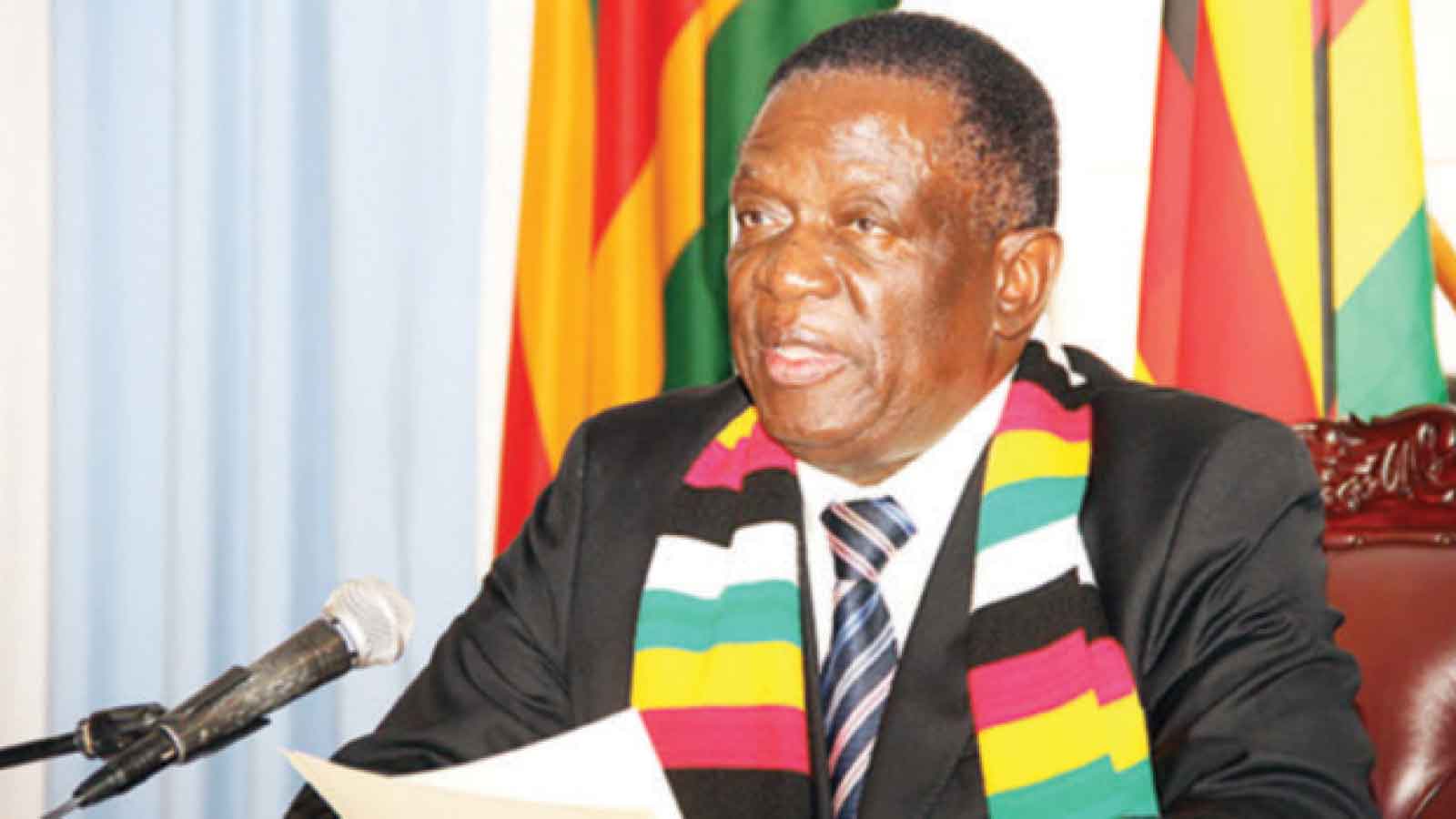
One reason President Mnangagwa is so keen on all councils having a reasonable masterplan, and then continually updating this, is because he wants the councils to be able to take advantage of the many programmes the Government has launched and connect these to the people. In rural areas a great deal of effort is being made to boost the income of small-scale farmers for example, largely through more efficient farming and the introduction of new streams of income.
This opens up a whole range of new business opportunities for others, at both ends of the farming economy, the supply side which would include those who can fix borehole and irrigation pumps or service a tractor, to the processing side for the new products that are coming from the farms. The village borehole programme, now extending to the village business units, seems, for example, to need local centres where horticultural produce can be rapidly packed and shipped.
But rural industrialisation will go a great deal further than this and rural district councils need to be able to look at their district, the highways, railways, water supply points and designate where the future industrial towns should be built, and in any case the sort of planning that may be required.
Urban centres are expanding and will continue to expand, even if new urban centres arise in rural areas to take advantage of the new sources of produce and other raw materials. Expanding towns and cities cannot just grow without form; we have seen the sort of planning disasters in and around Harare when that happened.
An urban authority needs to think hard where new industrial areas can be developed, and often that will need a good look at the rail network as well as the road network. New residential areas need to be properly planned, and that will be governed, to a large extent, by where water supplies can be easily piped, and the natural drainage that a proper sewer system has to follow with the treatment plant at the boundary end.
The masterplan cannot and does not detail what sort of new residential development will be built, but can say where it can be built with modest cost of extended necessary services, and can set the policy of how dense the development should be, such as flats, cluster housing or even detached housing, although this is now so space consuming that it is unlikely to be expanded much.
Masterplans can also set the need for effective greenbelts, so that urban development does not just form a continuous belt of concrete, but that gaps can appear between suburbs and even between a city and its satellite towns.
That is a policy decision for a masterplan, not a planning decision by a professional. It can look at how a wetland policy can also create open spaces, and at least prevent housing being built on a swamp or floodplain.
However, if a local authority wants a bit of help, the Ministry of Local Government and Public Works does have professionals, both in the form of the district co-ordinators and the provincial permanent secretaries, and in its planning unit, who could help the councils struggling to produce their plans to at least ask the right questions.
Very often that is all that is required to get the sort of outline answers that a masterplan requires.


 Online Reporter