The subsidy for the Grade 7, O-Level and A-Level public examinations run by the Zimbabwe School Examinations Council (Zimsec) has been revised from a blanket subsidy to targeted support for children from vulnerable households.
Almost everyone would agree that a child from a very poor or deprived household, who would otherwise be unable to sit the examinations, should be assisted so that opportunities remain open.
Very few would defend subsidising examination fees for children from obviously well-off families, who may even be paying school fees that far exceed the examination charges.
Cabinet, on the advice of the Ministry of Finance, Economic Development and Investment Promotion, has therefore decided to maintain the examination fee subsidy, introduced in 2020 at the start of the Covid-19 pandemic, for children in rural Government schools and satellite schools, as well as for children receiving assistance through BEAM, the Basic Education Assistance Module, which is designed to keep learners from the most deprived households in school.
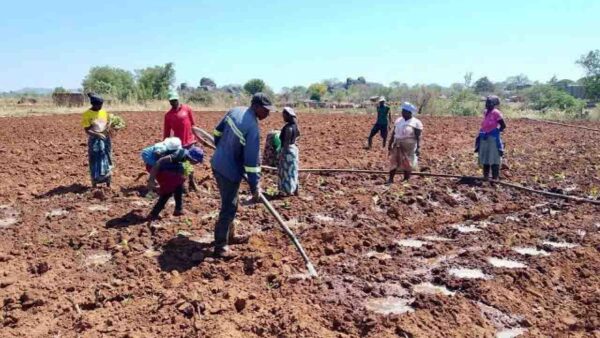
One change that may well come in time is to take greater account of the growing number of better-off rural families, as Government support, through villages business units, solarised boreholes, poultry projects and other empowerment programmes are improving livelihoods in the countryside.
Villagers report improved incomes under the Second Republic.
In this regard, the inclusion of all children covered by BEAM can be seen as the most important retention.
A very good example of targeted support was seen in 2024 and through to the 2025 harvests following the severe 2023-24 drought.
Rural families received grain rations, while urban families who normally relied on produce from their own plots or those of relatives received a modest monthly allowance to buy mealie meal.
However, the Government expected community leaders to identify and certify those who genuinely needed assistance and to determine when that support was likely to be required as household food supplies became exhausted.
The targeting process also ensured that grain rations and electronic cash payments were allocated according to the number of individuals rather than simply per household.
A family of six, for example, would receive twice as much as a family of three.
Despite growing Government revenue as the economy expands and the tax base widens, the demands on the national budget still exceed available resources.
Fundamentally, Government expenditure is intended to ensure that citizens enjoy a reasonable quality of life and that children are protected and given opportunities to progress.
As with every other expenditure item, the Zimsec subsidy had to be reviewed, together with the reasons for its introduction.
There were good reasons to retain it, but only for those who genuinely need it.
The changes, therefore, preserve what provides value while eliminating expenditure that no longer serves its intended purpose.