admin
admin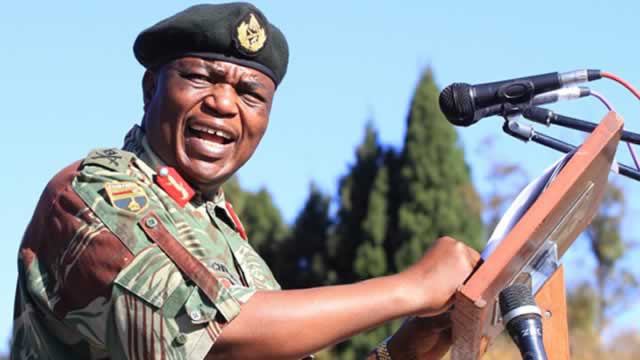
The Zimbabwe Defence Forces (ZDF) is respected worldwide for the high level of discipline among its members and its military prowess.
The ZDF brings together the Zimbabwe National Army and the Air Force of Zimbabwe. Since its formation in 1980 from the amalgamation of cadres who had just liberated their country from colonialism — Zanla and Zipra — and the Rhodesian Army, the ZDF has proved its capability in both peace and war time.
As the country has been peaceful since 1980, the ZDF has largely discharged its mandate locally through undertaking community development projects, disaster response and according the people that peace of mind of knowing that their territorial integrity and national sovereignty are in capable hands.
Abroad, the ZDF has distinguished itself in peace-keeping operations in a number of countries, among them Angola, Rwanda and Somalia. In Mozambique and Democratic Republic of Congo, ZDF members were involved in real combat operations. In Mozambique, the ZDF fought, alongside the Frelimo government, Renamo rebels and defended Harare’s economic interests centred on rail and road routes to and from sea ports in that country. Renamo was defeated and agreed to a peace deal in 1992.
In the DRC, then President, Laurent Kabila invited Zimbabwe in August 1998 to help fight rebels who, backed by some of that country’s neighbours, were grabbing territory in the east and fast advancing towards Kinshasa. The ZDF also played a leading role in securing some lifeline infrastructure in the DRC. Thanks to the ZDF role in bolstering the DRC’s resistance, the rebels were defeated.
The Zimbabwe National Defence College has over the years proved to be a centre of military excellence with dozens of Zimbabwean security men and women receiving cutting edge training in a range of areas. Many of its students are drawn from Sadc countries, pursuant to the regional bloc’s commitment to greater security co-operation.
Other ZDF training operations and institutions attract foreign students as well.
A recent request by the government of Equatorial Guinea for the ZDF to train troops in the West African country is a ringing endorsement of the deep respect that our soldiers command abroad.
ZDF Commander General Constantine Chiwenga saw off the training contingent to Equatorial Guinea on Friday last week. The soldiers would be in Equatorial Guinea to offer training in operational and logistical matters to their counterparts.
General Chiwenga implored the soldiers to maintain their discipline as they executed their duty.
“The Equatorial Guinea had realised some training deficiencies on their defence forces hence the request. In line with the ethics of our defence, I want you to remain professional and undertake this mission and any other additional tasks given to you.
“Internal events leading into 2016 include holding of the National Congress by the ruling party (Zanu-PF) followed by general elections. It becomes critical that you exercise caution as you safeguard the lives of men and equipment of the Zimbabwe contingent,” he said.
The deployment represents the deepening of military relations between the two countries.
During the Africa Cup of Nations finals in Equatorial Guinea early this year, local troops were engaged to provide security at various venues in that country. The security contingent, which was composed of police, soldiers and intelligence personnel, travelled to Equatorial Guinea at the invitation of the country’s head of state, President Teodoro Obiang Nguema Mbasogo.
Bilateral relations between Zimbabwe and Equatorial Guinea started in 2004 when Zimbabwe intercepted a gang of mercenaries who were en route to Malabo to stage a coup d’état against President Mbasogo.
At the political level, relations between the two countries are excellent with President Mugabe and his Equatorial Guinea counterpart leading the way.
Now the challenge that Zimbabwe and Equatorial Guinea have is to deepen and expand the security and political co-operation to the economic, social and cultural.
We expect more trade and investment between the two countries. We expect more co-operation between companies from both countries in terms of joint ventures, exchange programmes and others.
Equatorial Guinea is one of the strongest economies on the continent with a per capita income of about $25,000. Oil, that was discovered in 1996 drives that economy. Since then government revenues have increased exponentially and now the small country of 722,000 people is the third-largest oil producer in Sub-Saharan Africa. Agriculture, particularly the sub-sector of forestry as well as fishing is also important to that country’s economy.
Zimbabwe, on the other hand is strong in agriculture in all its facets, manufacturing, education and training, tourism and mining.
The two countries can explore areas of co-operation in these, and others for the bond, presently at the political and military levels, to cascade down to the people. When country-to-country relations are underpinned by direct, people-to-people interaction, not merely the more formal, bureaucratic ties, they would have become more meaningful and enduring.



 Online Reporter