admin
admin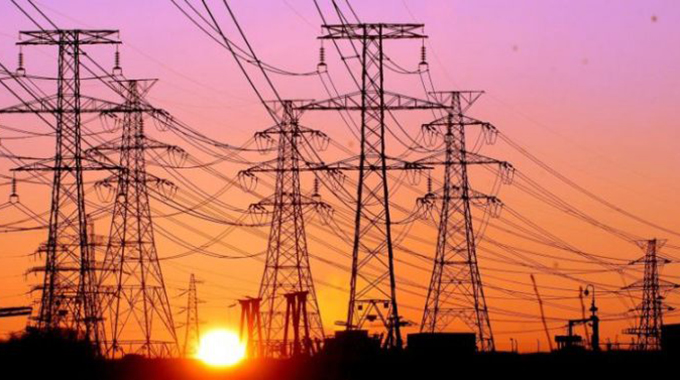
The owners of the huge steelworks being built at Manhize, Dinson Iron and Steel Company, are not just bringing in the most modern steelmaking technologies into Zimbabwe, but are also showing a great deal of imagination and innovation when it comes to the vast quantities of energy such technology requires.
For a start the 330kV power line, an extension of the backbone of the national grid, is being rapidly built to connect Sherwood near Kwekwe across the waist of the Midlands to Manhize.
The steel plant is at the moment connected via powerlines of a subsidiary industrial level to Chivhu. Dinson is financing the top-end backbone line through an arrangement that will see Zesa paying back the loan through reduced transmission charges to Dinson.
But Dinson now is going ahead with three 100MW power stations at the plant or near the plant to supplement what it receives from Zesa, or even from imports routed through the Zesa national grid.
These three power stations will not just supply a good fraction of the power the steelworks will need, but also give Dinson a green energy rating, important these days in many export markets.
One of the three stations, right by the blast furnaces, will use waste heat from the furnaces as the steel and slag cools to generate electricity as if it was a normal thermal power station, the main difference being what comes out of the furnaces being the source of thermal energy rather than coal.
Using waste heat, that would otherwise just dissipate into the atmosphere, definitely counts as green, since the power is generated in a thermal station that has a zero carbon rating.
The other two are more conventional green energy stations, a wind-powered station and a solar powered station.
Most of Zimbabwe does not have a high wind-power rating, winds usually being breezes with very intermittent decent blows.
However, Dinson has found after careful investigations that the nearby Manhize Mountain is high enough and without shadowing to have perennial winds, unusual in Zimbabwe west of the outer rim of the Eastern Highlands.
This makes it a suitable site for a wind station. This sort of semi-isolated mountainous area can occur in other parts of Zimbabwe, and it might well pay private power-station investors, communities that have such mountains in their midst and Zesa to investigate further and see where viable if modest wind power stations can be built.
The third station planned is a conventional solar-panel station, as other investors are also building. But all three stations are close to the steelmills and its connection to the national grid, so any surplus can be sold.
In practice, the stations will reduce Dinson’s power demand significantly in the day time, but two of the stations, the waste-heat thermal and the wind station, can also supplement Zesa at night. The three quite different stations also spread Dinson’s risk. There is unlikely to be a day when the blast furnaces are not operating, there is no wind and heavy cloud or nightfall keeps the solar plant quiet.
At least one, and often two or all three, of the stations will be operating at any particular time. The capital investment will pay off dramatically as time passes as waste heat, wind and sunshine are free energy sources, so operating costs for the three stations will be very low, basically maintenance and staff pay, with zero fuel costs.
Dinson and other subsidiaries through Dinson or directly through other concerns by Tsingshan Holdings, its parent, will be adding to the materials needed by the steel company to produce a wide range of steel products and stainless steel products.
The main metals allowed to carbon steel for stainless steel are chrome and nickel, and with Dinson and Tsingshan planning rapid expansion of their ferrochrome production and nickel smelting in Zimbabwe, the metallic and other ingredients of a full range of steel products are all on tap.
This is obviously why Tsingshan was ready to move into Zimbabwe. A pro-investor climate, and having iron ore, coal, limestone, chrome and nickel all on tap within the country made it an obvious choice for its main African investment.
While a decent slice of the planned production will see very quickly more than 90 percent of Zimbabwe’s steel imports vanishing as Manhize takes over the market, a lot of extra exports will be generated.
Part of the reason why Dinson is so keen on seeing rehabilitation and upgrade of the railway infrastructure is so it can get exports directly into the immediate neighbours and via Beira for the larger African market.
We need to remember that the rules of origin for all free trade areas, and this includes the present rules for Comesa and the rules being hammered out for the African Continental Free Trade Area, AfCFTA, which is largely joining up and supplanting the existing rules for regional free trade areas, are geographical.
Steel produced in Zimbabwe with Zimbabwean raw materials is definitely of pure Zimbabwean origin, regardless of the source of investment.
Within Zimbabwe we are very close to the point where our industrialists can start investing a lot more in heavy industry, with the steel required being a local product. Even in Zisco’s heyday, with just one variety of steel and no rolling mill, the Kwekwe area saw a growth of a flourishing heavy industrial base, which largely collapsed with the closure of Zisco.
The new backbone power grid line connecting the two major north-south backbone grid lines will make the Mvuma area a natural heavy industrial zone, joining Bulawayo, the central Midlands and even Harare.
Too much of Zimbabwe’s present manufacturing is secondary industry, using imported inputs from countries with the primary industries, and it needs to be diversified and grown fast to make use of the sort of products that Dinson will soon be producing and selling locally.
There is a lot of loose talk about modern economies moving away from “metal bashing” but those economies have retained their metal bashing and have added other stuff onto this.
Zimbabwean industry is largely these add-ons, without the base of the metal bashing, and so is over-reliant on imports of far too many inputs, and that makes it vulnerable as AfCFTA becomes a reality if too many of the inputs come from outside Africa.
The steels from Dinson, and many other intermediate products as well as final products manufactured in Zimbabwe can be exported since they will meet the rules of origin.
The Dinson energy investments also highlight the need for Zimbabwe to rapidly expand its electricity generation, through every conceivable avenue and power source, so the expected downstream industrial expansion can be grown and maintained.
There are a vast number of proposals and plans but the time has now come for these to be converted into reality, new power stations built around hydro, solar, wind as well as coal and making sure that the new factories and other industrial plant can be powered up at the flick of a switch.
Once again our largest single investor under the Second Republic is showing the way by what it is doing, rather than talking about. More potential investors, such as those in the power generating industry with licences but no stations, and many potential and existing Zimbabwean industrialists need to do the same.


 Online Reporter