admin
admin
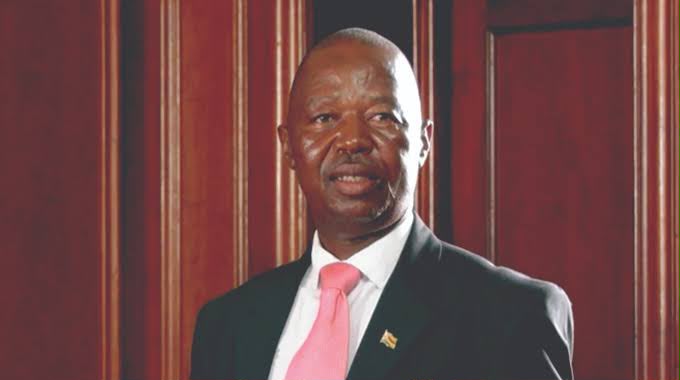
Dr Charles Utete made history by becoming the leading figure in shaping the civil service in independent Zimbabwe. The civil service is the lifeblood of any government. It conceptualises, develops, shapes and drives government policies and programmes. On February 25, 1981, 14 months after Independence, Dr Utete was appointed Secretary in the then Prime Minister’s Office. His main task was to build a new civil service after 90 years of a white-led system. The racist white regime had been entrenched for so long and ran on a system that placed blacks at the lowest rung of the civil service and whites from the middle and up. In setting up the structure, Dr Utete’s task involved managing the delicate transition from the old order to the new one. This was not easy as he lacked practical experience at that level. Given that independence came after a war, that whites generally didn’t want to let go and that there was virtually no black person in the colonial civil service who had risen to a very senior level, Dr Utete literally learnt on his pioneering job.
He became Chief Secretary to the President and Cabinet when the country established the executive presidency. Dr Utete succeeded in that onerous responsibility and now, Zimbabwe has one of the most hard-working and educated civil services on the continent. He retired in 2003, after 22 years of service.
After making history by founding the civil service of independent Zimbabwe and overseeing its development until 2003, Dr Utete makes history when he is buried tomorrow at the National Heroes Acre in Harare. He becomes the first civil servant to be accorded national hero status.
Indeed, the shrine has tended to be a burial ground for politicians, particularly veterans of our armed struggle. But Dr Utete, who collapsed and died at his home in Highlands, Harare, on Friday aged 77, takes his deserved place at that hallowed ground.
Dr Utete was born in Chikomba, Mashonaland East, in 1938 and attended primary schools in the area, including Kwenda Mission. He then went to Tegwane School, now Thekwane, in Plumtree, for secondary education before enrolling at Goromonzi High School for his Advanced Level
After that, he went to the then University of Rhodesia where he obtained a Bachelor of Science degree in Economics. He then went to Tufts University in Medford, near Boston, Massachusetts, in the US, for a Master’s degree in Political Science.
From Tufts University, Dr Utete went to Carleton University in Ottawa, Canada, where he studied for a Master’s degree and a PhD in International Relations and Public Administration.
After that, he taught at Montclair State University in New Jersey, then in Dar es Salaam before coming to Zimbabwe after lndependence, where he lectured at the University of Zimbabwe.
His boss, President Mugabe, needed an educated person he trusted to do the job. Knowing how scrupulous the President is, Dr Utete had to be up there. If he wasn’t he would not have served as the nerve centre of government business for so long.
“An intellectual of renown, Dr Utete was at the centre of the transformation of our civil service from what it was at Independence, ensuring its rapid Africanisation but without compromising on systems, efficiency and best practices,” President Mugabe said in a condolence message to the Utete family.
“This was no small task given the entrenched white Rhodesian ethos which had made the civil service a key lever of settler rule, black discrimination and oppression. Given his prior association with the liberation movement and vast knowledge in the tenets of public administration, we did not hesitate to appoint him to this key post which he discharged with distinction.
“As head of the civil service, he was at the centre of service delivery, always coordinating the drafting of policy initiatives which saw the new Government record key milestones, including reconciling a war-torn society, rehabilitating and re-integrating thousands of war displaced, as well as embarking on successive programmes of socio-economic transformation that underpinned our espousal and commitment to majority rule. A loyal, committed team player, the late Dr Utete’s services went far beyond the duties of a civil servant, readily making seminal inputs to key party policies which helped Zanu-PF deal with emerging issues and challenges. What I personally found admirable about him was his humility and self-effacement against such a lofty role and his multiple contributions. He never beat his drum.”
Yes, Dr Utete, a public administrator par excellence, served his country well, from the beginning. It is regrettable that he has gone as the government is repositioning the civil service to enhance its efficiency, effectiveness and save costs.
The National Heroes’ Acre is meant for people like him, those who make history for their country in positive ways, those whose works touch a broad spectrum of society and those who build and nurture. Dr Utete played a leading role in national development. He built and established the civil service without which no country and government can exist.


 Blessing Chizhande