admin
admin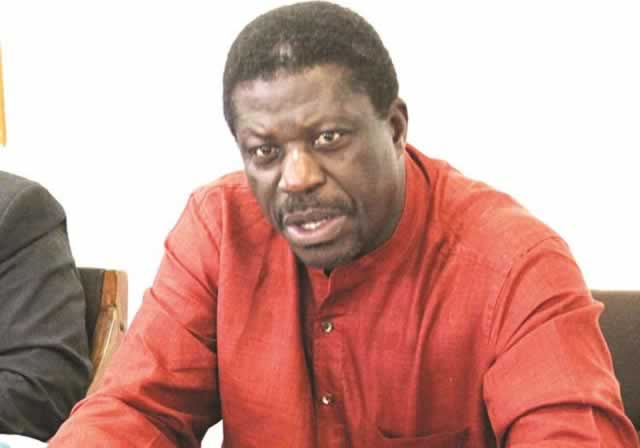
The Government is considering establishing special economic zones (SEZs) to hasten economic revival efforts.
As the Government seeks strategies to bring the economy back into shape after its record decline around 2008, the SEZs, reengagement with multi-lateral financial institutions, overtures for more investment from traditional sources in the West and Asia are being touted as important in reviving industry in cities such as Bulawayo, Mutare and Gweru.
Industry and Commerce Minister Cde Mike Bimha said: “The starting point is that under Zim-Asset we set up special economic zones and we now need to come up with incentives for attracting investment in those specific sectors. What we have done is an expression of interest and work is in progress, which involves other ministries, to incentivise these zones. We have agreed for instance that the starting point for Bulawayo is to declare the city an industrial zone. We now need to come up with specific timelines. This means we have to revisit Zim-Asset and come up timelines. I am optimistic this approach will take us somewhere as a country.”
In the same vein, he said the Government was also looking at the possibility of awarding incentives on specific manufacturers, as well as setting up export processing zones. It would be a whole gamut of initiatives but the SEZs are of interest to us. It is still work in progress as Cde Bimha said, so we wait to see the final document on the structure of the SEZs, which are geographical areas to be declared as such and the incentives to be put in place.
Export processing zones, free trade zones and other forms of special economic zones can be defined as demarcated geographical areas within a country’s national boundaries where the regulation of firms’ activity and the dedicated policies are differentiated from those applied to firms outside the zone. The regulations are aimed at creating a policy environment and associated infrastructures that are friendly to exporters or socio-economic development, for both domestic and foreign producers.
Measures such as duty drawback, trade finance, subsidies broadly defined, domestic taxes and customs duty exemption, regulatory policies and public good provision, can be used in the SEZs as well as EPZs, but limited to a given geographic location.
We can learn from experiences from countries that have done well with this approach. SEZs can be sensible strategy in many respects.
The biggest advantage is that rather than pursuing an omnibus kind of approach, the SEZs style would make is possible for the Government to focus on specific zones for quick-win outcomes. For a country coming from a base and still struggling for resources like us, specific focus on specific areas would enable the little resources to be more efficiently used.
Furthermore, a focused method enables the Government, its partners and investors to select areas in most need for support. Bulawayo stands out as a place where a SEZ can be set up, but other cities like Gweru and Mutare cry out for attention as well.
We can learn from the Chinese model of SEZs. It is said that in 1979, much of China faced the same challenges that Zimbabwe is facing, but after developing SEZs the designated places have grown into big manufacturing and trade zones that are contributing to the economic miracle we are witnessing in the world’s most populous nation.
A Chinese scholar, Jin Wang of the London School of Economics wrote that the Chinese State Council approved the creation of small SEZs in then underdeveloped cities of Shen Zhen, Zhuhai and Shantou in Guangdong Province. Xiamen in Fujian Province was picked as well. In August 1980 China passed the first legal rule on the SEZs: “The Regulation for Guangdong SEZs”.
This regional law was the first of its kind to be tested. It had some provisions which contradicted existing laws of China or created new economic frameworks. Indeed SEZs by their very nature pose a contradiction to established laws and practices as they are governed by their own laws. Therefore, there is need for a framework to make these apparent illegalities, legal. It is possible this can be done, as it has been done elsewhere.
This is one of the often-raised weaknesses of SEZs. They can result in unfair distribution of development and wealth. They favour some places and industries over others. It is hoped that once development and wealth comes to a SEZ, it would trickle down and diffuse to places outside the special zones.
However, because of the fundamental impacts of these zones to national development, governments have not been discouraged from designating them. In any case it is better to, at least, have some pockets of development than not at all and hope to designate more and ultimately grow economies.
But we have a negative experience with EPZs. They were meant to be zones of excellence in terms of harnessing investment, development and encouraging exports, but they never really achieved the goals. A Reserve Bank of Zimbabwe report released in December 2003 shows that the concept failed to make any meaningful contribution to the economy despite the array of incentives that were accorded to companies operating within the zones,.
The EPZs initiative was launched in 1994 amid hope that it would revive the flagging export sector and contribute significantly to national economic growth and development, but the central bank report gave a bad evaluation of the effort, 10 years down the line.
As we craft a new path on SEZs, we can draw lessons from the fate of EPZs to ensure that this time we get it right.



 Online Reporter