admin
admin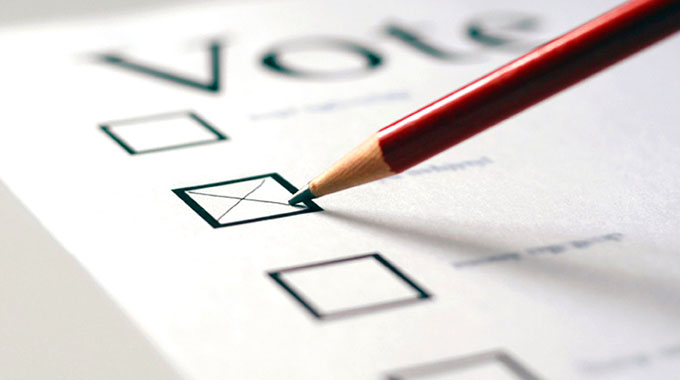
Zimbabwe is now into the process of harmonised elections for local authorities, Parliament and the Presidency on August 23, a process we all need to take seriously since this establishes who will be running our councils and our country for the next five years, and who will be taking our concerns to the very top.
President Mnangagwa and a growing number of Zanu PF leaders have been taking the opportunity to call for the whole pre-election process, the actual voting and the post-election period to be totally violence free, so that the voters can decide without any undue influence or any threat just who they want to represent them.
We hope that opposition political leaders will be throwing their weight behind similar appeals, so everyone understands that violence is totally unacceptable to all shades of opinion and that we all need to work together to ensure that it remains unacceptable and that we all accept the processes.
Elections, by their very nature, split voters into different groups as they support different candidates. That is why we have them, to find out who has the most support for each position.
But there are still many things that unite all of us, from the fact that we all citizens of Zimbabwe downwards and that we all want to be able to choose who each one of us, individually, wants as our councillor, our MP and our President.
This is our right, and we need to grant the same right to every other citizen. And that means we want to be able to campaign peacefully, vote peacefully and live peacefully after the poll, with everyone accepting that whoever won each position was the winner.
It is actually a very simple concept, and it is labelled representative democracy and is now followed by almost every country in the world.
This is one of those rights where we only really enjoy the right fully as an individual when we grant and defend the same right to every other Zimbabwean.
If we want peaceful polls then we have to persuade everyone else that they also want peaceful polls, and we can express our differences in the privacy of a voting booth and leave them there have exercised our rights.
No one denies elections are important, and that a lot of things can be said, sometimes undiplomatically, as candidates seek support. But we are grown ups and have been through a lot of elections since we won our freedom to vote in 1980 and are quite able to make up our own minds whose name we want to place the “X” next to on the ballot paper.
It is not just politicians who need to make sure that their supporters, and everyone else, understands the need for peace and for letting everyone make their free choices.
Appeals have been made to church leaders and civic society groups to encourage responsible and peaceful voting, and we hope that they will respond.
Some might want to endorse particular candidates, some may just want those who they influence to act responsibly. It is not that important which route they follow.
The main point is to urge people to act responsibly and act peacefully and when it is all over to remember that we all live in the same country with the same neighbours and so need to continue living in reasonable harmony.
We know we can do this, and do this properly. Last year we ran what amounted to a mini-general election when the health authorities cleared the country for the by-elections that had been postponed because of Covid-19.
They went very smoothly. There were a couple of minor instances of near low-level violence at a pair of meetings, but these were caused by a drunk in the audience who the police were quite able to remove from the scene so everyone else could feel safe.
The results in that election were also accepted by all without fuss.
Even our last harmonised elections in 2018 were peaceful in the run-up and polling stages, and we all thought we had matured as a nation. There was an outbreak of violence in central Harare when results were announced, and that is why it is so important that all political leaders make it clear that this is simply not on the agenda.
Sometimes there can disputes over the accuracy of a particular poll, but the Constitution and the law give a very clear and swift path to the courts to sort out any dispute.
The judiciary are required to have a number of High Court judges on stand-by, more than are likely to be needed, to hear any Parliamentary election petitions promptly, and the judges of the Constitutional Court have to be available to meet promptly if there is any petition involving the Presidential poll. There are non-violent solutions to any potential problem.
There has been some weird debate over the start of the pre-election process, the checking of the national voters roll.
The Zimbabwe Electoral Commission opened the roll for inspection; almost 1,2 voters actually tramped to their inspection point, and a whole lot more used their phones.
Considering that those who found an anomaly and went to a ZEC office to sort it out did not have to wait or queue suggests that the number of mistakes was very low.
Suggestions that anomalies were targeted are off base, since there is no way ZEC knows who supports which party, except the very small number of voters who will be candidates listed by a party as being entitled to use that party’s name and logo.
The rest of us are just listed as citizens. In fact the only country where voters can have a political affiliation listed is of all places the United States, and even there that is just to see who qualifies for each State-run primary election, rather than something cut in granite.
Even so the rest of the world sees that as something their own voters would not accept.
Elections are now something we do routinely in Zimbabwe, and we need to treat them as routine, as well as being important.
A lot of people died so we can campaign peacefully, turn out on the day to vote, and then wait calmly to find out who won each seat.
We should remain peaceful and calm and ensure that our rights and everyone else’s rights to a peaceful, routine election are honoured by us all.



 Online Reporter