Online Reporter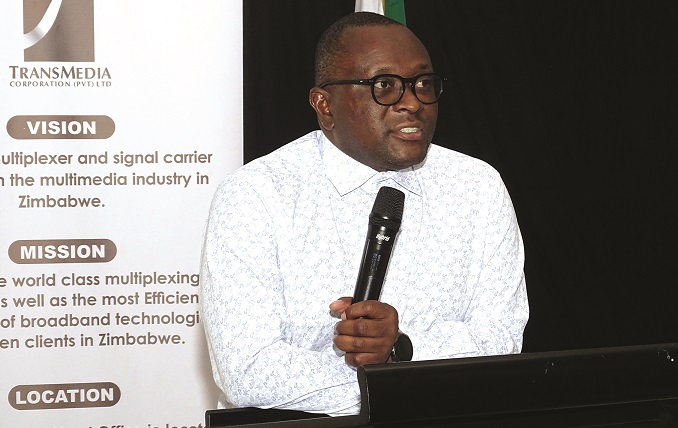
MODERN technologies allow high-quality radio and television coverage with the digital systems allowing maximum use of assigned broadcasting spectrum and thus a range of potential in every area.
While frequency modulation, the broadcasting method used for better-quality radio and all television is decades old in Zimbabwe, the upgrading to digital broadcasting technologies, started a few years ago, gives a major quality upgrade and allows licencing of a lot more services.
The revolution, replacing all transmitters, also needs a lot of capital investment.
FM radio and television broadcasting are fairly short range, a bit better than pure line of sight, that is a listener or viewer needing to be in sight of the tower transmitting the signal, but not much better. This requires in turn a tight network of transmitters to give national coverage.
That national coverage in turn is required not just to ensure that everyone gets equivalent services regardless of where they live, but also to make sure that the basic radio and television services originate in Zimbabwe from licenced service providers, thus guaranteeing that national sovereignty is exercised and that a small group of multinational companies and billionaires do not have total control of the airwaves.
In Zimbabwe, for very good reasons, Transmedia Corporation has a monopoly of signal distribution. All radio and television services, public and private-sector, need to use Transmedia to get their signal to their listeners and viewers.
Having a single signal broadcaster means that the limited range of frequencies available can be put to best use and we do not get stations on top of each other.
The electromagnetic spectrum is limited and every country is given batches of frequencies it can use for terrestrial broadcasting, satellite broadcasting and telecommunications.
While frequencies can be reused in different countries the fact that different bands have to be allocated on each side of every international border means that not all frequencies are available in all countries.
Even the same radio or television service needs to be on different frequencies between adjacent transmitters to avoid interference.
Under the Second Republic, the broadcasting modernisation and upgrade is being accelerated. At the beginning this involved largely replacing older and obsolete equipment, but in later years has been concentrating more on extending the national transmission network into ever more remote areas.
That in turn has allowed the growing number of community radio stations, as well as a fuller range of private stations.
Many of the areas that really benefit from community stations are not just out of range of big city transmitters, but have communities that were considered marginalised. Treating everyone the same does mean that no one can be marginalised.
Transmedia this year is looking at commissioning 10 new FM radio transmitters and five television transmitters and it accelerates building up comprehensive broadcasting networks.
Not everything can be done at once, but every year should see a significant improvement and far fewer people left behind.
In building up its infrastructure Transmedia is automatically going for cleaner energy, since many places that still need transmitters and associated infrastructure also need solar power and often infrastructure can be shared, especially in areas with lower population densities, with the telecommunications providers.
Speaking at last week’s Transmedia annual meeting, Minister of Information, Publicity and Broadcasting Services Dr Jenfan Muswere brought up the need for Transmedia to reduce operational costs as it expands.
Radio and television stations need to pay fees to Transmedia to transmit their signals, and obviously they want the fees to be affordable and for Transmedia to be ultra-efficient.
While the target for network availability is 99 percent, a reasonable figure, Transmedia is a little over 91 percent, and expansion into ever-more remote areas could push that down, hence the need for the corporation to build up its reliability.
Satellite broadcasting allows extra coverage and helps ensure everyone is connected and while commercial satellite broadcasting services are available in Zimbabwe they are foreign private-sector services and need significant monthly subscriptions.
The minister was keen on seeing satellite services as part of the Zimbabwean strategy of ensuring universal broadcasting coverage.
Regional and continental groupings could also play a major role in creating the sovereign satellite systems needed.
One area that could be looked at would be cheap radios and televisions.
While many mobile phones can now pick up radio signals, there would appear to be a need for pure radio receivers and these are very difficult to get hold of these days.
The growing expansion of the television transmitter network coupled with the policy of at least basic solar power supply for every household not on the grid, implies that there could be a market for a basic modern television that most could afford.
In past decades there were a couple of manufacturers in Zimbabwe, who made and sold radios and televisions, and one would think that this market is now a lot larger and that a good block of households would appreciate something less expensive than the myriad of imported appliances now on sale.