The fiscal discipline of the Second Republic and its strong commitment to accurate and enforceable budgeting means that a significant block of incoming revenue, the second largest in the National Budget after employment costs, is available for infrastructure and investment.
But the same strict fiscal discipline that finds the money in the first place demands that it is properly spent and the pace of infrastructure spending is largely dependent on the rate of revenue inflows.
So choices have to be made, first in the budget itself and then in how much work can be done at any particular time.
The Government has eschewed overdrafts and other more costly ways of spending first and finding the cash second.
The Finance Ministry is very strict on insisting that its rules are followed by the spending ministries and agencies.
Considering the huge gains that this stern outlook has anchored in creating our present economic and monetary stability with low inflation, high growth and ample foreign currency, no one is in a position to advance any other argument.
Now the Finance Ministry has issued the handbook for the Zimbabwe Infrastructure Investment Programme for next year, as one of adjuncts to the National Budget already presented to Parliament.
The main goal of the capital spending on infrastructure remains the continued progress to a prosperous upper-middle income society by 2030, with no deviations.
One noticeable factor with the rising number of State infrastructure programmes and the growing complexity of many of them is the need to spread the work, and so the spending, over more than one year and in some cases over several years.
But it should mean that existing work in progress is completed before the next stage is initiated in similar groups of projects and programmes.
A fair amount of infrastructure work in the early years of the Second Republic was completing projects initiated earlier and then cut short when money ran out.
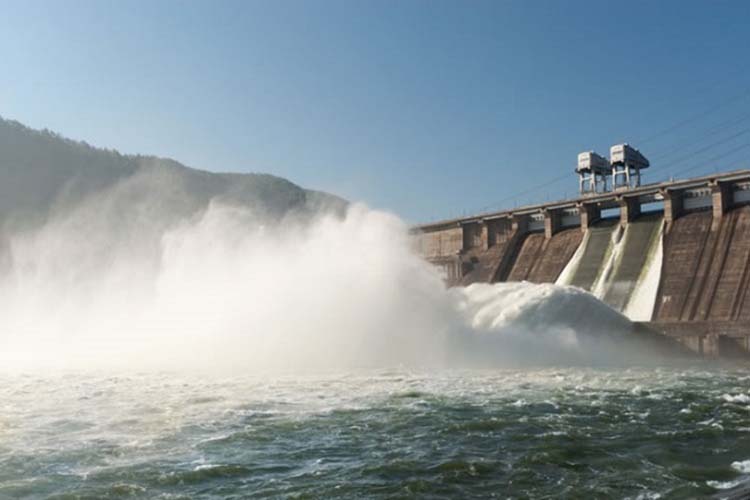
Projects like the Tokwe-Mukosi Dam, the largest interior dam, were brought rapidly to a conclusion as the Second Republic took advantage of money already spent and work already done, sometimes more than a decade earlier.
Now all that work has been done and along with the smaller projects that can be completed in a financial year, there are several multi-year projects that are still work in progress although with a great deal of progress and work still continuing. We do not see work stopped on any.
Next year the Finance Ministry wants operational ministries to concentrate harder on these, to make sure that the large sums already spent start giving value with completed projects.
In several cases, this will mean directing adequate resources to accelerate progress, rather than starting too many new projects and enlarging the group where work is progressing, but taking time to complete.
The message is now let us finish what we are doing as a first priority.
That does not mean that we do not start anything new. In some areas we are ready for the next wave of advance. But the Finance Ministry wants to see us scaling up investment in projects that push economic growth and development, and especially those that can draw in private investment to complement Government efforts.
The private sector, the agent of wealth creation even when working on a secure foundation of the national infrastructure largely provided by Government, has been growing faster in recent times and is able to mobilise funding from its own resources and from outside the narrow belt of taxes and fees that the Government has to rely on.
We are seeing more smart partnerships and more should be initiated.
Very often there is total consensus on what bottlenecks, or potential bottlenecks, to economic growth can be tackled by a sensible response involving both the private and public sectors.
One prime example is energy. Several private concerns are building solar stations, and even the odd thermal station, and many electricity users have spare generation capacity.
But they needed the necessary public-sector connections to the national grid and the smart metering that allows them to both buy and sell electricity to the grid.
The nuts and bolts of that were all sorted out a while ago, along with the pricing structures and contracts, and that has been a major factor in Zimbabwe having avoided load-shedding this year, despite fast rising production in agriculture, mining and industry.
These national approaches involving public and private investment do work to everyone’s advantage.
A lot of the continuing economic progress of the Second Republic is not just founded on getting things right from the beginning, but continually upgrading our decision making, priorities, standards and controls.
The Government, via the Finance Ministry, is doing exactly that.