

 admin
admin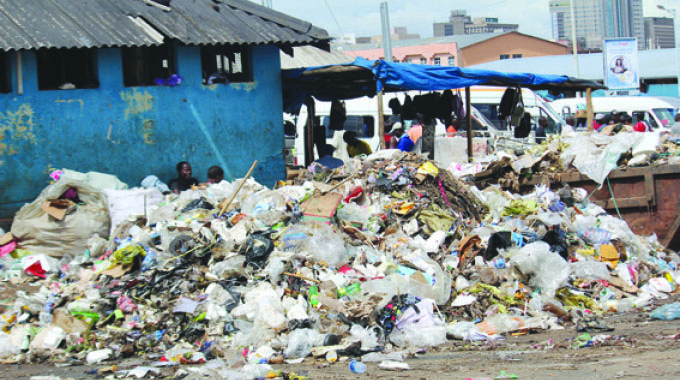
The recent decision to put the Environmental Management Agency to oversee Harare’s rubbish collection, and even hire private sector trucks and garnish the bank accounts of the Harare City Council for payment, shows the need for emergency action.
The EMA will also buy a couple of garbage trucks itself, but this is mainly for action in the city centre and the Avenues, while the rest of the uncollected garbage that the city council cannot collect with its own fleet will be collected by the private companies.
Generally municipalities, and city councils are just municipalities with a higher status, but no extra powers, have a great deal of self-government and are supposed in law to handle a very wide range of functions, without central Government interfering.
This is one reason why the Government agency that is moving in on the deficient garbage collection is the EMA, as the legislation that it acts under allows it to force remedial action whenever environmental laws are being broken or whenever there is an environmental emergency. This trumps the municipal independence.
We saw similar moves when the central Government needed to take urgent emergency action on urban roads.
It first of all had to declare the state of urban roads a state of disaster before it could legally move in and do work that should have been done by municipal councils, but simply was not being done.
Some were pushing a while ago for a commission to be appointed to take over the city council functions, so bad was the performance of the city council, but this is no longer possible except when there is no functional council.
After the Urban Councils Act was amended a commissioner can only be appointed, for a maximum of three months, when a large majority of the council has been expelled, suspended, resigned or jailed, so there is no longer a quorum.
The commissioner is no innovator, just there to keep the council ticking over why by-elections are hurriedly held to fill the vacancies.
This is why the central Government can only intervene when disaster in a particular area threatens, such as the roads, the need for public boreholes to maintain health and now the garbage piling up.
The failure of the city council is in its very core areas. The council grew out of the old Salisbury Sanitary Board of the early 1890s, which had a small list of functions.
It had to collect and get rid of sewage, collect and get rid of garbage, protect the public wells, the water supply for most residents, from contamination, keep the road drains clear and effective and keep the roads at least clear of obstruction.
The civil administration of the British South Africa Company handled the rest, from town planning and land sales downwards.
The sanitary board did its job sufficiently well that it was upgraded to a municipality in the later 1890s, and as the country was still using Cape law without amendment at the time it acquired the full functions and powers of the Cape Town City Council.
The Harare council went through times of trouble, but usually pulled through, largely because serious business and professional people in the growing town and later the city were ready to do their stint on the council to ensure things were done properly.
This ended a little over 20 years ago when, as was their right, a majority of voting residents switched to the opposition, but without checking on the calibre of the people being nominated to the council, for some reason unqualified in fact, if not in law, to run a big city.
So we move into a string of disasters: water supply halved as the water works cannot run properly, roads allowed to collapse, sewage works overloaded, garbage piling up.
And this is what a little village managed to do right in its first few years with a sanitary board simply because the better business and professional people put in a few hours a week to make it happen.
Central Government has been careful not to interfere much, but has to take action when people could die.
It took over the anti-cholera programme in 2018, with backing from the city health authorities, and that was needed in a major health emergency, although the cholera outbreak would not have happened if the sewers had been maintained properly.
Also on health issues it had to intervene during Covid-19 and make sure that run-down facilities were put back into operation, and medical staff recruited and paid, so that Harare residents had a reasonable chance of surviving if infected.
When urban roads were declared a state of disaster, a precise and accurate description of the state of most, it was then able to move in to start the rebuilds, repairs and the upgrades, work still going on although most arterial roads are now functional and work is moving into suburban roads.
Now it has to collect the garbage, or at least make sure that the garbage is collected, because the city council allowed its truck fleet to decline and break down.
This is more of health issue than anything else, and is certainly an environmental issue, especially as a lot of residents just dump their garbage in a wetland or on the side of the road if the council does not collect.
Some have little option, if they live in a flat for example, although those in detached houses with yards could at least bag their garbage and keep the bags tied until a truck does eventually appear.
But the council has not even tried to organise this sort of emergency measure, just sending trucks at any hour on any day. The council does not communicate much.
The good rains have seen the street drains blocking, partly with the uncollected garbage, and so two of the five original functions of the old board, now not done, create a double health hazard.
We have no idea what the next disaster will be, although we can assume the Government will be forced to intervene once again to stop people dropping dead in insanitary conditions.
We stress that the city council only really works when most councillors are proper business and professional people who care about their civic duty and prepared to do a stint on the council to make sure it performs its basic functions at least, and do this for free, the allowances for this group just being enough to buy the petrol they need to get to meetings and check out their ward.
Elections are due this year, and Harare residents this time need to elect a proper functional council with the right sort of people as councillors. We cannot go on with disaster following disaster.



 Online Reporter