

 admin
admin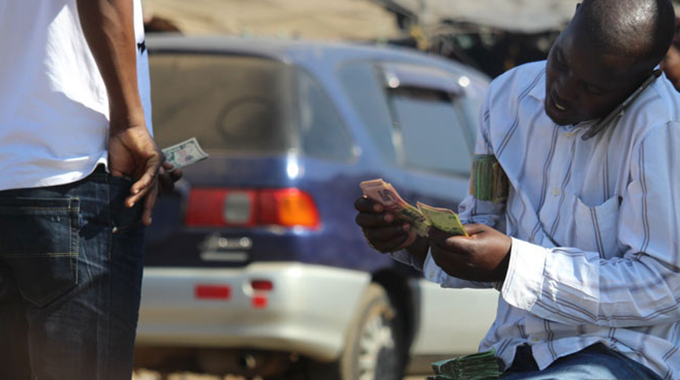
Most people when you talk about the black market in foreign currency see the scores of petty dealers on the streets or the slightly more sophisticated dealers, still at the bottom end of the market, dealing from cheap flats or the back seat of a car.
Concentrating on these would be about as useless as using brooms to combat a flood, since they are a symptom of the manipulations done by the real masterminds of the black market and even if chased off the streets would simply be replaced by others desperate to earn a living.
Even their customers are the small timers, people dumping US$10 a relative sent them or someone needing US$20 to buy a few litres of petrol or accumulating the cash to pay rent.
These are people who basically are having to use the system set up by the bigger shots to cope with what that system has produced. They are not the creators of the system although the numbers involved are large.
Despite the numbers involved, the amount of currency traded in these street and near street markets is remarkably low, even when totalled, and does not have that much of an effect on the economy or even on the rates offered.
The authorities now seem to accept this and instead of doing the easy and ineffective moves are concentrating on those bigger shots who control the system.
The actual manipulation and what amounts to setting of rates, although this is not a formal process, is done a lot further back, some by the accumulators of the street dealers through several layers as the money moves up with small mark-ups, but a lot using currency that never even appears on the streets.
Here serious damage can be done and while those involved state they are simply going with the tide, the amounts involved help create that tide.
So tackling the black market and associated currency manipulation has to be done at source. And here the authorities, with the Reserve Bank of Zimbabwe’s Financial Intelligence Unit playing a central role, are making significant progress.
This is helped by the need of the larger dealers to actually use the banking system.
Although some largish sums are still circulating in cash, armed robbers are helping the move towards safer havens for those with big sums, and in any case a fair amount of trading at this level is using funds already in the banking system in some form, since things like export retentions, payments to farmers and the like, and a reasonable fraction of the free funds are not paid out in bundles of US$100 notes, but are numbers in a data base.
As a result of the investigations by the Financial Intelligence Unit 206 companies have paid the civil penalties set up and which are now playing a major role in combating wide-spread breaches of the foreign currency markets and rules.
Civil penalties do not involve criminal prosecutions, nor for that matter involve proof beyond reasonable doubt.
But they do require a reasonable level of probability that the company involved has been playing the fool and have the advantage that they can be set by senior staff designated by the Reserve Bank.
The interesting point is that those caught are paying, rather than going through the appeal process or rushing to the High Court to seek urgent orders staying the levying of the civil penalties while launching a civil suit to show that the Reserve Bank and its Financial Intelligence Unit are behaving wrongly.
We do not even get media leaks and complaints. This implies that when the unit confronts someone they have the required ammunition and are not just on a fishing trip trying to gather evidence.
This is not to say criminal investigations cannot be then followed, or that other authorities cannot launch their own civil investigations.
So far the Financial Intelligence Unit has referred 141 cases, with 82 of these referred to the commercial crimes division of the CID in the police, 41 to Zimra since it appears that some currency manipulators are not declaring their profits or are trying to avoid paying taxes in foreign currency, with 11 going to the Zimbabwe Anti-Corruption Commission to check out potentially corrupt sources or payments, and even six being investigated by counter-terrorism officials.
This later group are more likely to be currency laundering using the methods used by terrorist organisations rather than actual payments to or from terror groups. But still it keeps the pressure on and in any case must be checked out.
While a lot of effort has been put into setting effective legal dealing in foreign currency, starting with the auctions run by the Reserve Bank, it has been found that some being brought into the legal fold cannot resist playing a double game, using both legal and illegal sources of currency.
We have those who buy on the auctions and then price according to the black market using huge mark-ups. We have double dipping in the auctions, and people getting auction money but not using it to pay their foreign bills.
And there have been cases of people borrowing to buy on the auction and then using the money for other purposes.
Some are caught early and disqualified from the particular auction they are intending to abuse, with repeat offenders banned from the auctions. But part of the fault lies with some banks who seem so keen to earn their fees that they do not do properly the checks they are supposed to do.
This has already seen bids having to be submitted almost a week in advance, rather than the day before an auction, since the Reserve Bank cannot trust all its gatekeepers and has to do the work itself, a sad indictment of the bankers.
That has other potential problems for the banking system since Zimbabwe has signed onto international agreements and we do not need to get a reputation that we can launder money.
Regardless of what banks and their clients think of the rules, they have to follow them or get them changed through due process, not ignore them.
This pressure by the Reserve Bank and its Financial Intelligence Unit is already taming the black market, since rates are stabilising. But that free-for-all and the desire of some to follow those manipulated rates has been largely responsible for the surge in inflation, not to anything like the levels seen in the first half of 2020, but still higher than what we were achieving.
The Reserve Bank agrees that inflation does make even potentially honest businesses dip into the black market to preserve value for surplus funds, and scares some into weird pricing, but both of these create inflation and need to be stopped.
And the Reserve Bank did cause some to lose confidence when they were delays in paying out allotted auction bids, although it has taken effective measures to return to something closer to instant payouts. That should bring the honest back on side allowing more effort to be thrown at those who cheat for greed.


 Online Reporter