admin
admin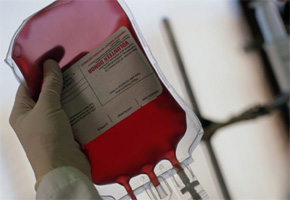
The economic meltdown of the last ten years has left the social services sector — which encompasses health and education — severely hamstrung to provide quality service. .
But these two sectors have recorded some measure of revival following the introduction of the use of multiple foreign currencies in 2009.
In education, donors in co-operation with Government have helped make textbooks available in primary and secondary schools. Parents are also playing their part by paying teachers — whose salaries are still to be improved by the State and hover below the poverty datum line — incentives to top up their low salaries.
In the health sector, drugs are now generally available in hospitals and at pharmacies. At the height of the economic problems of the past decade, it had become quite normal for relatives or families of patients admitted at hospitals, particularly Government health institutions, to be asked to provide their own medication. People had to run around pharmacies to buy these for their loved ones.
But since 2009, there have been some improvements in our health sector with Government and private health institutions functioning at full capacity. While Government is still battling to adequately fund the health sector, help has been sourced from and provided by donors and other co-operating partners in a number of areas.
The help is going some way to ameliorate the difficulties in our health sector but is still leaving gaps that need attention. Some of these gaps we surely can deal with them on our own.
A good example of this is the looming blood shortage at the country’s hospitals because National Blood Services Zimbabwe (NBSZ) has stopped supplying the health institutions with blood stocks.
This comes after the NBSZ introduced a pre-payment arrangement in a bid to recover more than $1 million it is owed by hospitals countrywide.
The NBSZ now demands cash upfront from hospitals before it can supply the health institutions with blood.
Most Government hospitals are said to be in arrears.
We do not understand the reason why hospitals should be in arrears because they are demanding cash from their patients for blood supplies. That money should simply be remitted to NBSZ so that it continues providing an essential and life saving service.
Some hospitals like Mpilo Central Hospital have not been affected by the NBSZ decision because they are paid up. These hospitals, which should be commended, have been timeously remitting the money that they collect from patients to NBSZ.
The problem over blood supplies mirrors the dilemma that most businesses and employers are finding themselves in Zimbabwe today. They collect contributions, some of them mandatory such as the National Social Security Authority and taxes, but fail to remit to the respective authorities.
However, in the case of some of the businesses or employers, it is just lack of will to do the right thing and remit the money they collect from their workers.
In the health sector, the same challenges have been obtaining with medical aid societies, which have arrears with doctors and hospitals. The medical aid societies are also taking long to pay claims by their members. This has forced Government to give medical aid societies a two-month ultimatum to pay up or have their licences revoked.
The failure by medical aid societies to pay has been inconveniencing their members who sometimes fail to access health services or are forced to pay cash and then wait for long to have their claims paid.
We commend Government for the ultimatum given to medical aid societies and urge it to also act on hospitals failing to pay the NBSZ after charging patients cash for blood supplies.



 Online Reporter