admin
admin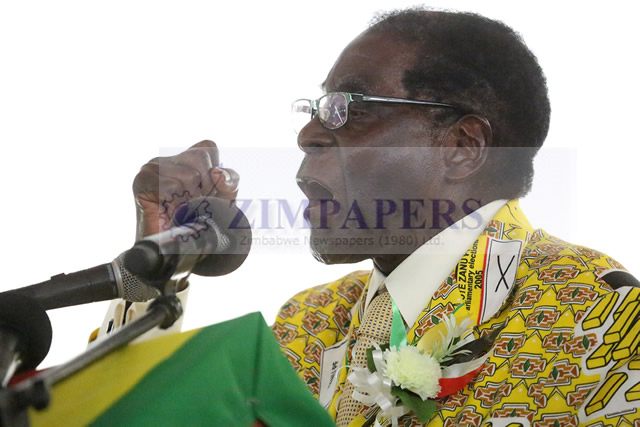
The indigenisation and economic empowerment agenda appeared to have slowed down from last year since its earnest start in 2011, three years after the promulgation of enabling legislation.
Foreign companies operating in the resources sector and those in areas specifically reserved for indigenous Zimbabweans thought that as the government goes full throttle courting foreign direct investment, the empowerment programme would somewhat be relaxed. Many of them, as President Mugabe said at the Zanu-PF Annual National Conference in Victoria Falls, are actually blocking the implementation of the policy.
Officially closing the conference, he set 2016 as the deadline for all foreign-owned companies to submit their empowerment proposals, saying the government will not tolerate any actions by firms that continue to defy the Indigenisation and Economic Empowerment Act.
“There are companies in this country that still refuse to accept our empowerment policy in the mining sector,” he said. “Well, this is 2015 and, of course, we are in December, the end of year but certainly come January and it’s 2016, that stubbornness and resistance we say should end in 2015. In 2016, we will not accept a company which refuses and rejects our policy of indigenisation and empowerment in a manner in which we described.”
He said there has been opposition to the programme within and outside of the government but that resistance is unacceptable.
“Some have been crying that sanctions, sanctions, that you are too hard, why don’t you accept what the Americans say, what the British say. No, we have our own philosophy, ideology and we believe that our natural resources are our own. We don’t share them with anyone else except ourselves.”
The indigenisation law says foreign-owned companies operating in the resources sector, such as mining and logging must sell 51 percent of their shareholdings to indigenous Zimbabweans or the government and remain with 49 percent. The law also bars foreigners from reserved sectors including agriculture (primary production of food and cash crops), transportation, retail and wholesale trade, barber shops, hairdressing and beauty salons, employment and estate agencies and grain milling.
The government had to make a stand as the President did on Saturday, making it clear that the economic indigenisation policy and programme are lawful and would be implemented. There is no doubt that the localisation of ownership of the economy constitutes broad-based empowerment, like the land reform and redistribution programme. As a people-centred party, Zanu-PF cannot be expected to drop such a policy in exchange for “better” Press in countries that seek to continue exploiting our resources while leaving small amounts of money in royalties and taxes in our country.
Zanu-PF has been consistently voted back into power thanks to its pro-people politics. It is a brand of politics that is relevant to the physical and psychological needs of the masses. It transforms lives on national scale, it empowers and is permanent.
Zanu-PF resoundingly won the July 2013 elections because of the indigenisation and economic empowerment drive, as the fast track land reform and redistribution programme did between 2000 and 2008. The latter is now established and permanent, so will continue attracting the masses to the ruling party. The former, particularly its community share ownership scheme segment and to some extent the employee share ownership one, has been a success story too. The people are deriving tangible benefits from it.
Up to 50 community share ownership trusts were set up countrywide between October 2011 and February 2013. The best one is in Tongogara district which received $10 million from Unki Mine. The trust has used part of the money to build schools, clinics, roads, drill boreholes and so on. The Mhondoro/Ngezi/Zvimba trust in Mashonaland West, the first one to be launched on October 13, 2011, is also doing well. Others are in Zvishavane, Gwanda and Umguza.
Softening the programme at this stage would be unthinkable. In addition, it would represent a betrayal of the tens of thousands who are benefiting from it and the millions who, on July 31, 2013 handed Zanu-PF its most convincing electoral mandate in 34 years on the basis of this mass empowerment programme.
It would reflect damaging policy inconsistency on the part of the government after five years of painstaking work of explaining to the market that economic empowerment and indigenisation is just and inevitable if the country is to attain sustainable socio-economic growth and political stability
Business does not have to fear anything as the law says there would be no expropriation of assets. Any new investors would have to pay for their shareholding in businesses outside the resources sector where, of course natural resources – indigenous Zimbabweans’ birthright – would serve as their contribution to ownership of the businesses.
In any case, the law allows the responsible minister to grant exceptions here and there.
With the President’s timely reminder at the weekend, we look forward to the indigenisation and economic empowerment agenda intensifying next year and more people benefiting from it, meaningfully.



 Online Reporter