Chronicle Editor
THERE is general consensus across the board that the macro-economic environment in Zimbabwe is not healthy at all. In fact, the economy has not been performing to expectations for a very long time and the haemorrhaging has left deep craters and crevices which require years to correct.
Years of mismanagement in the First Republic spawned a high budget deficit and significant debt. For years Government was spending more than it had, destabilising the economy. Surely Zimbabweans did not expect Finance and Economic Development Minister Professor Mthuli Ncube to perform miracles and immediately turnaround the economy within a few months.
Zimbabwe needs time, a lot of sacrifice, belt tightening, hard honest work, mindset change with regards to work ethic, productivity on farms and factories, an end to corruption, efficiency in Government bureaucracy, ease of doing business reforms, good governance, the rule of law, protection of property rights and a host of other economic enablers currently being worked on by Government. It needs bold action and the courage to take unpopular but tough decisions.
What is crucial is for the nation to pull in one direction with determination to achieve the much-vaunted Vision 2030. Unity of purpose is absolutely essential for this process to succeed and we owe it to future generations to ensure that we stabilise the economy and thereafter grow it to middle income status in 11 years from now.
It is possible and achievable but only when everyone is agreed on the need to put aside narrow selfish interests in pursuit of the wider national goal. The path to 2030 is simple. Government is currently stabilising the economy through the Transitional Stabilisation Programme under which a number of austerity measures are being implemented.
Just as medicine is bitter to swallow, the prescriptive measures are painful but necessary to stabilise an economy that was virtually in a coma before the onset of the new dispensation. There is no other way — these austerity measures are necessary. We cannot bury our heads in the sand.
The good news is that Government says the painful shocks will substantially subside after six months. It is inevitable that some form of turbulence is experienced as these interventions are rolled out but make no mistake about it, it is a necessary turbulence. There are no shortcuts to economic prosperity with the only downside being that we have taken too long to correct the distortions in our economy hence the pain of correcting these anomalies.
The good thing is that we have begun the process, laying a firm foundation for solid economic growth. This week, Prof Ncube has been explaining the path to Vision 2030 and clearly articulated what needs to be done to achieve that dream.
Addressing students of the National Defence Course-Intake 7 of 2018 at the Zimbabwe National Defence University in Mazowe on Thursday, Prof Ncube said there would be increased turbulence from ongoing reforms over the next six to eight months. “Reforms are continuing, but what happens is that over the next six months we are carrying out more reforms and will achieve quite a bit, so obviously after six months then we have less reforms and towards end of year, even less reforms.
“So we are doing more now and less as we go forward, but it does not mean reforms are finished we will still carry out more, for instance privatisation (of parastatals) takes a while so it always carries on, but certainly on the macro-economic front, we should have made quite a bit of progress,” he said.
Prof Ncube said some of Government’s interventions had started bearing fruit given that the State’s finances were now “clearly in a better position.” Since November 2018, Government has consistently achieved surpluses on its income and expenditure accounts while Treasury is beginning to see surpluses on the current account. This shows that the stabilisation measures are working and over the next two-year tenure of the TSP, Government will gradually implement more measures but the pain will subside.
The surplus income also frees up funds for developmental projects, programmes which support production, education, health and infrastructure such as roads, rail and electricity. By stimulating production in agriculture, mining and manufacturing sectors, we produce more of our own goods, import less and export more, bringing in the much needed foreign currency, reducing prices and creating jobs. This is not rocket science but simple economics and it can be done.
Once economic stabilisation has been achieved, Government will move on to the next two stages of Vision 2030 — the two five-year National Development Plans, the first one being over the period 2021-2025 and the second plan over 2026-2030. This is the period of Triple S Growth — Strong, Sustained and Shared.
Hopefully, by then Zimbabwe would be an upper middle class country with per capita income of US$3 500 per year.


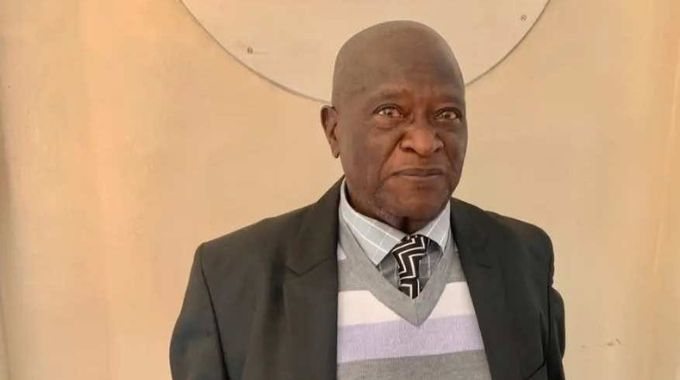
 Bongani Ndlovu