Online Reporter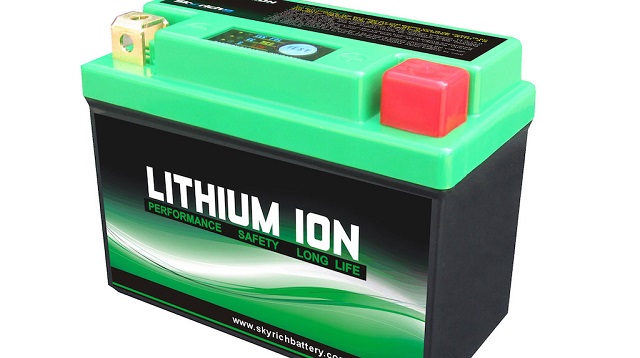
LYING in the tropics at quite high altitudes and with what cloud cover there is largely seen in summer months and clear skies in winter months, Zimbabwe is ideally placed to harness solar power as a primary energy resource, and certainly as the main clean energy source.
The private sector and upper-income and middle-income homeowners have been taking the lead in installing solar, and many formal businesses without heavy-current production equipment are now largely reliant on solar, and everyday more householders join the list of people with a few panels on their roof.
The Government has been active, implementing policies to have all hospitals, clinics and schools fitted with at least a minimum solar installation that can provide lights, keep the vaccine fridge running and power up the computers and communications that are now becoming ubiquitous at schools and clinics.
The borehole drilling scheme now includes solar powered pumps, and in a major policy, rural households no longer have to wait for the national Zesa grid, but will be getting in a multi-year programme minimum solar packages for the essentials.
At the same time, a pilot programme is seeing mini-grids at business centres, where the businesses and surrounding households share a larger installation.
The time has now come to start drawing together all the accumulated experience and knowledge from providers and users, work out the best sort of products and ways of boosting efficiency, and moving forward systematically, including into the manufacture of solar panels, batteries and supporting equipment to back the local manufacture that has been in place for many years for solar hot water heaters.
An agreement has now, after Cabinet approval, been signed with the International Solar Alliance to establish a Solar Technology Application Resource Centre (STAR-C) at Chinhoyi University of Technology to do precisely this, building up the required advanced research and development base that we need and bringing all the data together so best practices can be set out and adopted.
The competition for solar is low. Wind power will never amount to much in Zimbabwe, since we do not really have those consistent higher-velocity winds.
It is almost impossible to fly a kite in the country. Hydro has been seen as important, but the fluctuating river flows as climate change kicks in has made this a far less secure option.
Solar is still fairly pricey in capital costs compared to coal and even hydro alternatives, but the fuel is free and costs are falling.
In any case, the sort of money that the Batoka Gorge scheme would need could, if applied to solar, light up a vast area of Zimbabwe and have a far more consistent supply of power than a hydro scheme that swung so much between 100MW and 1 200MW output.
Energy and Power Development Minister July Moyo sees the new Chinhoyi research centre looking at potential manufacture of solar panels in Zimbabwe and exploring battery options.
Panel manufacture would still require, at least at first, some imported components, but could gradually move away from assembly to ever more local content.
Battery manufacture requires a fairly significant industrial base from the beginning, plus almost certainly licensing of advanced designs and technology.
There are two major types of lithium batteries – the lithium-ion battery and the lithium ferrous phosphate battery, with the latter being the one that manufacturers in Zimbabwe should centre on.
The lithium-ion battery is what we find in cellphones and other small electronic appliances.
It has been scaled up and is used in some electric vehicles. Its greater energy density makes it almost essential for when the minimum sized battery is needed, but the scaling up has produced some safety issues, such as fires.
The lithium ferrous phosphate battery in its latest versions is seen as far more suitable for most heavier duty batteries, despite its lower energy density, having higher discharge rates, significant lower cost, longer life and being a good deal safer.
Much of the latest research has been done in China by the world’s largest producer of electric vehicles, BYD, which has seen its bet on this technology, rather than scaling up cellphone batteries, more than justified as its sales surge.
More interestingly the raw materials for this battery are totally within Zimbabwe: lithium, iron ore and phosphates for the cathode and carbon for the anodes. A huge investment would be required to build up the industrial base, the lithium processing plants and the industrial plant for manufacturing ferrous phosphate, before we even get to the battery factory.
But having everything on tap makes that investment at least worth looking at. Besides the solar panels we also need to look at other solar applications. Running a geyser off solar panels and batteries needs a lot of panels. The older solar heater on the roof does this for a small fraction of the cost.
While some householders have the geyser and the panels on their roofs, too many rely on Zesa to heat the water between load shedding. Both would seem to be needed.
Cooking is the other big household energy requirement, and again a lot of panels and batteries are needed to run a stove.
Liquid petroleum gas has become a major option, but it does need a wide network of dealers who can refill cylinders.
These now exist in urban areas, and even in low-density suburbs most people are within walking distance of a licensed filler.
But in rural areas you need a car, hence the reliance on firewood.
Biogas is an option for many farmers, since they have the manure fuel source, although adoption has been very slow.
Minister Moyo was also keen on seeing far more of those with solar panels using the Zesa smart metering, where they could sell surplus power to the grid, perhaps at midday when their output was high and their demand low. With such meters they would only pay the balance on what they brought from Zesa and what they sold to Zesa.
The new centre at Chinhoyi University of Technology will need to be able to move swiftly to start linking up what is happening, what is planned and what is desirable and put all of this together, while keeping up to date on technical breakthroughs around the world, so that we get the best results for our limited capital spending.